
By the mid-1760s, the American colonies were already restless, though not yet rebellious. The war with France had ended, the empire had grown, and with that growth came a tightening hand from London. Taxes were being discussed, trade was being scrutinized, and authority, once distant and flexible, had begun to feel closer, more deliberate. Still, most colonists thought of themselves as British. Loyal, even when frustrated. The idea of breaking from the Crown was not yet a plan. It was, at best, an unspoken question.
And then came the words.
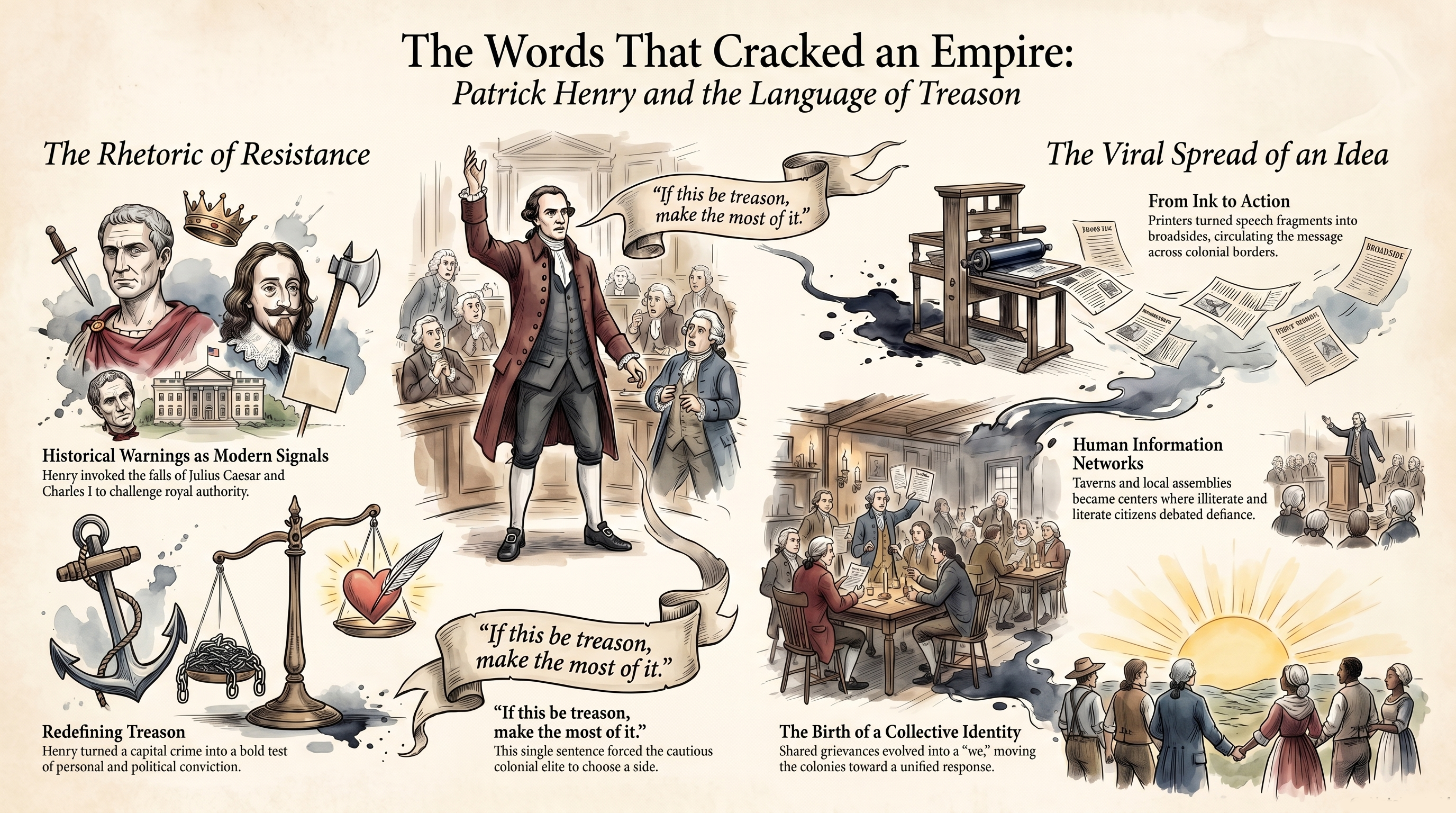
“If this be treason, make the most of it.”



It is one of those lines that echoes across centuries, partly because it is bold, partly because it is reckless, and partly because it forces everyone who hears it to choose a side, even if they would prefer not to. In that moment, treason stopped being a legal term and became something else entirely. It became a test of conviction.
The setting was the Virginia House of Burgesses, a place that, on most days, leaned toward caution rather than confrontation. The men gathered there were not revolutionaries, at least not yet. They were planters, lawyers, merchants, men with property and reputation, men who understood that the wrong word spoken too loudly could cost them everything. Into that room stepped a relatively unknown figure named Patrick Henry, a man without the pedigree of the established elite, and, perhaps for that reason, without their hesitation.
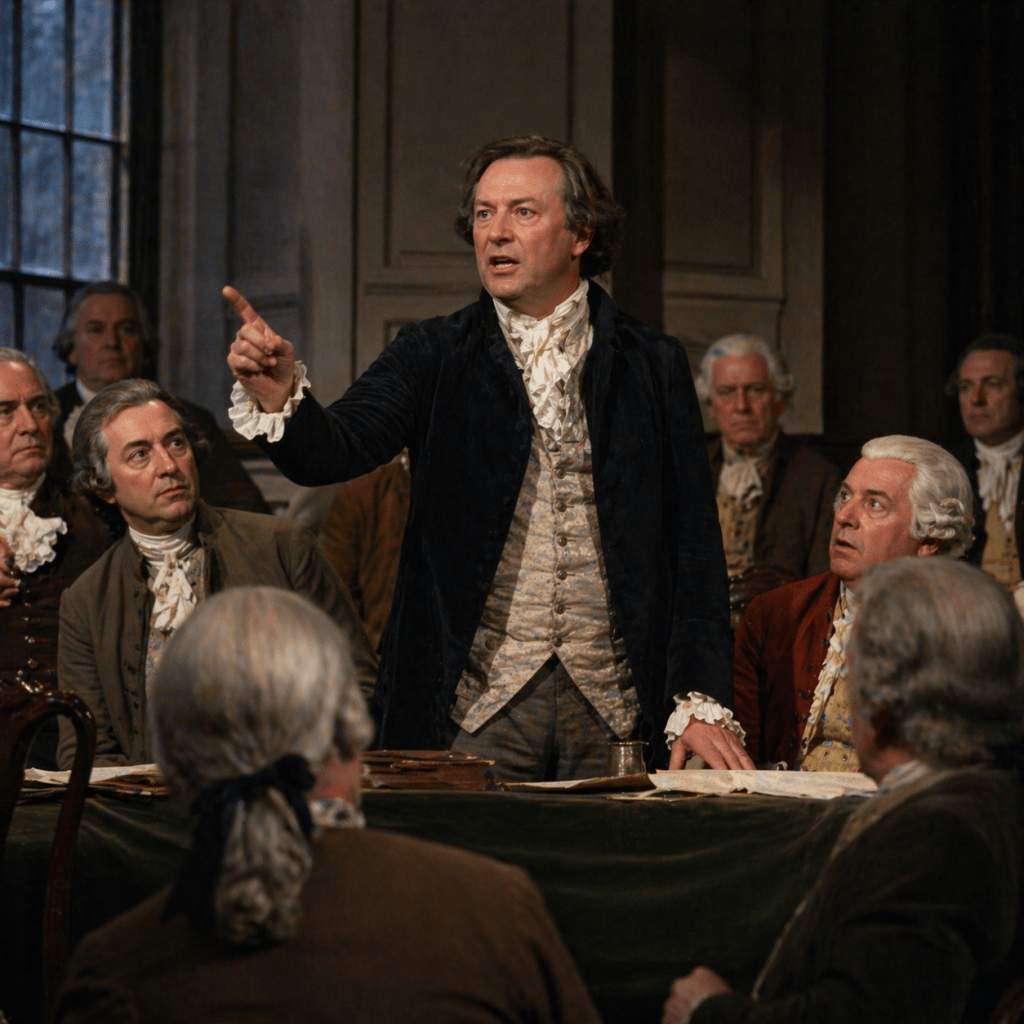
Henry did not begin with treason. He built toward it.
He spoke of history, which is always a dangerous place to begin if you are trying to avoid trouble. He invoked Julius Caesar, the great man brought down by those who believed they were saving a republic. He spoke of Charles the First, a king who lost not only his throne but his head. These were not casual references. They were signals, placed carefully into the speech like markers along a trail, leading his audience somewhere they were not entirely comfortable going.
The reaction in the room shifted as he spoke. At first there was curiosity, then discomfort, then something closer to alarm. When Henry suggested that George the Third might learn from the fate of those earlier rulers, the line had been approached. When he declared that if this be treason, then the most should be made of it, the line had been crossed.
One can imagine the silence that followed, not empty but heavy, the kind of silence where men glance at one another, calculating, wondering who will speak next and what it will cost them. Some were outraged. Some were impressed. Most were likely both at the same time. This was not how politics was conducted, not in polite society, not in a chamber that prided itself on order and restraint.
And yet, the words had been spoken.
What makes that moment matter is not simply the boldness of the statement. It is the reaction it produced. There were those who recoiled, who saw in Henry’s speech a dangerous escalation, a step too far. They understood, quite correctly, that treason was not a metaphor. It was a crime punishable by death. To flirt with it openly was to invite consequences that could not be easily undone.
There were others who felt something different, something closer to recognition. They had been thinking similar thoughts, perhaps less clearly, certainly less publicly. Henry had given those thoughts a shape, a voice, and once voiced, they were harder to dismiss. It is one thing to feel that something is wrong. It is another to hear someone say it aloud and realize that you are not alone.
The divide that formed in that room would not remain confined there. It spread outward, carried by conversation, by letters, by the slow and steady movement of ideas through a population that was already primed for them. Taverns became places not just of drink but of debate. Assemblies grew more contentious. The language of grievance began to shift toward the language of defiance.
What had been complaint was becoming argument.
What had been argument was becoming something closer to resistance.
It would be a mistake to think that this transformation happened overnight. Most colonists did not wake up the next morning ready to declare independence. Habits of loyalty do not vanish so easily. They linger, they argue with new ideas, they resist change even as they begin to bend. The importance of Henry’s words lies in the fact that they made that bending visible.
They also revealed something about power, something that empires tend to forget. Authority depends not only on force but on acceptance. As long as people believe the system is legitimate, they will work within it, even when it frustrates them. When that belief begins to crack, the system itself becomes unstable, even if nothing has yet changed on the surface.
Henry did not break the system. He exposed the crack.
From that point forward, it became harder to pretend that the relationship between Britain and the colonies was simply a matter of policy disagreements. The question of loyalty had been raised in a way that could not be easily dismissed. Was obedience to Parliament an obligation without limit, or did there come a point when resistance became justified? That question had always existed in theory. Now it existed in practice.
The shift from words to action would take time, and it would require more than a single speech. There would be laws passed, protests organized, confrontations that pushed both sides further than they intended to go. Yet it is worth remembering that before any of that happened, there was this moment, a man standing in a chamber, saying what others had not yet dared to say.
Revolutions, for all their drama, often begin in quieter ways. Not with a bang, but with a sentence that refuses to stay contained. Henry’s words did not end the argument. They ensured that it would continue, louder and more openly than before.
Once a people begin to speak in those terms, the path ahead becomes difficult to avoid.
The line between loyalty and liberty had been named, and once named, it could not be unseen.
What happened in that chamber did not stay in that chamber. Words like Henry’s do not behave themselves. They slip out through doors, ride along in letters, get repeated badly and remembered even better, and before long they belong to everyone. The colonies had been talking for years, complaining about taxes, muttering about Parliament, grumbling in that familiar tone that suggests frustration without consequence. Now the tone changed. Now there was a sentence that could not be softened, and once spoken, it began to travel.
Print culture did the rest of the work, quietly and relentlessly. Printers in Boston, Philadelphia, Williamsburg, and beyond took fragments of speeches, resolutions, and debates and turned them into broadsides and newspaper columns. Not everything was recorded accurately, and not everything needed to be. The power was not in perfect transcription but in repetition. A phrase like “If this be treason” did not require context to carry weight. It needed only to be seen, read aloud, argued over. In a world without telegraphs or wires, ink and paper did the job just fine.
Beyond the printed page, the message moved through older, more human networks. Taverns, those unofficial centers of colonial life, became clearinghouses for ideas. A man who could not read could still listen. A man who did not trust newspapers might trust the story told by a neighbor who had just come down from the capital. Assemblies echoed with debate, churches absorbed the language of resistance, and the long roads between towns carried more than goods. They carried opinion. The remarkable thing was not that the message spread. It was how quickly it did so, and how little the imperial system could do to contain it.
Ideas travel faster than authority, especially when authority is three thousand miles away.
Local leaders began to pick up the thread, some eagerly, others cautiously. Not every man in a position of influence was ready to follow Henry all the way to his conclusion, but many recognized that something had shifted. The question was no longer whether Parliament had overstepped, but how far that overreach might go. Men like Samuel Adams in Massachusetts, Richard Henry Lee in Virginia, and others in less celebrated towns began to interpret the moment in their own way, shaping it to fit local concerns while keeping its edge intact. They did not all agree, and they did not move in perfect unison, but they began, almost without realizing it, to move in the same direction.
Out of this movement came the first hints of coordination. Committees formed, initially to correspond, to share information, to keep track of what was being said and done elsewhere. It sounds modest, almost bureaucratic, but it mattered. Communication creates alignment, and alignment creates power. A grievance voiced in one colony might be dismissed. The same grievance echoed in several begins to sound like a pattern. Patterns are harder to ignore.
From London, the view looked very different. British officials saw not a thoughtful reassessment of political relationships, but a troubling rise in what they considered radicalism. Colonial speeches were read, when they were read at all, as evidence of instability rather than conviction. The language of treason was not interpreted as rhetorical flourish. It was taken at face value, and not without reason. To men responsible for maintaining an empire, the idea that colonial assemblies might openly challenge royal authority was alarming.
There was also a deeper misunderstanding at work. British leaders tended to see the colonies as extensions of the empire that required guidance, discipline, and, when necessary, correction. The idea that colonial resistance might be rooted in a sincere belief about rights and representation was difficult to accept. It was easier, and perhaps more comfortable, to interpret it as disorder, as a failure of respect, as something that could be managed through firmer enforcement.
That misreading would prove costly.
As the months passed, the language in the colonies continued to harden. What had once been framed as requests or petitions began to sound more like demands. The careful phrasing of earlier years gave way to sharper edges. Pamphlets questioned not only specific policies but the authority behind them. Public meetings grew more assertive. Even those who urged caution found themselves pulled along by the momentum of events.
Authority, once assumed, was now examined.
There is a moment in any political conflict when people stop asking whether something is allowed and start asking whether it is right. That moment had arrived. It did not bring immediate unity, nor did it eliminate disagreement. Loyalists remained, moderates argued for compromise, and many colonists still hoped for reconciliation. Yet the ground beneath those arguments had shifted. The conversation was no longer about isolated grievances. It was about the nature of the relationship itself.
Out of that shifting ground, something new began to form. It was not yet a nation, not even close, but it was more than a collection of separate colonies. There was a growing sense, faint at first and then stronger, that these scattered communities shared a common problem and might, in time, require a common response. The language of “we” began to appear where once there had been only “they” and “I.”
The seeds of unity are rarely planted with ceremony. They take root in shared frustration, in repeated conversations, in the quiet realization that one is not alone. Henry’s words had not created that unity, but they had given it a spark, a phrase that could be carried from place to place, reshaped and repeated until it belonged to everyone.
What began as a single voice had become a chorus, not yet in harmony, but no longer isolated. And once voices begin to gather, once they begin to recognize themselves in one another, the path from speech to movement becomes difficult to reverse.
There is a moment, quiet but unmistakable, when a word begins to change its meaning. “Treason” had always been clear enough in the law. It meant disloyalty to the Crown, a crime not merely serious but final, punishable by death and remembered in shame. It was the sort of word that kept men cautious, that reminded them where the boundaries lay. Yet in the years following Henry’s speech, something began to shift. The word did not lose its danger, but it gained a rival definition, one that lived not in statutes but in the minds of those who heard it and felt, perhaps for the first time, that loyalty itself might be more complicated than they had been taught.
What did it mean to be loyal? For generations, the answer had been straightforward. One owed allegiance to the king, to the system of laws and traditions that defined British identity. The colonies had not questioned that in any fundamental way. They had complained, certainly. They had resisted particular measures, argued over taxes, and ignored inconvenient regulations when it suited them. But beneath all of that lay an assumption that the Crown and the colonies were part of the same political family, bound together by history and mutual interest.
Now that assumption was under strain.
Henry’s words did not create the strain, but they exposed it. If speaking against Parliament could be called treason, and if such speech could be justified, even admired, then the definition of loyalty was no longer fixed. Was loyalty owed to the Crown above all else, even when the Crown seemed to act against colonial interests? Or was loyalty owed to something more abstract, a set of principles, a conception of rights that might, in certain circumstances, stand in opposition to royal authority?
This was not a theoretical debate. It carried real consequences, and everyone involved understood that. The legal definition of treason had not changed. A man who crossed that line risked everything, his property, his reputation, his life. The gallows were not an abstraction. They were a reality, visible and well understood. To speak openly against the Crown was to invite attention, and attention from imperial authorities was rarely a comfortable thing.
And yet, men continued to speak.
That is where the deeper transformation took place. The colonies began, slowly and unevenly, to see themselves differently. The language they used reflected this change. They still spoke of rights as Englishmen, but the emphasis began to shift. Those rights were no longer seen as gifts secured by loyalty to the Crown. They were seen as inherent, something that existed prior to and independent of imperial approval. If those rights were threatened, then resistance could be framed not as disloyalty, but as defense.
Language matters in moments like this. It shapes how people understand their actions. A protest can be called a disturbance or a stand. A refusal can be seen as defiance or as principle. Treason, once a label that ended debate, began to look more like a question. Who, exactly, was betraying whom?
The risk remained. It would be foolish to pretend otherwise. There were those who recoiled from this shift, who saw in it a dangerous path that could lead to chaos and ruin. They were not entirely wrong. Revolutions have a way of devouring certainty and replacing it with something far less predictable. Even among those who admired Henry’s courage, there was a recognition that bold words could carry unintended consequences. Courage and recklessness are often separated by a thin line, one that is easy to see in hindsight and difficult to judge in the moment.
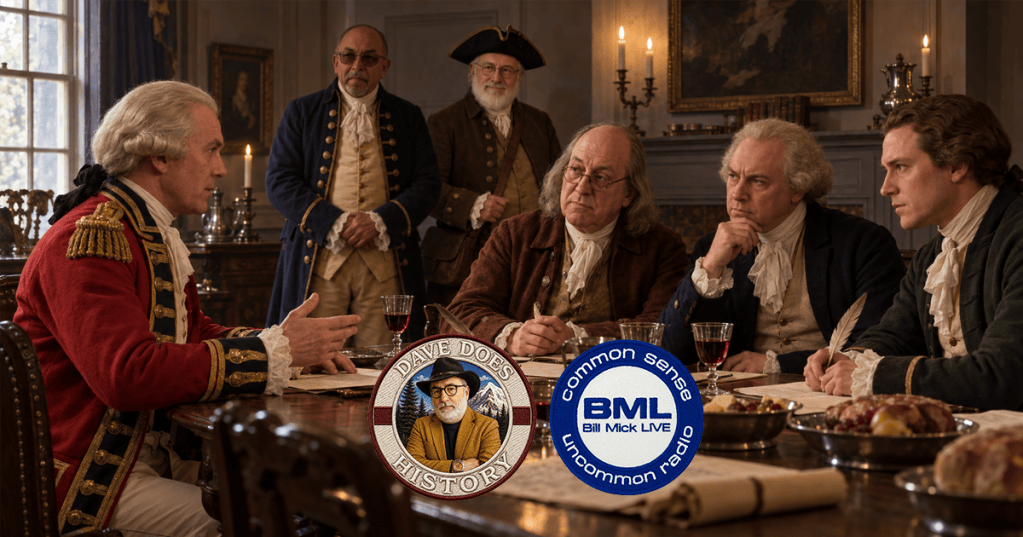
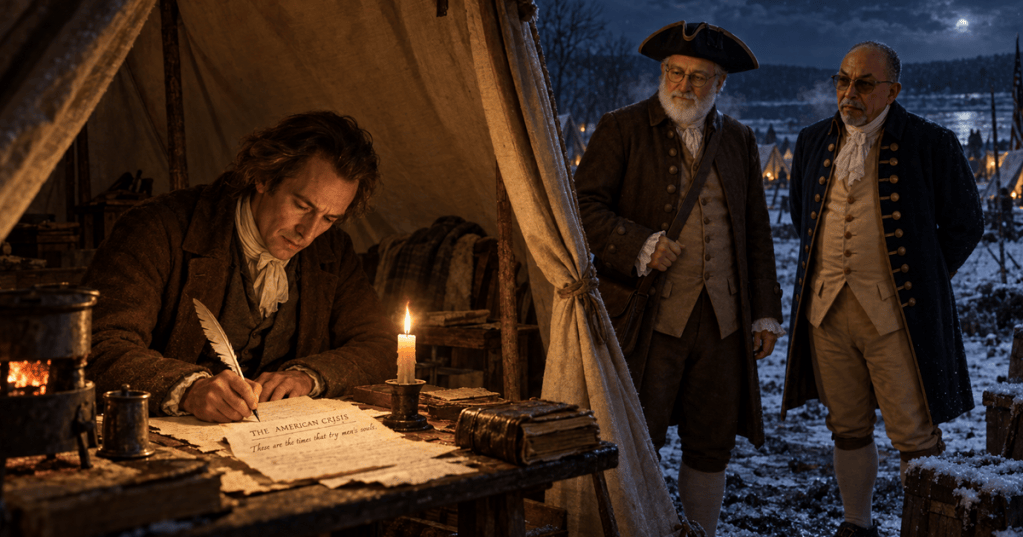
Somewhere in the background of all this stood men who were not yet at the center of events, but who were watching carefully. Among them was George Washington, whose earlier experiences in the French and Indian War had already taught him something about the gap between imperial theory and colonial reality. He was not, at this stage, a radical. He did not rush to embrace the language of treason. But he listened. He observed. He absorbed the lessons unfolding around him.
From Henry, and from others who followed, Washington and his contemporaries learned more than rhetoric. They learned about risk, about timing, about the power of words to shape action. They saw how a single statement could alter the terms of debate, how it could force others to respond, to take positions they might have preferred to avoid. These were not lessons that could be taught formally. They had to be witnessed, experienced, understood in context.
The foundations of later action were being laid, not in a single dramatic gesture, but in a series of moments that, taken together, reshaped how a people thought about itself. The colonies were still, in a formal sense, part of the British Empire. They still operated within its structures, still spoke its language, still appealed to its traditions. But beneath that continuity, something was changing. Identity was beginning to shift, moving from a comfortable assumption of Britishness toward something less defined and more independent.
Revolutions, when they come, often appear sudden. They are marked by dates, by events that can be pointed to and remembered. Yet those moments are the surface, not the source. The real work happens earlier, in thought, in conversation, in the gradual redefinition of what is acceptable and what is not. By the time a shot is fired, the argument has already been made.
Henry’s words did not start the Revolution, but they marked a turning point in the way colonists understood their situation. They made it possible to think in terms that had previously been unthinkable. They gave voice to a tension that had been building, quietly, beneath the surface of colonial life.
The Revolution did not begin with a shot.
It began when men decided that speaking what they believed to be true was worth the risk of being called traitors.
The line between loyalty and liberty had been crossed, and once crossed, it did not disappear behind them.
Originally published June 3, 2025
Republished April 23, 2026




Leave a Reply