
I’ll admit it. I am still steamed over Senator Tim Kaine’s comments this morning on Bill Mick Live. Hearing a sitting U.S. Senator say that our rights come from government and not from God or nature is the sort of thing that makes me want to pull the car over just to make sure I actually heard it right. Kaine said it plainly, and he meant it. To me, that kind of talk cuts right at the roots of the American idea.

People often ask me why I care so much about history. Isn’t it just names and dates? Isn’t the whole point to keep us from repeating past mistakes? That is the Santayana line, and yes, it gets tossed around like a bumper sticker. But that is not the real reason. The reason we teach history is to shape virtue. It is to pass down the values that we most want to endure in the next generation. If we fail at that, culture falters. And when culture falters, the Republic follows. That is not theory. That is the lesson of every society that has fallen before us.
The Romans knew this. Cicero, in the first century before the common era, wrote his De Re Publica in part because he saw the Republic decaying around him. In that dialogue he puts a speech in the mouth of Scipio Africanus, Rome’s great general, addressed to his grandson. This is the famous Somnium Scipionis, the Dream of Scipio. Scipio tells the boy that true greatness comes not from conquest or applause but from service to the Republic with justice. He lifts him into the heavens and shows him how tiny the earth is and how fleeting the praise of men is. The message is simple. Seek virtue. Serve the Republic. Then you will have immortality.
That mattered to the Scipios. The elder Scipio Africanus had beaten Hannibal. His son and grandson carried on the family legacy. Cicero was reminding Romans of the duty that came with that legacy, warning them not to mistake power for virtue. He wrote it as his own Republic was sliding into tyranny.
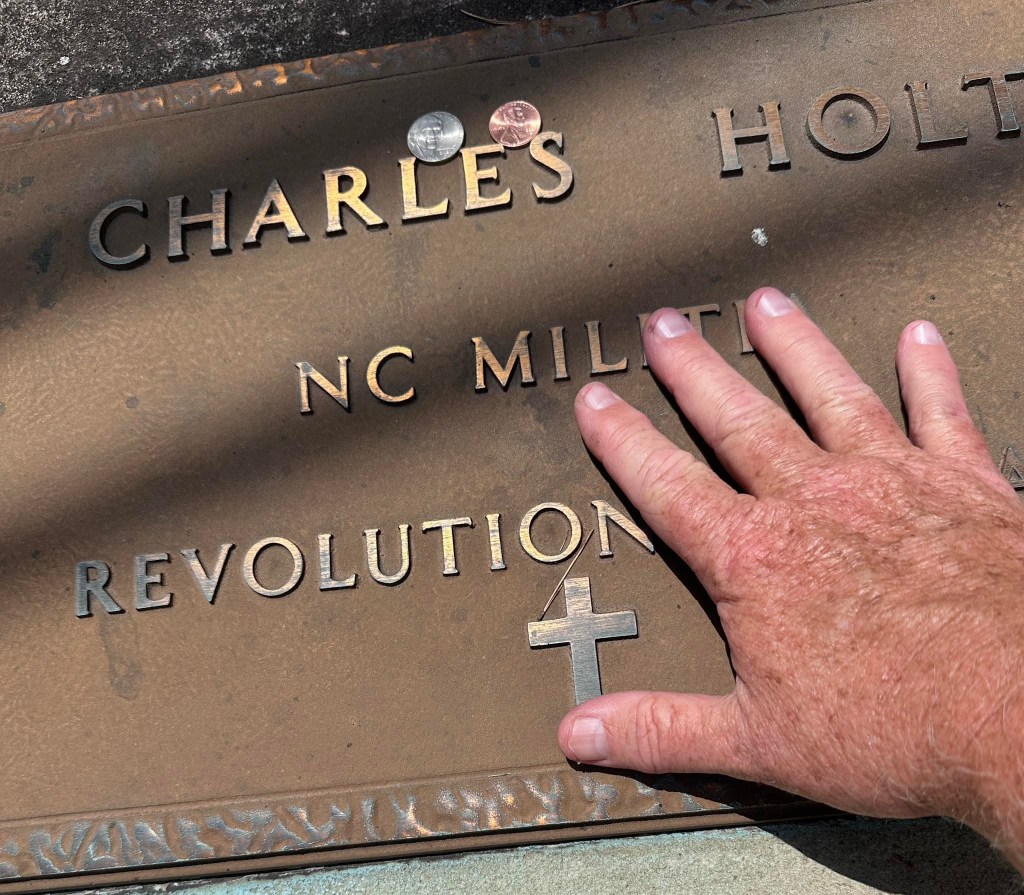
That brings me back to where I started. After hearing Senator Kaine I found myself imagining my own dream. Not with Scipio, but with my great-great-great-great-great-great-great-great-grandfather, Charles Holt, a soldier in the American Revolution.
In my dream, grandpa steps out of the mist in his Continental uniform and tells me what liberty cost, what it means to keep it, and how easily it can be lost. He shows me Valley Forge, he shows me Yorktown, and he reminds me that liberty was purchased dearly and must be guarded daily.
That is why we teach history. Not so our kids can rattle off trivia, but so they know the values we want them to live by. Cicero knew it. Jefferson knew it. My grandfather Holt knew it. And if we forget it, then Senator Kaine’s vision of rights granted by government will become reality. When that happens they will not be rights anymore. They will be permissions, revocable at will.
History teaches us virtue, if we let it. That is the lesson worth remembering.
Somnium Holtianum
Davidus Radius Sagittarius
Last night, I had a dream.
I was standing in a quiet field, under a sky alive with stars. The air was still, the way it gets just before dawn.
From the mist a man appeared. He wore the weathered coat of a Continental soldier, his musket hanging at his side. His step was light, but his eyes were steady.
He looked at me and asked, “Do you know me?”
And the name came to me: Marcus Carolus Silva. My ancient forefather. Charles Holt, A soldier of the Revolution.
He nodded. “Your great-grandfather many times removed. You carry the fruit of what we sowed, though you were not there when liberty was still but a frail shoot, threatened by storm and axe.”
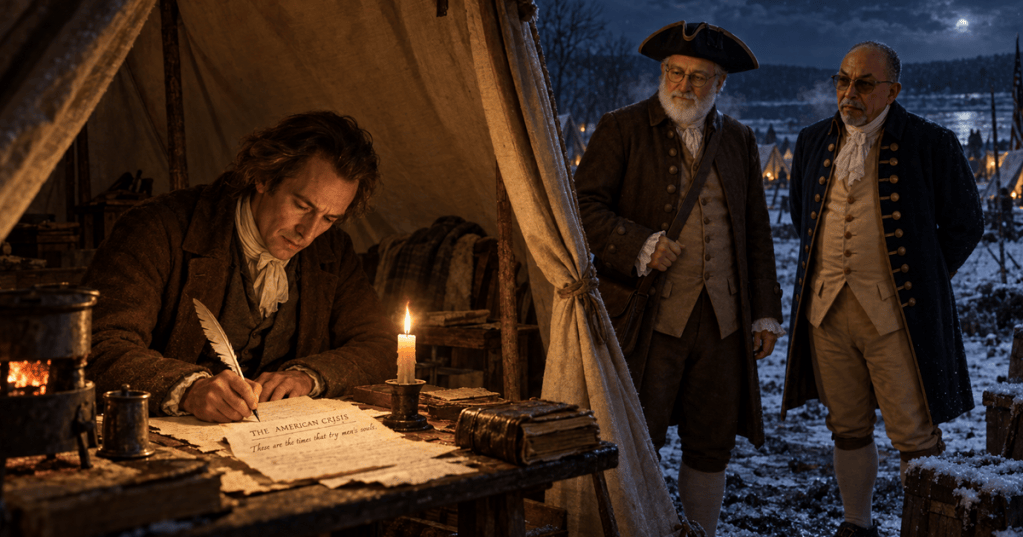
He raised his arm, and suddenly the heavens opened. I saw Valley Forge: men with bleeding feet in the snow, their fires weak but their spirit unbroken. I saw farmers laying down plows and lifting muskets. I saw the Declaration: words of treason to a king, but truth to the hearts of men.
And Marcus Carolus Silva said: “This was the price of liberty. We were not angels, nor were we saints. We were men. Cold, hungry, afraid. But we held to one thing: the conviction that rights come not from kings, but from God. That conviction was our sword.”
The scene changed. I saw Yorktown. Cannons thundering. Smoke rising. Cornwallis humbled. And then silence. The silence of surrender.
Silva’s voice deepened: “This is the victory the world remembers. But remember this better: the years of defeat and despair, when all seemed lost, yet still we endured. Virtue is not proven in triumph, but in trial. The Republic is built not upon glory, but upon sacrifice.”
He fixed me with his gaze.
“Do not seek immortality in applause. It is fleeting. Our reward was liberty itself: to live free, to worship free, to raise our children free. But know this: liberty is no inheritance, secured once and for all. Each generation must take up the musket of memory and the armor of vigilance. Neglect it, and tyranny will return, dressed in new clothes, new phrasing, but with the same old heart.”
He lifted his hand to the stars. “Even Rome and Britain were sparks that flared and died. So too will your Republic, if you forget that virtue is the only fortress that can stand against time. Remember the soldier in the snow. Remember the words on that parchment. Remember that liberty was bought dearly and must be guarded daily.”
And then, as the light faded, he said, “Go now, my son of sons. Tell our story. Keep the Republic. And when your children’s children ask what it means to be free, tell them liberty was purchased with sacrifice. That it is preserved only by sacrifice.”
I awoke with the weight of centuries upon me. And yet, I also woke with a strange lightness. For I knew that in remembering Marcus Carolus Silva, I am part of the same eternal duty.
The same chain that bound him to Washington, Washington to Providence, and Providence to the destiny of a free people.


Leave a comment