
On November 11, 1918, the world stood on the brink of peace, but for thousands of American soldiers on the front lines in France, the war’s final moments were anything but peaceful. In this episode, we recount the last morning of World War I, when American “doughboys” were ordered to launch one final push just hours before the guns would fall silent.
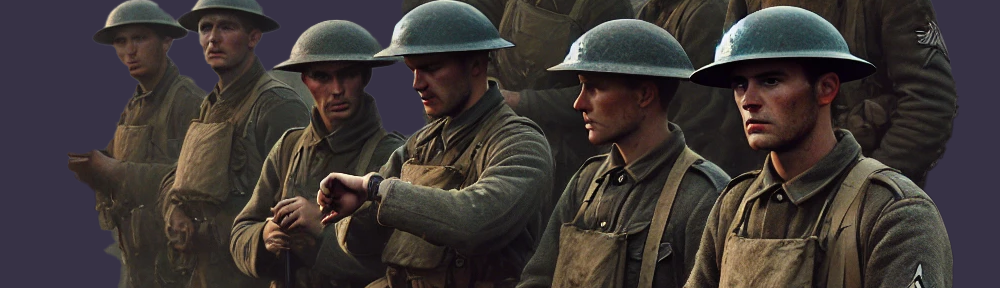
On the morning of November 11, 1918, the world hung on the edge of peace. For over four years, World War I had raged across Europe, leaving fields and forests drenched in blood. But on that chilly autumn day, representatives from Germany and the Allied powers finally signed an armistice agreement in a forested railcar in France, scheduled to take effect at the eleventh hour. With this armistice, the guns were to fall silent, and the soldiers could at last go home.
For the American troops on the front lines, though, that morning felt no different from any other. They were part of the American Expeditionary Forces (AEF) under General John J. Pershing, who believed that the U.S. presence in Europe had to be decisive, undeniable, and respected. Pershing held deep skepticism about the armistice; to him, it seemed a poor substitute for unconditional surrender. He believed in the power of a “military victory” to leave no doubts about who had won this war. So, even as the armistice was being signed, American units received orders to advance, to continue their offensives, to press forward until the final second. Some American commanders, whether driven by ambition or simply obeying orders, sent their men into the fight, knowing full well that peace was just hours away.
One such order came to the 313th Infantry Regiment of the 79th Division. They were tasked with taking a small, unassuming village called Ville-devant-Chaumont along the Meuse River. Though quiet and tucked away, the village lay across enemy lines, so the Americans were told to capture it. Just a few hours before the armistice took effect, these American soldiers rushed toward German positions, facing the relentless hail of machine-gun fire and artillery that had barely slowed since the armistice announcement. For these soldiers, there was no celebration or sigh of relief—only the familiar sounds of rifles and shells exploding. With every muddy step, they pushed forward, doing what they were trained to do, following orders and fighting as if peace was an illusion.
Other American units, including the 89th Division, found themselves in similar situations. Stationed along the Meuse, they were ordered to cross the river and advance. Picture these young men—most of them farm boys and factory workers from America—wading through cold, murky waters, hearing rumors that the war would soon end but knowing that they could be cut down at any moment. The German soldiers they faced had also heard the news, but they, too, were still fighting, still protecting their positions. And so, men on both sides found themselves in the tragic position of killing and dying in a war that was technically already over.
The human cost of that final day was staggering. On November 11 alone, over 10,000 soldiers on both sides were wounded or killed—more casualties than on D-Day in 1944. American forces alone suffered more than 3,000 casualties on this final day. Each of those men was someone’s son, brother, or husband, lost in a war that was already set to end. Among them was Private Henry Gunther, an American soldier from Baltimore who is often remembered as the last man killed in action in World War I. Just minutes before 11:00 a.m., Gunther charged a German machine-gun position. The German soldiers, aware of the coming peace, tried to wave him off, but he pressed on and was killed. He fell in the final minute of the war, his life taken by a bullet that should never have been fired.
The motivations behind these final actions were murky, wrapped in orders from officers like Pershing who saw the armistice as a fragile agreement. Pershing and others believed that, without American troops decisively advancing, the Germans might not truly respect America’s strength or sacrifice. To them, these final pushes were not just battles but symbols of honor, proof that the United States had arrived as a world power. But history has since raised difficult questions about these choices. Was it truly worth sending men to die in those final hours? Couldn’t those soldiers, most of whom had been drafted and trained solely for this war, have been spared in the name of a peace that was so close?
As the years passed, many came to view these last offensives as reckless, a tragic loss of life for territory that would soon be left behind. Survivors of the fighting carried with them the memories of that morning, haunted by friends and comrades lost just as peace was finally within reach.
That November morning left a legacy that stretched far beyond the trenches. It forced American military leaders to confront the true cost of war and to reflect on the value of human life. The blood shed on November 11, 1918, taught the military a lesson in restraint, one that resonated in future conflicts and influenced the approach to ceasefires and armistices. It was a stark reminder that in the fog of war, honor and victory can sometimes come at a cost that is far too high.
Today, we remember that cost every November 11, now known as Veterans Day. It is a day not of glory, but of solemn reflection and respect for the sacrifice of those who served. As we honor those who stood on the front lines, we are reminded that sometimes, in the name of duty, young men are asked to give everything—even on the edge of peace. For them, and for those who survived, it’s a reminder that peace, even when it arrives too late, is always worth striving for.




 DAVE DOES HISTORY
Leave a comment