
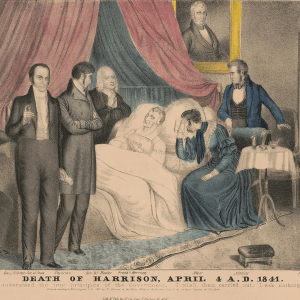
 William Henry Harrison’s ascent to the presidency was marked by a historic election in 1840, where he emerged victorious as the oldest president to be elected at the time. His campaign was the first to employ modern electoral tactics, including slogans, songs, and mass rallies, epitomized by the memorable “Tippecanoe and Tyler Too.” Harrison, a military hero famed for his victories in the Indian and British wars, particularly the Battle of Tippecanoe, capitalized on his image as a man of the people, despite his aristocratic origins.
Upon winning the office, Harrison was brimming with plans and expectations. He intended to implement policies that would reflect his Whig beliefs, including support for a national banking system, higher tariffs to protect American industries, and federal funding for internal improvements. His presidency promised a departure from the perceived autocracy of his predecessor, Martin Van Buren, and an era of expansive economic development.
Harrison’s inauguration on March 4, 1841, was a landmark event, not just for its celebratory grandeur but also for the unfortunate precedent it set. In an effort to demonstrate his vigor despite his age, Harrison delivered the longest inaugural speech in American history, lasting nearly two hours, without wearing a hat or overcoat despite the cold, wet weather. The speech itself, dense with policy declarations and classical allusions, affirmed his commitment to the Whig agenda and a restrained executive power.
The early days of Harrison’s presidency were overshadowed by internal squabbles within the Whig party, particularly over the issue of patronage—the appointment of public offices. Harrison found himself at odds with Henry Clay, a leading Whig statesman, who expected to wield significant influence over the administration. Harrison, resenting the presumption of being a puppet to Clay’s will, pushed back against the pressure to appoint office holders solely on the basis of party loyalty.
On March 24, 1841, a seemingly innocuous decision sealed Harrison’s fate. After taking a long walk in the rain, he neglected to change out of his wet clothes, leading to a cold that developed into pneumonia. In the 19th century, without antibiotics or advanced medical treatments, pneumonia was often a death sentence, particularly for someone of Harrison’s age.
Harrison’s illness progressed quickly, and despite the best efforts of his doctors, his condition deteriorated. The public was largely kept in the dark about the severity of his illness until it was too late. On April 4, 1841, just a month after taking office, William Henry Harrison died, becoming the first U.S. president to die in office and serving the shortest tenure in presidential history.
Harrison’s death left a legacy of what could have been. His plans for reform and policy initiatives went unrealized, and his death underscored the fragility of human life and the unpredictability of leadership. Historians often ponder the directions American policy might have taken had Harrison lived to implement his agenda.
The sudden death of President Harrison posed an unprecedented constitutional question: what happens when a president dies in office? Vice President John Tyler’s decision to take the oath of office and assume the presidency set a vital precedent. It affirmed the Vice President’s role as not just a successor but as a replacement president, with all the powers and duties thereof. This act, sometimes referred to as “Tyler’s Precedent,” became a foundational principle for the peaceful transition of power, later codified in the Constitution through the 25th Amendment.
In the wake of tragedy, the nation found clarity in succession, and Tyler’s ascension to the presidency under such circumstances laid the groundwork for future transitions of power, ensuring the stability and continuity of the United States government.


Leave a comment