
On July 7, 1834, New York City was plunged into chaos as anti-abolitionist rioters took to the streets, setting off nearly a week of violence and destruction. This turbulent period, marked by fierce opposition to the growing abolitionist movement, highlighted deep-seated racial tensions and economic anxieties in the city. The riots not only underscored the volatile nature of the abolitionist struggle but also left a lasting impact on New York’s social and political landscape.
The abolitionist movement, advocating for the immediate end of slavery, was gaining momentum in the United States during the early 19th century. Key figures like William Lloyd Garrison and organizations such as the American Anti-Slavery Society were vocal in their demands for emancipation. However, their efforts were met with fierce resistance from many quarters, particularly from those with economic ties to the Southern slave economy and individuals harboring deep-seated racist beliefs.
New York City, a bustling economic hub, had significant economic dependencies on the South. Many New Yorkers feared that the abolition of slavery would disrupt the cotton trade and other economic activities tied to Southern plantations. The city’s political landscape was also influenced by pro-slavery sentiments, with many politicians and influential citizens opposing the abolitionist cause.
The immediate trigger for the riots was a series of public speeches and events organized by abolitionists. The tension reached a boiling point when Lewis Tappan, a prominent abolitionist, invited black and white abolitionists to his home, provoking the ire of anti-abolitionist factions. The media’s sensationalist coverage further inflamed public sentiment, leading to an explosive confrontation.
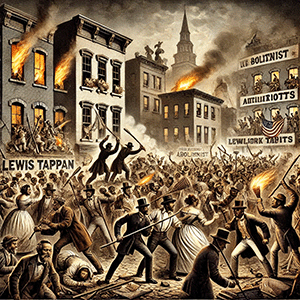
The violence began on the evening of July 7, 1834, with mobs targeting abolitionist leaders and their properties. The rioters attacked the Chatham Street Chapel, where abolitionist meetings were held, and moved on to the home of Lewis Tappan, destroying his property. Over the next several days, the riots spread across the city, with mobs vandalizing homes, churches, and businesses associated with abolitionist sympathizers.
The rioters came from diverse socio-economic backgrounds, including laborers, artisans, and immigrants who felt threatened by the potential competition from freed black workers. Their motivations were fueled by economic insecurities, racial prejudices, and a sense of defending their social status.
While the riots appeared spontaneous, they were partly orchestrated by influential anti-abolitionist leaders and groups who capitalized on public fear and resentment. These leaders incited the crowds with inflammatory rhetoric, urging them to take action against the abolitionists.
The riots resulted in extensive property damage, including the destruction of homes, churches, and businesses. Several abolitionist leaders were physically attacked, and many black residents were terrorized, with some fleeing the city to escape the violence. The chaos disrupted daily life and instilled a sense of fear and insecurity among the city’s residents.
The immediate economic impact included the loss of property and business disruptions. In the long term, the riots revealed the city’s deep divisions, affecting its social fabric and creating an atmosphere of distrust and hostility.
The city’s law enforcement struggled to contain the riots initially, overwhelmed by the scale and intensity of the violence. Eventually, militia units were called in to restore order, but the response highlighted the authorities’ lack of preparedness and the challenges of managing civil unrest.
Reactions to the riots varied. Many citizens were horrified by the violence and condemned the rioters’ actions. Abolitionist leaders used the events to galvanize support for their cause, emphasizing the urgent need for societal change. However, pro-slavery advocates continued to resist, arguing that the riots demonstrated the dangers of the abolitionist movement.
The riots significantly impacted public opinion. While some were swayed by the abolitionists’ plight and became more sympathetic to their cause, others were hardened in their opposition, fearing further social upheaval. The events highlighted the deep-rooted racial and economic divisions within the city.
In the immediate aftermath, there were few legislative changes, but the riots set the stage for future political battles over slavery and civil rights. The violence underscored the need for stronger protections for free blacks and abolitionist activities, influencing subsequent policy debates and legal reforms.
Eyewitness accounts from the period paint a vivid picture of the chaos. Residents described scenes of looting, arson, and brutal attacks, with the city’s streets turned into battlegrounds. These personal stories humanize the historical narrative, offering a glimpse into the fear and uncertainty experienced by those caught in the riots.
Abolitionists like William Lloyd Garrison and Arthur Tappan documented their experiences and reflections, using the riots as a rallying cry to intensify their efforts. Their writings provide valuable insights into the abolitionist movement’s resilience and determination in the face of violent opposition.
The anti-abolitionist riots of 1834 were a pivotal moment in New York City’s history, revealing the city’s deep-seated racial and economic tensions. The violence highlighted the intense opposition faced by the abolitionist movement and underscored the challenges of advocating for social change.
The riots serve as a stark reminder of the volatility of social and political conflicts in the antebellum period. They illustrate the lengths to which opponents of abolition were willing to go to maintain the status quo and resist the push for equality and justice.
The legacy of the 1834 riots is a complex one, marked by both progress and ongoing struggles. While the abolitionist movement ultimately succeeded in ending slavery, the riots foreshadowed the continued resistance to racial equality that would persist for generations. The events of that week in July 1834 offer valuable lessons for contemporary social movements, emphasizing the importance of resilience, solidarity, and the pursuit of justice in the face of adversity.





Leave a comment