
The First World War, a global conflict lasting from 1914 to 1918, was marked by numerous naval engagements and maritime tragedies. One of the lesser-known yet highly significant incidents of the war was the sinking of the RMS Leinster on October 10, 1918.
The RMS Leinster was a Royal Mail Ship operated by the City of Dublin Steam Packet Company. Launched in 1897, she had spent most of her career ferrying passengers, mail, and cargo between Kingstown (now Dún Laoghaire) in Ireland and Holyhead in Wales. Throughout her two decades of service, the Leinster became a familiar and trusted vessel for many Irish and British citizens alike.
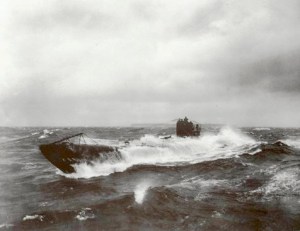
Public Domain
The UB-123 was a Type UB III submarine of the Imperial German Navy. Commissioned in March 1918, she was a part of Germany’s renewed effort to disrupt Allied shipping routes, particularly those surrounding the British Isles. Commanded by Kapitänleutnant Robert Ramm, the UB-123 had already proven herself by sinking several allied vessels prior to the fateful encounter with the RMS Leinster.
On the morning of October 10, 1918, the RMS Leinster embarked on her usual route, carrying an estimated 771 passengers, which included both civilians and military personnel. As she was about 16 miles out from Kingstown, the UB-123 fired a series of torpedoes. One of these struck the Leinster, causing a devastating explosion. The vessel began to sink rapidly, taking many of its passengers and crew with it.
The tragic sinking sparked a massive rescue effort from vessels nearby. Despite valiant attempts, many onboard the Leinster lost their lives due to the explosion, drowning, or exposure to the cold waters of the Irish Sea. News of the tragedy quickly spread, generating an outpouring of grief and anger in both Ireland and Britain.
The exact number of casualties varies slightly depending on the sources, but it’s estimated that over 500 people lost their lives in the sinking of the RMS Leinster, making it the greatest loss of life in the Irish Sea. The dead encompassed both civilians and military personnel from multiple nationalities.
The sinking of the RMS Leinster stands as one of the last maritime tragedies of World War I. As the war was nearing its end, the incident became symbolic of the senseless loss of life suffered during the conflict. In the years following the war, the RMS Leinster was commemorated in various ways, including plaques, memorials, and ceremonies, serving as a reminder of the human cost of warfare.
The UB-123’s success in sinking the RMS Leinster was short-lived. Just a few weeks after the attack, in late October 1918, the UB-123 struck a mine in the North Sea near the German coast and was lost with all hands on board. The exact location of her wreck remains unknown.
The sinking of the RMS Leinster is a testament to the horrors of war, the risks of sea travel during conflict, and the high price paid by civilians in wartime. While overshadowed by larger events of World War I, the tragedy continues to resonate as a poignant reminder of the human cost of global conflict.




 DAVE DOES HISTORY
Leave a comment