
The Compromise of 1850 consisted of five separate bills passed by the U.S. Congress. These bills aimed to address territorial and slavery issues stemming from the conclusion of the Mexican-American War (1846-1848). The main components included:
1. California Admission: California was admitted to the Union as a free state.
2. Texas Boundary Act: Settled the border dispute between Texas and New Mexico. Texas ceded land to the federal government in return for $10 million to pay off its debt.
3. New Mexico and Utah Acts: The territories of New Mexico and Utah were organized with the option of deciding for themselves, through popular sovereignty, whether to allow slavery.
4. Fugitive Slave Act: This controversial act mandated that states apprehend and return runaway slaves to their masters, even in states where slavery was illegal.
5. Slave Trade Abolition: The slave trade (but not slavery itself) was abolished in the District of Columbia.
The annexation of Texas, the results of the Mexican-American War, and the gold rush in California highlighted the pressing issues around the expansion of slavery in the growing U.S. territories. As the U.S. acquired vast new territories, the question arose: Would these territories become free or slave states? This debate intensified sectional tensions as Northern states, in general, sought to limit the spread of slavery, while Southern states wanted to expand it.
The main figures in the Compromise of 1850 debates were known as the “Great Triumvirate:
1. Henry Clay of Kentucky: Known as the “Great Compromiser,” Clay introduced an early version of the compromise to the Senate.
2. John C. Calhoun of South Carolina: A staunch defender of the South and slavery, he was against the compromise but couldn’t participate actively due to his failing health.
3. Daniel Webster of Massachusetts: Delivered his famous “Seventh of March” speech in favor of the compromise to prevent secession and potential war.
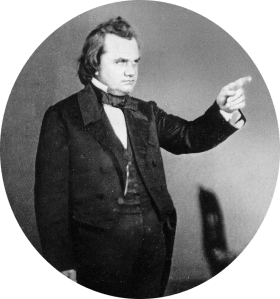
Public Domain
Additionally, younger senators like Stephen A. Douglas of Illinois played a significant role in breaking down Clay’s single, omnibus bill into individual components, which made passage easier.
Short-term Effects of the Compromise
1. Tension Reduction: Initially, the compromise alleviated some of the sectional tensions.
2. Enforcement of the Fugitive Slave Act: Its implementation caused significant uproar in the North, as free blacks and escaped slaves were sometimes kidnapped without due process, leading to increased support for abolitionist movements.
3. California’s Statehood: As a free state, it shifted the balance in the Senate away from the slave states.
California was admitted to the Union as a free state primarily because of the Gold Rush of 1848. The rapid influx of settlers into California due to the Gold Rush accelerated the need for an organized territorial government and eventually statehood. As settlers drafted the California Constitution in 1849, they chose to prohibit slavery. When California applied for statehood with this anti-slavery constitution, it was admitted as a free state through the Compromise of 1850, which aimed to balance the interests of free and slave states.
Long-term Effects of the Compromise
1. Increased Sectionalism: The relief from tensions was short-lived, and by the mid-1850s, debates over slavery became more intense, paving the way to the Civil War.
2. Popular Sovereignty: The principle was later used in the Kansas-Nebraska Act of 1854, leading to violent clashes in “Bleeding Kansas” as pro- and anti-slavery factions fought for control.
Popular sovereignty, as advocated by Senator Stephen A. Douglas, referred to the idea that the residents of a territory should have the right to decide, through the voting process, whether to allow slavery within their territory’s borders. Douglas believed this approach would allow for self-determination and reduce the tensions between the North and South over the issue of slavery’s expansion into the newly acquired territories. However, in practice, it led to significant conflict, especially in places like Kansas, where pro- and anti-slavery factions clashed violently.
3. Strengthened Abolitionist Sentiments: The Fugitive Slave Act galvanized Northern opposition to slavery, leading many previously indifferent individuals to join the abolitionist cause.
The Compromise of 1850 is often viewed as a temporary truce in the ongoing conflict over slavery. While it may have postponed the Civil War for a decade, its provisions, especially the Fugitive Slave Act, deepened Northern resentment. The compromise highlighted the challenges of balancing sectional interests in a rapidly expanding nation and underscored the fragile nature of the Union in the face of the moral and political challenges posed by slavery.




 DAVE DOES HISTORY
Leave a comment