
American independence was declared in the summer of 1776. Whether the new nation could survive long enough to make that declaration mean anything was another matter entirely.



By the autumn of that year, George Washington’s Continental Army had suffered a succession of defeats around New York. The British had the larger army, the Royal Navy controlled the surrounding waters, and General William Howe repeatedly maneuvered to trap Washington and destroy his army.
At several critical moments, one largely forgotten Massachusetts officer helped make sure that didn’t happen.
His name was John Glover.
Glover commanded the famous Marblehead Regiment, a remarkable collection of sailors, fishermen, ship captains, Black soldiers, Native Americans, and other Massachusetts men whose experience on the water made them unlike almost any other regiment in Washington’s army.
When Washington found himself trapped after the disastrous Battle of Long Island, Glover’s men helped ferry thousands of Continental soldiers across the East River under cover of darkness and fog. Washington’s army escaped.
Seven weeks later, Glover was called upon again.
At Pell’s Point, roughly 750 Americans found themselves facing thousands of advancing British and Hessian troops. Glover couldn’t defeat them. Instead, he used the stone walls of the Westchester countryside to create a defense in depth, forcing the British to deploy, attack, reorganize, and advance repeatedly.
He was buying Washington something more valuable than territory.
He was buying time.
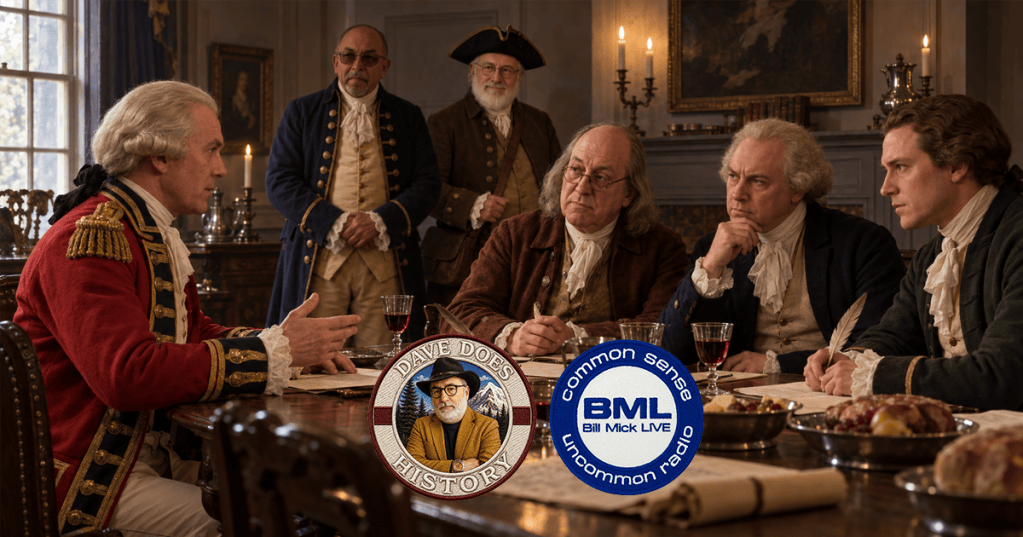
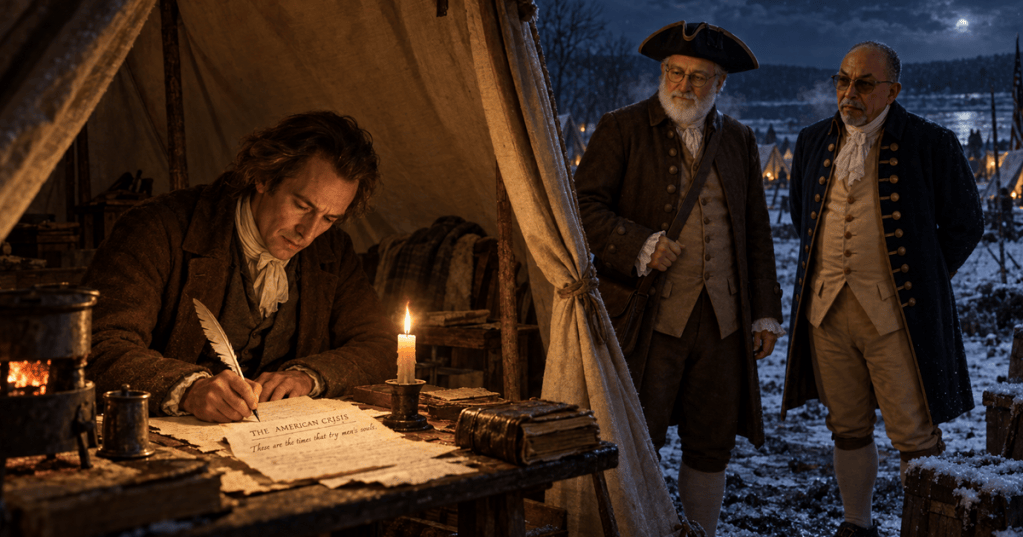
In this episode of Dave Does History on Bill Mick Live, we follow John Glover from the evacuation of Brooklyn to the fighting at Pell’s Point and the road toward White Plains. We also connect his story with Benedict Arnold’s stand at Valcour Island and examine one of the great strategic lessons of 1776.
Washington didn’t have to defeat the British Army.
First, he had to make sure the British didn’t destroy his.




Leave a comment