
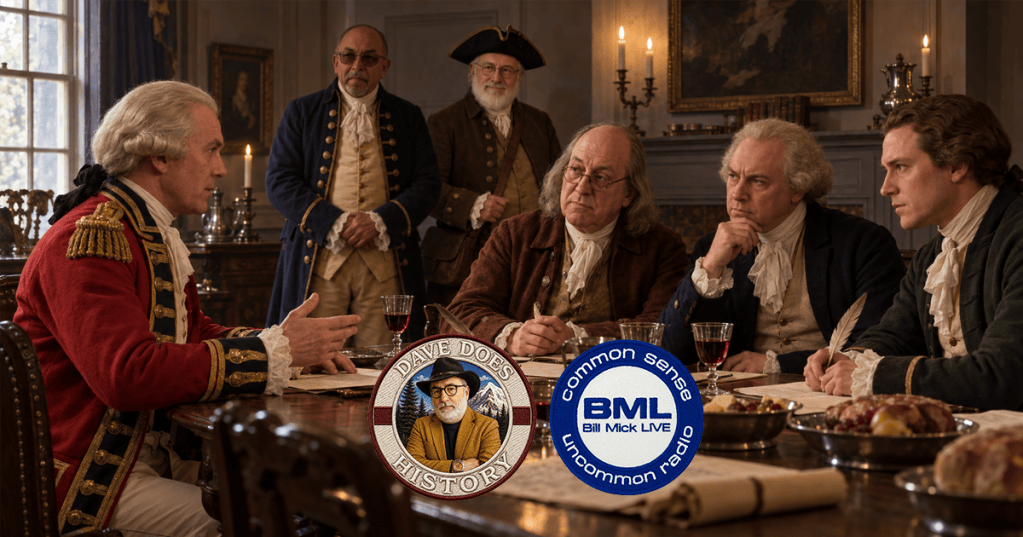
There are moments when diplomacy does not prevent a war. It merely reveals what the war is actually about. On September 11, 1776, three representatives of the Continental Congress crossed under a flag of truce to Staten Island. Benjamin Franklin, John Adams, and Edward Rutledge came to hear what Admiral Lord Richard Howe could offer a people who had declared themselves independent only two months earlier.
The setting suggested civility: a fine meal, carefully arranged surroundings, and polite conversation among gentlemen. Beneath it lay an impossible divide. Howe could offer pardons, but only after submission. He could speak with the Americans as private gentlemen and British subjects, but could not recognize their Congress or their independence. Adams answered with a line that captured the entire dispute: Howe could regard him in any character he pleased, except that of a British subject.
The Staten Island Peace Conference is often treated as a diplomatic footnote because it produced no agreement. Its failure, however, gave the Revolution a new clarity. The Americans learned that Britain’s peace commissioners possessed no authority to consider their grievances or negotiate with them as political equals. The choice was no longer between war and a meaningful settlement. It was between submission and the dangerous, uncertain pursuit of sovereignty.
In this episode of Dave Does History, we return to the uneasy days after the American defeat on Long Island, when Washington’s army was retreating and independence remained far more declaration than reality. Major General John Sullivan carries Howe’s proposal to Philadelphia, Congress debates whether the invitation is an opening or a trap, and three very different Americans make the journey to Staten Island. Their meeting does not stop the fighting. It establishes why the fighting must continue. It also clarifies what Americans now understood victory would demand from them.



 DAVE DOES HISTORY
Leave a comment