
In September 1776, New York newspapers carried a mocking letter from a supposed eyewitness who claimed that George Washington and his “dirty pack of New England long faces” were losing the war. The author did not exist. The letter was British propaganda, part of an organized effort to ridicule the Continental Army, undermine public confidence, and convince Americans that resistance had become hopeless.
The uncomfortable part was that the propaganda did not need to invent the defeats.
Washington’s army had been driven from Long Island and New York City. Fort Washington would soon fall, taking nearly 3,000 American soldiers with it. Fort Lee would be abandoned so hastily that cooking pots and provisions remained beside the fires. Pursued by Cornwallis, the shrinking Continental Army fled across New Jersey until the Delaware River provided one last barrier between it and destruction.
By December, independence no longer resembled the glorious promise proclaimed in Philadelphia five months earlier. It meant cold, hunger, disease, expiring enlistments, and the growing possibility that the entire enterprise might collapse. Congress fled Philadelphia. Loyalists became bolder. Neutrality suddenly appeared prudent. Washington had preserved his army, but he was rapidly running out of army to preserve.
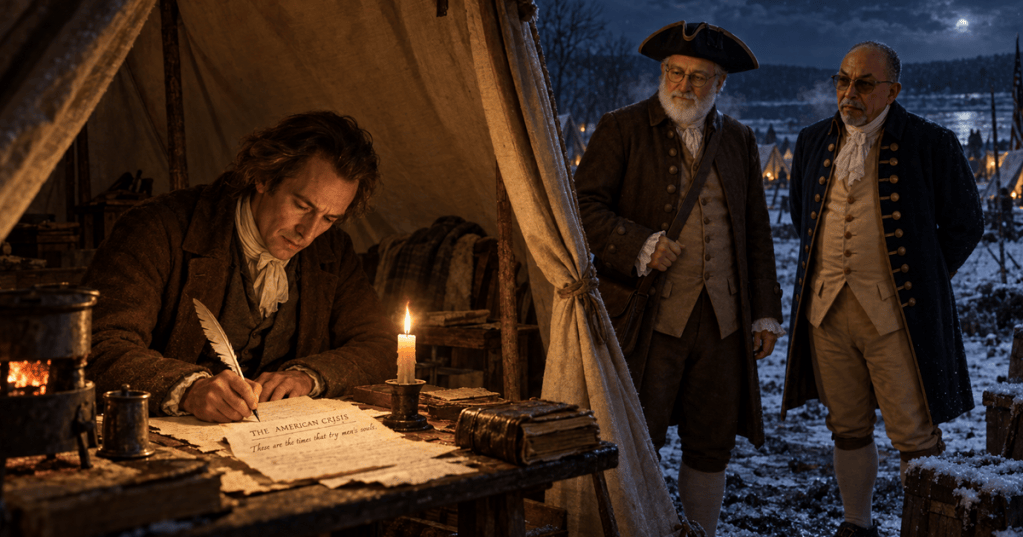
Then Thomas Paine, who had marched among these exhausted soldiers and witnessed the retreat himself, picked up his pen.
“These are the times that try men’s souls,” he wrote. His words were aimed directly at the summer soldier and sunshine patriot who embraced liberty when it was exhilarating but abandoned it when sacrifice became real.
In this episode of Dave Does History, we enter the darkest weeks of the Revolution, when survival required Washington to retreat and victory seemed almost unimaginable. Yet somewhere between Fort Washington and the frozen Delaware, the meaning of the struggle changed. If the Revolution was going to survive, Washington would have to stop running.
Christmas night was coming.




Leave a Reply