
For most Americans, the story of September 1776 begins and ends with Nathan Hale. We remember the young schoolteacher turned patriot spy, the gallows, and the words that have echoed through American history: “I only regret that I have but one life to lose for my country.”
But Hale’s final days unfolded against the backdrop of an even larger drama.



On the morning of September 15, 1776, George Washington watched his army fall apart. Not because the British were unstoppable. Not because the Americans lacked courage. Quite simply, the situation was impossible.
General William Howe had spent months assembling one of the largest amphibious expeditions the world had yet seen. Hundreds of ships crowded New York Harbor. Thousands of British regulars and Hessian troops waited to come ashore, backed by the guns of the Royal Navy. Washington knew they were coming. What he didn’t know was exactly where Howe would strike.
The answer came at Kip’s Bay.
As British boats reached the Manhattan shoreline, the militia posted to defend the landing fired only a few scattered volleys before panic took over. Men broke ranks and ran. Officers shouted, cursed, and pleaded, but once fear started moving through the line, it spread faster than any command could stop it.
Washington rode straight into the confusion.
Several eyewitnesses remembered him trying to rally the fleeing soldiers, striking at them with the flat of his sword and ordering them back into line. At one point he came so close to the advancing British that members of his staff thought he was about to be captured. They finally grabbed his horse and pulled him away before he did something that might have ended the Revolution in a single afternoon.
It was one of the lowest moments of Washington’s military career.
Yet after the smoke cleared, something important had happened.
He had lost New York, but he had not lost his army.
Washington withdrew north to Harlem Heights, where the higher ground gave him a chance to regroup. The retreat was painful, but it also confirmed what he had suspected for weeks. New York was one of the hardest cities in North America to defend. It sat on an island surrounded by navigable water. As long as the British controlled the sea, Howe could choose almost any landing point he wanted. Washington could only react.
The British entered lower Manhattan believing they had won far more than another battle.
To General Howe, New York was the key to ending the rebellion. It was Britain’s most important port in North America, the center of commerce, and an ideal base for military operations. More than that, Howe still believed most Americans wanted the fighting to stop. Crush Washington’s army, restore royal government, offer pardons, and the rebellion would quietly fade away.
It wasn’t an unreasonable assumption. It just happened to be wrong.
The Americans who abandoned New York didn’t see the British restoring order. They saw a foreign army occupying the political and commercial heart of the colonies. British flags replaced Patriot ones. Loyalists emerged from hiding, convinced the rebellion had failed. Soldiers took over homes, churches, warehouses, and public buildings. Before long, the city looked less like a thriving colonial seaport and more like a military camp.
Even so, the most important fact wasn’t who occupied New York.
It was who didn’t.
Washington’s army was still in the field. It was bruised, discouraged, and badly outmatched, but it still existed. As long as it did, independence remained possible.
Neither commander realized it yet, but the fighting for New York was about to become much uglier. Within a week, much of the city would be on fire. A young American captain would go to the gallows. Whatever hope remained that this war might end with reconciliation would begin to disappear in the smoke.
The Occupation Begins
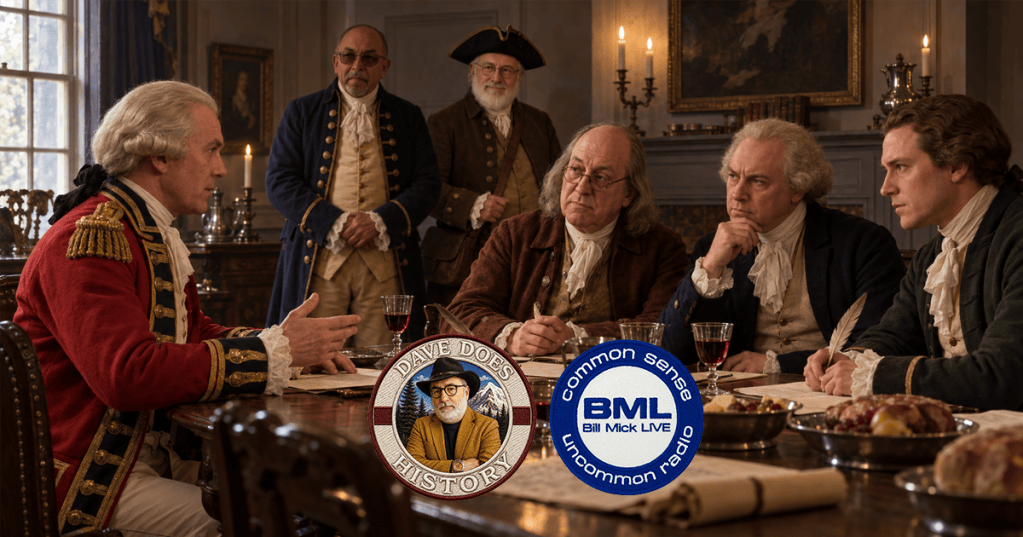
From his headquarters at Mount Pleasant, north of the city, General William Howe settled into the business of occupation. Reports went back to London describing the successful capture of New York. Plans were made for the next phase of the campaign. On September 19, Howe issued yet another proclamation inviting Americans to lay down their arms, swear allegiance to King George III, and return peacefully to their lives.
It was hardly the first time he’d made that offer.
Like many British officers, Howe believed the rebellion had been driven by a relatively small group of radicals. Most Americans, he thought, simply wanted peace. Now that New York had fallen, surely many of them would decide the fight wasn’t worth continuing.
Almost nobody did.
Part of the problem was that New York no longer looked like a city returning to normal.
People had been leaving for months. Loyalists fled while the Continental Army controlled the city, worried they would be arrested or attacked. Patriots packed up when it became clear the British were coming. By September, empty houses could be found throughout lower Manhattan. First the Continental Army had taken over many of them. Now British officers were doing the same. Churches became hospitals and barracks. Warehouses filled with military supplies. It seemed every empty building belonged to the army before long.
There was another problem Howe hadn’t counted on. The British had captured the city, but they suddenly had to house an army.
Thousands of British soldiers, Hessian troops, sailors, camp followers, merchants, and returning Loyalists all needed somewhere to live. Officers claimed the best homes. Ordinary soldiers crowded into churches, public buildings, and private residences. Refugees camped wherever they could find space. Even before the fire, housing had become one of the biggest headaches facing the occupation.
Howe also made a decision that surprised many Loyalists. Instead of restoring New York’s civilian government, he kept the city under military rule.
Royal Governor William Tryon did not simply resume control. Neither did Mayor David Mathews. Howe chose martial law instead. British soldiers stood watch at key intersections. Military authority replaced civil authority. The city wasn’t being governed as much as it was being occupied.
That mattered.
Loyalists had expected life to return to the way it had been before the Revolution. Instead, they found checkpoints, soldiers, and military regulations. Patriots looked at the same scene and saw proof of everything they had been saying about British power. Rather than restoring English liberties, the Crown appeared to be ruling by force.
Meanwhile, Washington waited on Harlem Heights.
He had no intention of throwing his battered army into another major battle. Another defeat like Long Island or Kip’s Bay might destroy the Continental Army altogether. For now, surviving was enough. Every day his army remained in the field was another day the Revolution remained alive.
So both commanders waited.
Howe believed time favored the British. Washington believed time favored the Americans. Neither of them expected the next crisis to come from inside New York itself.
It would come in the middle of the night, carried by the wind, and before sunrise nearly a quarter of the city would be gone.
The Night Manhattan Burned
Just after midnight on September 21, someone shouted that New York was on fire.
The first flames appeared near Whitehall Slip, close to the Fighting Cocks Tavern on the southern end of the city. At first it must have seemed like the kind of fire every eighteenth-century city feared. Wooden buildings stood shoulder to shoulder. Open flames were part of everyday life. Fires happened.
This one was different.
A strong southwest wind picked up the burning embers and carried them from rooftop to rooftop. Within minutes, the fire outran the people trying to stop it. It swept north through narrow streets, consuming houses, taverns, warehouses, and churches almost as quickly as people could empty them. Before long, Trinity Church was burning. Its tall steeple became a landmark in the darkness, visible across the harbor as the fire spread through the city.
Normally, church bells would have summoned everyone to the bucket brigades. But on this night, there were no bells.
Months earlier, many had been removed by the Patriots and melted down for cannon and musket balls. Instead, people ran through the streets shouting warnings. Families carried whatever they could save. British sailors and marines joined civilians in hauling water from the Hudson River while others pulled down buildings to keep the flames from spreading. Howe, worried the fire might be a trick to draw troops away from their positions, initially kept much of his army under arms until it became clear no American attack was coming.
By morning, the worst was over. Nearly a quarter of New York had been destroyed.
Exactly how many buildings were lost depends on whose account you read. Most estimates fall somewhere between four hundred and one thousand. Thousands of people suddenly had no homes. Entire blocks had disappeared. Only a change in the wind kept the fire from consuming much of the rest of the city.
Almost before the smoke cleared, people began asking the obvious question.
Who started it?
The British didn’t spend much time wondering.
General Howe believed the fire had been deliberately set. Governor William Tryon agreed. Soldiers claimed they had caught men trying to ignite additional buildings. Stories spread quickly. Some suspected arsonists were reportedly killed on the spot. Others were said to have been hanged or thrown into burning buildings themselves. Some of those stories may well have grown with retelling, but they tell us something about the mood inside the city. The British were furious, and they were convinced someone had tried to destroy New York on purpose.
The Americans told a different story.
Some blamed careless British soldiers. Others accused Hessian troops of starting fires while they looted abandoned buildings. Washington reported the disaster to Congress as an accident. Publicly, he never suggested otherwise.
Privately, though, he was more candid.
Writing to his cousin, Lund Washington, he remarked that “Providence, or some good honest fellow, has done more for us than we were disposed to do for ourselves.” Congress had forbidden him from burning New York before abandoning it, and Washington had obeyed. But his private letter makes it clear he believed the British would have been far worse off if they had inherited ashes instead of a city.
Two hundred and fifty years later, historians still argue over what really happened.
Benjamin Carp, whose recent study is the most thorough examination of the fire, concludes that Patriot sabotage is the most likely explanation. He is also careful to point out that the evidence is circumstantial. The British arrested more than two hundred suspects after the fire, questioned them extensively, and never produced enough evidence to bring a single person to trial. There are strong clues, but there is no smoking gun.
In one sense, though, the question has never really been about who struck the match.
The fire changed the way both sides looked at the war.
Before September 21, Howe still believed he could restore the King’s authority and persuade Americans to come back into the Empire. After the fire, New York no longer looked like a city waiting to be reconciled. It looked like a city full of enemies. Suspicion replaced confidence. Every unfamiliar face became a possible spy. Every unexplained fire looked like sabotage.
The British had won New York. But now they had to hold it.
A Revolution Without Rules
If Howe had hoped to calm New York after capturing it, those hopes disappeared with the smoke. From the British point of view, this wasn’t just a terrible accident. It looked like a deliberate attempt to destroy the city before the occupation had even begun.
The British stopped thinking like an army that had won a campaign and started thinking like an army occupying hostile territory.
Patrols spread through the burned neighborhoods. Homes were searched. People were questioned. Anyone who looked suspicious risked being arrested. In the days after the fire, British authorities rounded up more than two hundred suspects, convinced they would eventually uncover the men responsible.
They never did.
For all the arrests and interrogations, no one was ever brought to trial. The British were certain the fire had been set deliberately. What they couldn’t do was prove who had done it.
That uncertainty made the situation even worse.
Rumors filled the gap left by evidence. Soldiers talked about catching men with torches. Others claimed suspected arsonists had been bayoneted where they stood or hanged from nearby lampposts. Some stories said men were thrown into the very buildings they had tried to burn. We can’t verify every account, and some were almost certainly exaggerated as they spread. Even so, they tell us something important. Discipline was giving way to anger, and anger has never needed much evidence.
Martial law, which had already been imposed after the occupation, now became even more important to the British.
Howe made no move to restore civilian government. Royal Governor William Tryon remained on the sidelines while the army tightened its grip on the city. Soldiers controlled the streets. Property continued to be taken over for military use. Checkpoints became a normal part of life. For ordinary New Yorkers, it was increasingly obvious that this was no temporary military presence. They were living in an occupied city.
Ironically, the fire undermined the very policy Howe had hoped would end the rebellion.
He wanted Americans to see British rule as a return to peace and stability. Instead, the occupation came to look more and more like military rule backed by bayonets. Loyalists who expected life to return to normal found themselves living under army regulations. Patriots looked at the same scene and felt their worst fears had been confirmed. The farther Howe tried to tighten his control, the harder reconciliation became.
Looking back, it’s easy to see why historian Benjamin Carp describes New York as a “chaos zone.”
Nothing about the city felt settled anymore. Neighbors suspected neighbors. British officers distrusted civilians. Civilians distrusted the occupying army. Every new rumor seemed believable because the previous week had already proved that almost anything could happen.
That atmosphere mattered.
When a young American named Nathan Hale was brought before General Howe on September 22, he wasn’t standing before the same commander who had entered New York a week earlier expecting to restore the King’s peace. Howe had spent the previous night watching much of his newly captured city burn.
Whether Hale deserved mercy or not, he was asking for it at exactly the wrong moment.
Nathan Hale Walks to the Gallows
Nathan Hale was twenty-one years old when he volunteered.
He wasn’t a professional spy because America didn’t have professional spies yet. He was a Yale graduate, a schoolteacher from Connecticut, and an officer who thought he could help Washington by finding out what the British were planning.
It was one of the most dangerous jobs in the army. If a soldier was captured in uniform, he was usually treated as a prisoner of war. A spy caught behind enemy lines had no such protection. He could be hanged without much delay.
Washington needed information badly.
After the defeat on Long Island and the loss of New York, he knew very little about Howe’s intentions. Where would the British strike next? How many troops did they have? Were they preparing another landing? Someone had to cross into British-held territory and find out.
Hale volunteered.
His cover story was straightforward. He posed as a schoolteacher looking for work before the new term began. As he moved across Long Island and eventually into New York, he counted troops, sketched fortifications, and wrote down what he saw.
The problem was that he carried all of it with him.
Today we remember Nathan Hale as America’s first famous spy. In truth, he was an amateur. He used no code. He carried no invisible ink. He had no local network to help him. He made no arrangements to pass information back to Washington before returning himself. If he was searched, everything he had learned would be sitting in his pockets.
That’s exactly what happened.
No one knows with complete certainty how Hale was captured. One account says Major Robert Rogers recognized him and tricked him into revealing who he was. Another says he approached a British boat, believing it carried Americans. Whatever happened, British soldiers searched him and found his notes and sketches. There wasn’t much left to argue about after that.
He was taken to General Howe. And the timing couldn’t have been worse.
Only hours earlier, Howe had watched much of New York burn. His officers believed Patriot agents had tried to destroy the city. British soldiers were still searching for whoever had done it. Hale had nothing to do with the fire as far as the evidence shows, but that hardly mattered. He was an American officer caught behind British lines carrying military intelligence. Howe had all the justification he needed.
There would be no trial.
Under the accepted rules of eighteenth-century warfare, spies could be executed immediately. Howe ordered Hale hanged the following morning.
The task fell to Provost Marshal William Cunningham, whose reputation for brutality followed him throughout the war. Hale asked for a Bible. He was refused. He asked to see a minister. That request was denied as well. British engineer John Montresor gave him paper and ink so he could write farewell letters, but Cunningham reportedly destroyed them rather than allow them to reach the Americans.
On the morning of September 22, Hale was led to the gallows.
British officer Frederick MacKenzie later wrote that the young American met his death calmly and with dignity. The famous words most Americans know, “I only regret that I have but one life to lose for my country,” were probably not original. Hale was almost certainly quoting, or at least paraphrasing, Joseph Addison’s play Cato, a work every educated young man of his generation would have known.
That doesn’t make the words any less powerful.
Nathan Hale failed in the job Washington had given him. His intelligence never reached the Continental Army. His mission ended in capture almost before it had begun. But history remembered something else.
People forgot the unsuccessful spy and remembered the young officer who walked to the gallows without asking for mercy. During one of the bleakest weeks of the Revolution, when New York had been lost and Washington’s army was struggling simply to survive, Hale became proof that there were still Americans willing to risk everything for independence. His military mission failed.
His example did not.
Washington Learns Another Lesson
While Nathan Hale waited for the hangman in British-held New York, another man waited for death just a few miles away.
His name was Ebenezer Leffingwell.
Leffingwell had been accused of mutiny after the confusion at Kip’s Bay. The retreat from Manhattan had shaken the Continental Army badly. Men had abandoned their positions. Some had fled without orders. Washington knew he had to restore discipline before his army came apart completely. Leffingwell’s case made that point painfully clear.
Joseph Reed, Washington’s adjutant general, confronted Leffingwell after the soldier apparently left his assigned post. The encounter quickly turned violent. Leffingwell pointed his musket at Reed and pulled the trigger.
Nothing happened.
The gun misfired.
Reed immediately drew his own weapon and fired back.
His gun misfired too.
It almost sounds like something out of a novel. Two men trying to shoot each other, and neither weapon goes off. But there was nothing amusing about it. Washington saw it as another sign that discipline inside the army was slipping away at exactly the wrong time.
Leffingwell was tried and sentenced to die before a firing squad. The sentence made sense.
Washington believed discipline was every bit as important as courage. An army that ignored orders wasn’t an army for very long. If soldiers could threaten officers without consequences, the Continental Army would collapse from within long before the British destroyed it.
Then something happened Washington hadn’t expected.
As the troops gathered for the execution, word spread through the ranks. Many soldiers weren’t celebrating the sentence. They sympathized with Leffingwell. They had been at Kip’s Bay.
They knew how confusing and frightening those hours had been. They saw Leffingwell less as a dangerous mutineer than as another ordinary soldier who had cracked under extraordinary pressure. Executing him might restore discipline, but it might also poison morale in an army that was already hanging by a thread.
Washington noticed.
At the last moment, he stopped the execution.
That decision tells us something important about the kind of commander Washington was becoming. He never stopped believing in discipline. He never suggested Leffingwell had done nothing wrong. But he was beginning to understand that leadership wasn’t simply about enforcing rules. Sometimes preserving the army meant showing mercy instead of making an example out of someone.
The contrast with General Howe is striking. Howe had before him a captured American spy. He chose swift justice. Washington had before him one of his own soldiers, convicted of mutiny. He chose mercy.
Neither decision changed the outcome of the New York campaign, but together they show two very different approaches to command. Howe led one of the best-trained professional armies in the world. Washington was trying to hold together an army of volunteers, short-term enlistments, and ordinary citizens who were learning how to become soldiers while fighting a war.
That experience stayed with him.
New York taught Washington many hard lessons. Some were about strategy. Some were about logistics. Others were about human nature. He was learning that keeping an army together required more than winning battles. It required understanding the men who fought them.
With New York firmly in British hands, both armies began looking north. The next campaign wouldn’t be fought in the streets of a city.
It would be fought on the waters of Lake Champlain, where Benedict Arnold was building a tiny fleet that had almost no chance of winning a battle, but every chance of changing the course of the war.
The Revolution Becomes a Different War
When the British fleet sailed into New York Harbor in the summer of 1776, there were still people on both sides who believed the fighting might end with one decisive campaign.
Howe certainly believed it.
Capture New York. Defeat Washington’s army. Offer pardons. Restore royal government. The rebellion, he thought, would lose its reason to continue.
September proved otherwise.
In the space of a single week, New York changed the character of the war. The city fell. Nearly a quarter of it burned. British soldiers hunted saboteurs through smoke-filled streets. Nathan Hale went to the gallows. Washington nearly executed one of his own men before deciding his army needed mercy more than another firing squad.
None of those events happened in isolation.
Each one pushed the Revolution a little farther away from the political dispute it had once been. The arguments over taxes, representation, and constitutional rights didn’t disappear, but they were no longer the whole story. Now there were occupied cities, spies, martial law, sabotage, and reprisals. Both sides were beginning to understand that this war would not be settled with a single battle or a negotiated compromise.
Washington came away from New York with one lesson above all the others: He had lost the city. He had not lost the army.
That distinction shaped almost everything he did afterward. Cities could be retaken. Forts could be rebuilt. An army destroyed in the field could not. Washington would spend the rest of the war protecting that army, waiting for opportunities instead of chasing them. It wasn’t glamorous, but it was exactly what the Revolution needed.
The British learned a lesson of their own. They had captured the largest and most important city in North America. It should have been the turning point of the war. Instead, the rebellion continued.
Holding New York turned out to be much easier than ending the Revolution.
As autumn settled over the colonies, both sides looked north toward Lake Champlain. There, a young brigadier general named Benedict Arnold was racing to build a fleet from almost nothing. He knew he couldn’t defeat the Royal Navy. That wasn’t really the point.
Sometimes the most important battles aren’t won.
Sometimes they’re fought simply to buy time.



 DAVE DOES HISTORY
Leave a comment