
On the morning of July 4, 1781, the American prisoners confined within the stone walls of St. Augustine’s British fortress marked the anniversary in the only way available to them. They had no cannon to fire, no public square in which to gather, and no flag of their new nation to raise. Their clothes were worn from months of confinement, their meals depended upon their captors, and the success of the Revolution remained uncertain. Charleston had fallen. The southern Continental army had been shattered. The men imprisoned in Florida could not know that Washington and Rochambeau would soon begin the movements that ended at Yorktown.



Thomas Heyward Jr., one of South Carolina’s signers of the Declaration of Independence, reportedly provided the prisoners with something more useful than a flag. He gave them a song.
The tune was unmistakably British. “God Save the King” celebrated the monarch against whom the Americans had rebelled and whose government now held them captive. Heyward, according to a tradition repeated in several accounts of his life, supplied different words: “God Save the Thirteen States.” The prisoners sang the parody loudly enough for their guards to hear. Whether Heyward composed every line, adapted an existing version, or simply helped popularize it cannot now be established with certainty. The story endured because it captured something true about the man. The British had confined his body, but they had not persuaded him that his cause was lost.
That moment in St. Augustine provides an appealing portrait of a Founder: defiant, courageous, and unwilling to surrender even when the Revolution appeared to be collapsing around him. Yet the deeper significance of Thomas Heyward’s life emerges only when the scene is placed beside another, a century later. In that second scene, a Black congressman from South Carolina stood in the United States House of Representatives and described the violence being used to drive Black citizens from public life. His name was Thomas Ezekiel Miller. He claimed descent from the Heyward family and identified Thomas Heyward Jr. as his maternal grandfather.
One man had signed the Declaration’s promise. The other demanded that the nation honor it.
Their intertwined lives reveal both the power and the incompleteness of the American founding. Heyward risked his fortune and his life for principles of political liberty while presiding over a plantation world sustained by enslaved labor. Miller inherited neither the security nor the recognized social standing of the Heyward name, but he claimed the principles of 1776 as his own. Between them stretched the Revolution, emancipation, Reconstruction, and the rise of Jim Crow. The words signed in Philadelphia survived each transformation, gathering meanings that many of the signers themselves had not been prepared to accept.
An Heir to the Carolina World
Thomas Heyward Jr. was born on July 28, 1746, at the family’s Old House plantation in the South Carolina Lowcountry. His father, Daniel Heyward, belonged to the colony’s planter elite, a small class whose wealth rested upon land, rice, and enslaved labor. The family controlled thousands of acres between Beaufort and Savannah and eventually became one of the largest slaveholding dynasties in the United States. Thomas entered the world with advantages that few colonists could imagine. He inherited not only wealth, but social position, political connections, and the expectation that he would help govern the province into which he had been born.
The Lowcountry that produced him was among the wealthiest regions in British America. Its prosperity came from rice cultivation, which demanded punishing labor in swamps and flooded fields. Enslaved Africans and their descendants possessed much of the agricultural knowledge upon which the rice economy depended, yet the wealth they created accumulated in the hands of families such as the Heywards. Plantation houses, imported furnishings, legal education, and political influence all rested upon that coerced labor.
For Thomas Heyward, this arrangement would have appeared less like a political choice than the natural order of the world. He had been born into it, educated by it, and prepared to inherit it. That does not excuse his participation in slavery, but it helps explain the moral limits within which he understood liberty. Like many men of the revolutionary generation, he could recognize arbitrary power when Parliament exercised it over colonial elites while failing to recognize, or refusing to confront, the far more absolute power exercised on his own plantations.
His father intended him for the law. After receiving a private education, Heyward traveled to England and entered the Middle Temple in London, one of the Inns of Court through which English barristers were trained. The journey was meant to refine a colonial gentleman. London offered access to the intellectual and legal center of the empire, along with the manners and institutions that distinguished Britain’s ruling classes.
The experience did not make Heyward more obedient to imperial authority. Instead, it seems to have sharpened his sense of the distance between colonists and the metropolitan society that governed them. Americans who traveled to Britain often discovered that wealth and education did not entirely erase the stigma of provincial birth. They might admire English law while resenting the assumption that colonists were subordinate members of the imperial family. The contradiction became increasingly difficult to ignore as Parliament asserted its authority over colonies that had long governed much of their own internal affairs.
Heyward returned to South Carolina as a lawyer, but he did not return as a reliable servant of the Crown. The imperial crisis had begun to transform disputes over taxation and representation into a contest over constitutional authority. South Carolinians were being forced to decide whether their liberties were protected by the British Constitution or endangered by those who claimed the power to interpret it. Heyward chose the latter view.
His decision carried greater significance because rebellion offered him so little material advantage. He was not an obscure farmer seeking land or a debtor hoping to overturn an unfriendly legal system. The British Empire had been exceedingly generous to the Heyward family. Its commercial protections, courts, military power, and Atlantic trade had helped create the world from which he benefited. Prudence might have counseled loyalty, or at least silence.
Instead, Heyward entered revolutionary politics.
He was elected to the Continental Congress and joined the South Carolina delegation in Philadelphia. There, in 1776, he placed his name beneath a declaration that transformed resistance into independence. The act has been softened by familiarity. The signatures appear fixed and inevitable beneath words memorized by generations of schoolchildren. To the British government, however, they represented evidence of treason. If the rebellion failed, the signers could not expect their wealth or social rank to protect them.
Heyward signed anyway.
Law and Gunpowder
The Declaration did not end Heyward’s participation in the Revolution. He returned to South Carolina, where the struggle soon assumed the character of a civil war. Loyalists and Patriots lived beside one another, sometimes within the same families. Political allegiance could determine whether a man kept his property, suffered imprisonment, or faced execution. The Revolution in the South was not fought only by uniformed armies moving across maps. It unfolded through raids, confiscations, reprisals, trials, and private vengeance.
Heyward served as a judge and confronted those divisions from the bench. In 1778 he presided over treason proceedings against Loyalists whose convictions were followed by executions within sight of British lines. Later accounts emphasized that the spectacle made Heyward especially hated by the enemy. The scene complicates any sentimental picture of the signers as philosophers who confined their revolution to parchment. Heyward understood the law as a weapon of the new government and was willing to use its severest penalty against men who resisted it.
The executions belonged to the hard logic of revolution. The Patriot government claimed sovereignty and therefore treated armed assistance to the British as treason. Loyalists, meanwhile, regarded that government as illegitimate and the rebels as the true traitors. Each side believed the law stood behind it. The gallows visible from the British lines announced that South Carolina’s revolutionary authorities intended to survive and that they would punish those who helped the enemy.
Heyward also carried his commitment onto the battlefield. He served with South Carolina’s artillery and was wounded in the fighting at Port Royal Island in 1779. Artillery required more than courage. Guns had to be transported over poor roads, supplied with powder and shot, positioned under fire, and operated by crews trained to continue their work amid smoke and confusion. Heyward had moved far from the expected life of a wealthy planter’s son. The man educated in London to practice English law was now directing cannon against British troops.
His military service did not make him a Washington or a Nathanael Greene, nor did it determine the outcome of the war. Its importance lies elsewhere. Heyward did not treat independence as an abstraction. He accepted the physical consequences of the decision he had made in Philadelphia. He risked the wound of a musket ball, the loss of his property, and the possibility of execution if the royal government recovered control.
By 1780, that possibility had become alarmingly real.
After failing to crush the rebellion in the North, Britain turned toward the southern colonies. British commanders believed substantial Loyalist support could be mobilized in Georgia and the Carolinas. Charleston, wealthy and strategically important, became the central objective. Its capture might isolate the South, restore royal government, and begin the unraveling of American independence.
The city surrendered on May 12, 1780, after a prolonged siege. More than five thousand American troops fell into British hands, making Charleston’s capitulation one of the most devastating defeats of the war. The southern Continental army was effectively destroyed. Heyward was among those trapped by the British victory.
At first, prominent Patriots in Charleston lived under a form of parole. British authorities soon concluded that several of them remained dangerous. On August 27, Heyward and other leading revolutionaries were arrested and confined aboard a guard ship. They were then transported to St. Augustine in British East Florida, far from their families, property, and political influence. Heyward remained there for approximately eleven months.
The reversal was severe. The heir to an immense plantation fortune now depended upon British captors for food and shelter. The judge who had condemned Loyalists stood under the authority of the government he had rejected. The signer who had proclaimed the birth of a new nation could not know whether that nation would survive long enough to secure his release.
We possess the advantage of hindsight. Yorktown gives the Revolution a destination, and independence seems to draw closer with every familiar episode. Heyward had no such assurance inside the fort. The British controlled Charleston. American forces in the South had suffered repeated defeats. Political support for the war had been strained by years of taxation, shortages, and bloodshed. France had entered the conflict, but French intervention had not yet produced a decisive victory.
The song attributed to Heyward must be heard within that uncertainty. “God Save the Thirteen States” was not the celebration of a man who knew triumph was approaching. It was an assertion of faith by a prisoner who possessed little evidence that his faith would be rewarded. The parody turned the anthem of imperial authority against those who claimed it. Its humor carried an edge. King George might command the fort, the guards, and the prison ships, but the prisoners still claimed allegiance to another political order.
In July 1781, Heyward was released in a prisoner exchange and sent north. Even then, the hazards of his rebellion followed him. During the voyage he fell overboard and nearly drowned before he was rescued. It was a strangely fitting danger for a man who had survived a battlefield wound, the fall of Charleston, arrest, and exile. His journey home brought freedom, but not restoration.
The British had plundered his estates. Buildings, crops, livestock, and personal property had been lost or damaged. Approximately 130 enslaved people were permanently removed from his holdings, some reportedly transported to British Caribbean plantations. Contemporary and later accounts treated this as one of the great sacrifices suffered by a signer of the Declaration. In strictly economic terms, it was. Under South Carolina law, the people taken from Heyward were counted among his property and represented a large portion of the productive wealth of his plantations.
The language of loss, however, conceals the human reality. The enslaved people removed from Heyward’s estates had their own experiences of the war, their own families, and their own hopes for freedom. Across the Revolutionary South, thousands of enslaved men and women sought refuge with British forces after royal officials offered liberty to those who escaped rebel masters and served the Crown. Others were seized, sold, displaced, or transported without receiving the freedom they had hoped to obtain. The Revolution that promised political liberty to white colonists opened uncertain and often dangerous paths for those whose bondage the new state continued to recognize.
Heyward therefore returned from captivity both a genuine sufferer for American independence and a master whose fortune had been created through the captivity of others. Neither description erases the other. His courage was real, as was the system he defended by returning to plantation life after the war.
A Promise Larger Than Its Authors
The contradiction was embedded in the nation’s founding document. The Declaration announced that all men were created equal and endowed with rights that governments existed to secure. It did not abolish slavery, confer citizenship, or specify the political community to which its universal language would immediately apply. Many of the men who adopted it understood equality within boundaries created by race, sex, property, and custom.
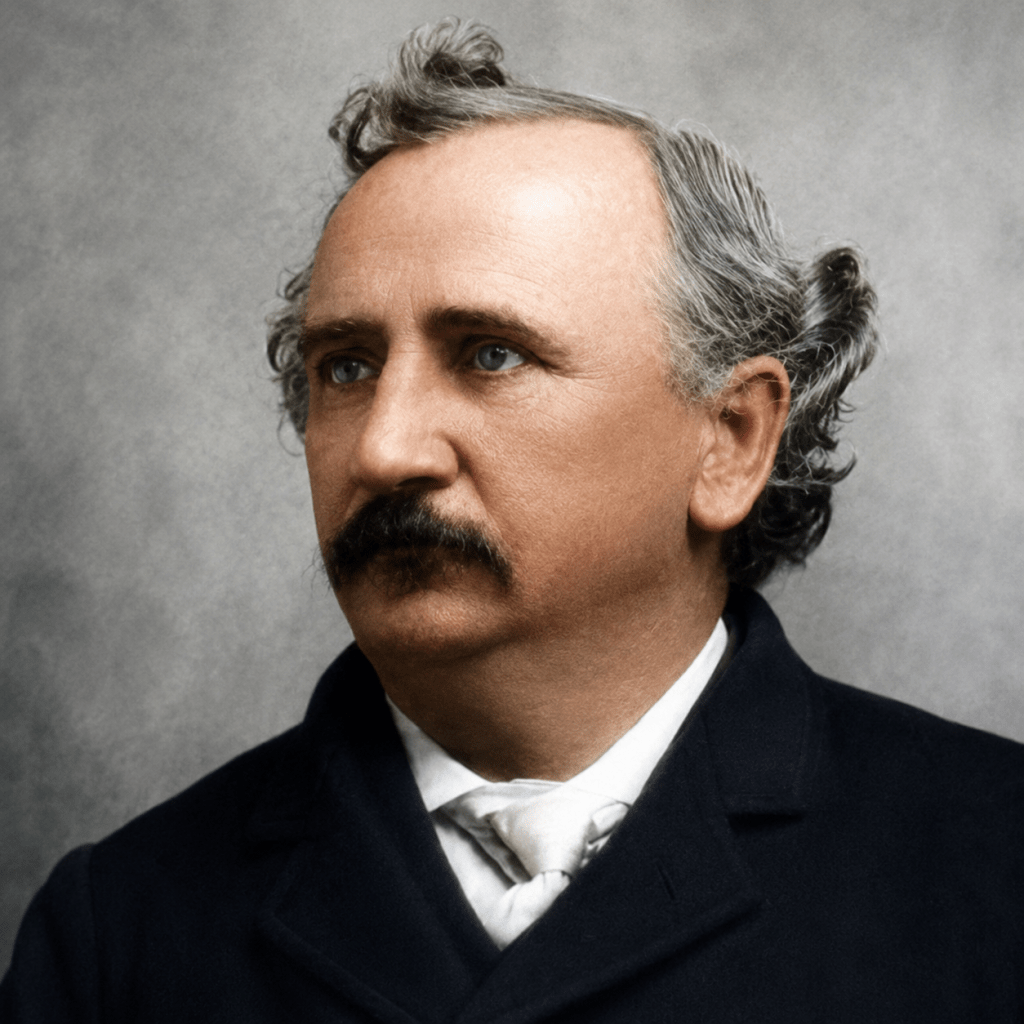
Yet the words did not remain confined within those boundaries.
Once equality had been declared a self-evident truth, Americans excluded from its immediate benefits acquired a standard against which the nation could be judged. The Declaration became an instrument of criticism because its language reached beyond the arrangements of 1776. Abolitionists invoked it against slavery. Frederick Douglass turned its principles against those who celebrated independence while denying liberty to millions. Abraham Lincoln placed it at the center of his understanding of the nation, describing its principle of equality as a standard intended for continuing application. Women’s rights advocates and later civil rights leaders made the same claim in their own time.
The words were not self-executing. They did not free a single enslaved person merely by appearing on parchment. Their force depended upon people willing to insist that the nation meant what it had said. That struggle repeatedly required Americans to interpret the founding more broadly than many Founders had done.
In Thomas Heyward’s family, the struggle became intensely personal.
Thomas Ezekiel Miller was born in South Carolina in 1849. The details of his parentage remain partly obscured, as might be expected in a society where relationships across the color line were hidden by law, power, and family silence. Miller later stated that his father was white and claimed that his mother was a daughter of Judge Thomas Heyward, the signer of the Declaration. The United States House of Representatives’ historical account preserves the claim but appropriately treats the genealogy as Miller’s own account rather than an uncontested fact. The distinction matters. The surviving record supports describing Miller as Heyward’s claimed grandson, while caution counsels against presenting every detail of the relationship as conclusively documented.
The uncertainty does not diminish the historical meaning Miller attached to the connection. He had been born into a South Carolina still governed by the social order that made the Heyward fortune possible. Slavery determined legal status, family security, education, work, and movement. The name of a white ancestor could not provide a Black descendant with equal standing before the law.
The Civil War changed the legal foundation of that world. Slavery was abolished, citizenship was constitutionally defined, and Black male suffrage received federal protection. Reconstruction opened public life to men who only a few years earlier could have been bought and sold. Black South Carolinians voted, served on juries, held local office, entered the legislature, and represented the state in Congress.
Miller entered that opening with determination. He pursued an education, studied law, and became active in Republican politics. His life carried him into the South Carolina legislature and eventually to the United States House of Representatives after the fiercely disputed election of 1888. His service came during a period in which the possibilities created by Reconstruction were being systematically narrowed by white violence, electoral manipulation, and law.
By the time Miller reached Congress, the contest was no longer over whether slavery would return. It was over whether emancipation would possess political substance. Black citizenship existed in the Constitution, but constitutional language could be defeated in practice by intimidation at polling places, fraudulent counts, discriminatory registration, and the refusal of state authorities to protect Black citizens. Federal retreat allowed the architects of the new racial order to present disfranchisement as local self-government.
Miller used the House floor to describe what that language concealed. He spoke of Black men subjected to brutality on trivial or false accusations and of Black women abused by officials who knew they were unlikely to be held accountable. Such stories made the decline of Reconstruction visible at the level of the individual body. Constitutional rights were not disappearing only through court decisions and legislative maneuvers. They were being taken from particular men and women by people wielding ropes, chains, warrants, guns, and public authority.
The spectacle carried an irony that no novelist would have needed to invent. A man who claimed descent from a signer of the Declaration stood in Congress defending the political rights of the people whom the signer’s society had excluded. Miller did not abandon the founding because its first generation had failed to apply its principles consistently. He claimed the founding for himself.
That choice deserves attention. The Declaration might have been dismissed as the work of slaveholders, irredeemably compromised by their conduct. Miller instead treated its promise as an obligation that survived their failures. The words “all men are created equal” did not belong exclusively to those who had signed them. They belonged to those willing to hold the nation accountable to them.
His congressional career did not halt the construction of Jim Crow. White Democrats regained control of South Carolina and steadily restricted Black political participation. The state constitution of 1895 provided new machinery for disfranchisement beneath the language of electoral reform. Literacy requirements, administrative discretion, and other devices accomplished much of what open racial exclusion could not yet declare. Black officeholding collapsed, and the political world Miller had entered nearly disappeared.
Miller continued to serve through education, including leadership at the institution that became South Carolina State University. Education offered another form of resistance, less dramatic than a speech in Congress but essential to the survival of Black civic life. Schools trained teachers, ministers, lawyers, and citizens during the long period in which the promises of Reconstruction were denied.
He lived until 1938. By then, the generation born in slavery was passing away, but the legal order constructed after Reconstruction remained firmly in place. Miller did not live to see the Voting Rights Act or the final destruction of legally enforced segregation. Like his grandfather’s generation, he participated in a struggle whose full consequences belonged to the future.
The Inheritance
Thomas Heyward Jr. died in 1809, honored as a signer, soldier, judge, and prisoner of the Revolution. He had helped separate the colonies from Britain and establish the political independence of the United States. Those achievements required courage and deserve remembrance. They also left untouched the plantation system that had made his family powerful.
Thomas Ezekiel Miller inherited no recognized share of that power. What he claimed instead was the Declaration.
The difference between the two men marks the distance between American independence and American equality. Heyward understood liberty primarily as the right of a political community to govern itself. Miller confronted the question that followed: who belonged to that community, and what did self-government mean when citizens could be terrorized out of exercising it?
The history of the Declaration lies within that expanding argument. Its authors did not resolve the contradiction between equality and slavery. They gave the contradiction permanent language. Each succeeding generation could either narrow that language to fit inherited institutions or use it to judge them.
Heyward signed words that condemned principles upon which much of his own world depended. Miller, claiming the blood of the signer but denied the privileges of the family, carried those words into a struggle the grandfather had not imagined. The relationship between them does not cleanse the founding of its failures, nor does it reduce the Revolution to hypocrisy. It reveals something more difficult and more consequential.
The American promise was larger than the generation that first declared it.
Thomas Heyward helped place that promise on parchment. Thomas Ezekiel Miller helped wrest it from the limits imposed by race, custom, and power. Between the patriot and the grandson, the Declaration became more fully what its language had always claimed to be: an apple of gold, still imperfectly fitted within the nation built around it.
Thomas Heyward helped place the promise on parchment, though he could not bring himself to apply it fully within his own world. Thomas Ezekiel Miller claimed that promise despite being denied the privileges of the family from which he descended. Between them, the Declaration traveled from the hands of those who announced equality to the hands of those who demanded its fulfillment.
That journey did not end with Miller. The Apple of Gold was never intended to remain beneath bulletproof glass, only admired as an artifact of 1776. It was entrusted to generations that would have to decide whether the nation’s institutions, customs, and laws formed a frame worthy of the principle at their center. Some generations widened that frame. Others narrowed it. None received permission to discard the promise simply because those who first declared it had failed to live by it completely.
The Founders did not finish the work of the Declaration. They could not have done so. They placed into American life a proposition whose full reach they did not comprehend and whose demands they often resisted. Its survival depended upon people who were willing to claim it, criticize the nation by its standard, and carry it into circumstances the men of 1776 could never have imagined.
Thomas Ezekiel Miller was one of those people. The unacknowledged grandson of a Founder inherited no plantation, no family fortune, and no secure place within the political order. He inherited the promise. By carrying it forward, he showed how the Declaration became more than the possession of those who signed it. It became the inheritance of every generation willing to accept both its gift and its burden.
The Apple of Gold remains before us. The frame is still being made.


Leave a Reply