
In the annals of military history, the establishment of the Continental Navy on October 13, 1775, marks the inception of what would later become the world’s premier naval force, the United States Navy. But the journey from its founding to its present stature is one that saw arduous beginnings, tales of valor, and legacies of immense impact.
Facing the world’s most formidable naval power, the British Royal Navy, the fledgling Continental Congress had the audacity to greenlight the creation of a naval force to counter British dominance on the seas. This was no small undertaking. Britain’s dominance wasn’t merely numerical but was rooted in centuries of maritime tradition, expertise, and experience. Yet, the need to disrupt British supply lines, facilitate the American commerce, and challenge the enemy on their own medium was clear.
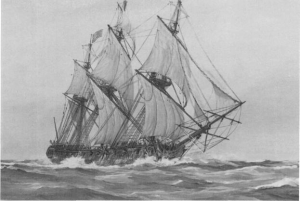
In response to the emerging naval need, the Continental Congress authorized the construction of thirteen frigates in December 1775. These warships varied in size and design, ranging from 28 to 36 guns.
Public Domain
Public Domain
Building these vessels was no easy task. In an era devoid of mass production, each frigate was a painstaking labor of artisanship, craftsmanship, and engineering. Timber was hewed, sails were stitched, and cannons were forged. Each frigate was a testament to American resilience, ingenuity, and determination to break free from British shackles.
The newly christened Continental Navy was eager to prove its mettle. Among its early exploits was the capture of British supply vessels, a crucial move that not only disrupted British operations but also provided the Continental Army with much-needed provisions.
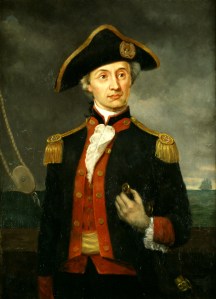
However, its most audacious operation was led by Captain John Paul Jones. His raids on the British coast, including the epic battle between the USS Bonhomme Richard and the HMS Serapis in 1779, showcased the Navy’s indomitable spirit and commitment to the revolutionary cause.
While the Continental Navy was disbanded post-Revolution, its legacies were manifold:
1. Tradition of Valor: The bravery shown by officers and sailors of the Continental Navy set a precedent. Tales of their heroism would inspire future naval personnel for generations.
2. Foundation for a Modern Navy: The experience garnered during the Revolution informed the establishment and operation of the U.S. Navy, officially re-established in 1794.
3. Influence on Strategy and Doctrine: The tactical maneuvers, raiding tactics, and innovative strategies deployed by the Continental Navy influenced the future maritime doctrines of the United States.
4. Birth of Naval Diplomacy: The naval engagements and successes played a role in garnering international support, particularly from France, showcasing the role of naval power in diplomatic endeavors.
5. Cultural Impact: Figures like John Paul Jones became American legends, instilling a sense of maritime pride and heritage in the American psyche.
Public Domain
As we commemorate the founding of the Continental Navy on this day, we reflect upon its profound significance. Born out of necessity and audacity, this force paved the way for the United States Navy’s long-standing tradition of excellence, valor, and global maritime dominance. The ripples from its founding continue to shape the waves of naval history.




 DAVE DOES HISTORY
Leave a comment