
The American Revolution, a struggle for independence and identity, bore witness to numerous clashes, both ideological and martial. However, few engagements epitomized the civil war dimension of the conflict quite like the Battle of Kings Mountain in 1780. The British southern strategy, which aimed to utilize the significant loyalist sentiments in the region, reached a critical juncture in the Carolinas. Their hope was to galvanize loyalist support, crush the patriot resistance, and roll northward to snuff out the rebellion.
The Carolinas were not just a patchwork of colonial settlements but also a crucible of loyalties. While the coastal regions, with their strong economic ties to Britain, housed numerous loyalists, the backcountry was predominantly patriot in sentiment. These divisions were not just ideological; they were often personal, pitting neighbor against neighbor and sometimes even family against family.
Loyalist militias, emboldened by British regular troops and their successes, took a series of aggressive actions against the patriots, leading to escalating violence and atrocities on both sides. This cauldron of tensions set the stage for a significant confrontation at Kings Mountain.
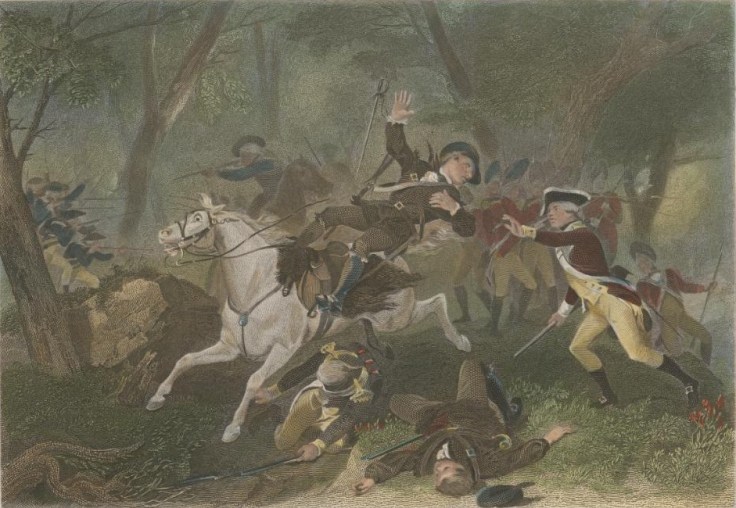
On October 7, 1780, the loyalist force, commanded by British Major Patrick Ferguson, found themselves surrounded on Kings Mountain by a conglomerate of patriot militias from Virginia, North Carolina, South Carolina, and Tennessee. These “Overmountain Men” were predominantly frontier folk, not regular soldiers, but they knew the terrain and, most importantly, they were fighting for their homes and their vision of liberty.
The patriots utilized guerrilla tactics, striking swiftly from behind trees and rocks. The loyalist forces, despite their valiant attempts, found themselves outmaneuvered and outgunned. After an hour of intense combat, Ferguson was killed, and his forces quickly surrendered.
The Battle of Kings Mountain was a resounding patriot victory. Of Ferguson’s approximately 1,100 men, 290 were killed, 163 wounded, and nearly 700 captured. The patriots suffered 28 killed and 68 wounded.
Public Domain
Strategically, the battle was a disaster for the British. Their hopes of a strong loyalist uprising were dashed. The defeat sent shockwaves through the British command, compelling General Cornwallis to temporarily abandon his plans to invade North Carolina and retreat to South Carolina.
The victory at Kings Mountain was a morale booster for the patriots, proving that they could not only stand up to but also decisively defeat British-backed forces. It played a role in galvanizing patriot support and showed the potential pitfalls of the British southern strategy.
The Battle of Kings Mountain, while not the largest or the most famous of the Revolutionary War battles, had a disproportionate impact on its course. It was a stark reminder of the war’s deeply personal nature, especially in the southern colonies, and showcased the resolve and capabilities of patriot militias.
The battle is commemorated today as a testament to the spirit of the American people, their resilience, and their determination to fight for their beliefs even against seemingly insurmountable odds. It stands as a beacon, highlighting the essence of the American Revolution: a people’s struggle for self-determination and liberty.
In conclusion, Kings Mountain wasn’t just a battle; it was a proclamation that the spirit of revolution wasn’t confined to the cities or the Northern colonies. It was alive and well in the hearts and minds of ordinary people across the nascent nation, willing to fight and die for their vision of a free America.




 DAVE DOES HISTORY
Leave a comment