
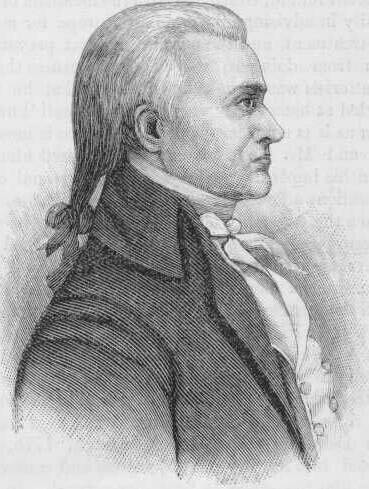
Public Domain
Caesar Rodney stands among the foremost figures in the pantheon of America’s founding fathers, particularly in Delaware, where his legacy as a staunch supporter of American independence is both cherished and celebrated.
Caesar Rodney was born on October 7, 1728, in Dover, Delaware, into a well-established family. Rodney’s early years were spent on his family’s farm, where he gained the appreciation for the agrarian way of life that would influence many of his later political decisions. The passing of his father when Rodney was just 17 meant young Caesar took on significant responsibilities, including the management of the family estate and caring for his younger siblings.
Rodney’s introduction to public service came in 1755 when he was elected Sheriff of Kent County. But this was only the beginning of a long and illustrious career. He was later appointed to several positions, including Justice of the Peace and Judge of the Lower Courts.
By the 1760s, as tensions between the American colonies and the British Crown began to rise, Rodney’s political leanings became evident. He became a prominent critic of British policies and was soon appointed to the Stamp Act Congress, a gathering of colonial representatives opposing the controversial British tax measure.
In 1774, as the winds of revolution began to pick up speed, Rodney was elected to the Continental Congress. Here, he played a pivotal role in guiding and influencing the trajectory of the burgeoning American nation. He served in the Congress through some of its most tumultuous years, between 1774 and 1776, and then again from 1777 until 1778.
Perhaps the most defining moment in Rodney’s career came on July 2, 1776. The Continental Congress was sharply divided over the issue of declaring independence from Great Britain. Delaware’s delegation was split, with George Read opposing independence and Thomas McKean supporting it. Rodney, aware of the gravity of the situation and the deadlock within his state’s delegation, made a dramatic overnight ride from Dover to Philadelphia. Battling ill health and a storm, he arrived just in time to cast the deciding vote for Delaware in favor of independence. This act has since become emblematic of Rodney’s commitment to the cause of American freedom.
Unfortunately, Caesar Rodney’s dedication to the cause took a toll on his health. Suffering from asthma and a facial cancer, Rodney withdrew from national politics in the 1780s. He passed away on June 26, 1784, at the age of 55.
Today, Caesar Rodney is remembered not just as a founding father but as a symbol of the sacrifices made in the pursuit of American independence. His midnight ride to Philadelphia, immortalized in stories and paintings, serves as a potent reminder of the lengths to which these early American leaders went to secure a new nation’s future. In Delaware and beyond, Rodney’s legacy is that of a principled and courageous statesman, steadfast in his commitment to liberty and independence.
In recognition of his contributions, his likeness graces the Delaware state quarter, ensuring that his legacy is not just remembered in history books, but also in the pockets and purses of Americans every day.




 DAVE DOES HISTORY
Leave a comment