
안녕하세요 As we approach another Gaecheonjeol, also known as the National Foundation Day of Korea, it’s an opportune time to delve deeper into this significant holiday’s origins, history, and its continuing legacy. Join me on a journey to understand this revered day, from its earliest legends to its modern-day significance.
Gaecheonjeol, translated as “Opening of Heaven,” is celebrated every October 3rd and commemorates the legendary founding of the Korean nation in 2333 BCE by Dangun. The legend of Dangun is one that most Koreans grow up hearing. It tells the tale of a god named Hwanung, who descended from the heavens to live on Earth, and a bear who transformed into a woman after enduring trials. The union of these two beings resulted in the birth of Dangun, the first ruler of the Korean people and the founder of the ancient Joseon dynasty.
While the legend itself dates back millennia, Gaecheonjeol as a formalized holiday is relatively recent. The recognition of this day began during the latter part of the Joseon Dynasty. However, during Japanese colonial rule (1910-1945), the celebration of Gaecheonjeol was prohibited, as the colonial powers sought to suppress Korean identity and culture.
After gaining independence in 1945, the newly established South Korean government formally designated October 3rd as Gaecheonjeol, solidifying it as a national holiday in 1949. Since then, it has been a day of pride, reflection, and unity for Koreans.
Today, Gaecheonjeol is a public holiday in South Korea. Schools and businesses are closed, and various events are held throughout the country. The main ceremony takes place at the Chamseongdan altar in Mt. Manisan on Ganghwa Island, where Dangun is believed to have offered sacrifices to the heavens. The day often begins with a reenactment of the Dangun legend, followed by performances, dances, and rituals showcasing Korea’s rich cultural heritage.
In addition to these traditional ceremonies, families might visit historical sites or simply spend time together, reflecting on the significance of the day. As with many holidays, it’s also a day of joy and celebration.
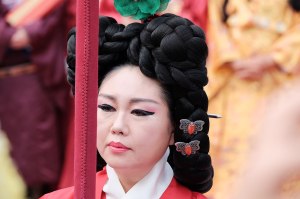
CC BY-SA 4.0
Gaecheonjeol is not just a day of looking back but also a day to understand the present and envision the future. By celebrating the nation’s foundation, Koreans are reminded of their shared history, values, and the resilience that has seen the nation through numerous challenges.
For the Korean diaspora worldwide, Gaecheonjeol serves as a bridge, connecting them to their roots and the motherland. The day has become an embodiment of Korea’s enduring spirit, emphasizing unity, pride, and the continuous journey of a nation and its people towards progress and prosperity.
In conclusion, Gaecheonjeol is more than just a date on the calendar. It’s a day that encapsulates the soul of Korea, weaving together legends of old with the hopes and dreams of generations to come. Whether you’re Korean or just someone interested in the country’s rich tapestry of history and culture, Gaecheonjeol is a testament to the enduring spirit of a nation.
감사합니다 (Thank you) for joining me on this journey. Let’s continue to learn, celebrate, and share the rich history and culture of Korea. Happy Gaecheonjeol!




 DAVE DOES HISTORY
Leave a comment