
Gaius Sallustius Crispus, commonly known as Sallust, was born October 1, 86bce in Amiternum, a town in the Sabine territory. He hailed from a well-to-do plebeian family, which allowed him to receive a comprehensive education, fostering his love for literature and history.
In his early career, Sallust entered public life and climbed the cursus honorum, the sequential order of public offices in Rome. However, his political career was not without controversy. In 50 BC, he faced expulsion from the Senate due to alleged immorality. Not to be deterred, he aligned himself with Julius Caesar, which proved to be a wise choice as it led to appointments like the quaestorship and even a command in North Africa.
After amassing considerable wealth, Sallust retired from politics around 40 BC. This retreat from public life allowed him to concentrate on historical writing, where he truly made his mark.
Sallust is best known for his monographs: “The Jugurthine War,” which deals with Rome’s struggle against the Numidian King Jugurtha, and “The Conspiracy of Catiline,” which delves into the notorious attempt by the senator Catiline to overthrow the Roman Republic.
His works are characterized by their brevity, sharpness, and his unique style of Latin. Sallust was deeply influenced by the turbulence of his times. He perceived moral decay as a primary cause of Rome’s crises, and his works often reflect a strong moralistic tone, admonishing the decline in Roman virtue.
While Sallust’s historical monographs are not as extensive as those of Livy or Tacitus, they provide an invaluable glimpse into the late Roman Republic’s politics and moral atmosphere. He shunned the annalistic tradition, which documented events year by year, in favor of monographs focused on significant episodes, thus pioneering a new form of historical writing.
Sallust’s rhetorical style, with its concise and pointed Latin, was widely admired and became a model for Latin prose in the subsequent generations. His moralistic approach resonated with later Christian writers, further amplifying his influence throughout the medieval period.
The mark Sallust left on historical writing is undeniable. His focused monographs became a model for subsequent historians, demonstrating that history could be more than a mere chronicle of events; it could be a sharp analysis, moralistic critique, and a riveting narrative.
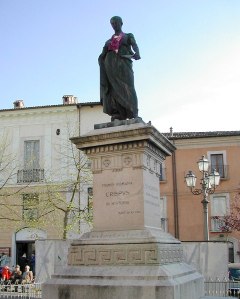
CC BY-SA 2.5
Tacitus, one of Rome’s greatest historians, certainly took a leaf out of Sallust’s book. The sharp moral commentary and the dark view of human nature evident in Tacitus’s works are reminiscent of Sallustian undertones. Later historians, both within and outside of Rome, would look to Sallust not just for facts, but for how to present those facts in a compelling and morally instructive manner.
Sallust occupies a unique place in the annals of Roman historiography. Born into a tumultuous era, he not only witnessed but also documented the Republic’s trials, leaving behind works that would shape how history was written for generations to come. Today, as we continue to engage with his writings, we’re reminded of the timelessness of his observations and the enduring power of history to instruct and caution.




 DAVE DOES HISTORY
Leave a comment