
Born on September 27, 1840, in West Point, New York, Alfred Thayer Mahan hailed from a family with a military background; his father, Dennis Hart Mahan, was a renowned professor at the United States Military Academy. Given the environment, it’s no surprise that Mahan would later embark on a journey of military and strategic significance.
Mahan’s seafaring days began with his graduation from the Naval Academy in 1859. Over the course of a 40-year naval career, he served in various capacities, from serving in the Civil War on Union blockading squadrons to appointments in the Naval War College. Despite not having significant combat experience, Mahan’s real contribution to the naval world lay in his intellect and strategic understanding of maritime affairs.
Alfred Thayer Mahan’s views on naval warfare were deeply rooted in his belief in the paramount importance of sea power. He argued that throughout history, nations with strong navies had a better chance of achieving global dominance and securing their interests overseas. To Mahan, command of the sea via naval dominance was the key to ensuring commercial prosperity and preventing blockades that could cripple a nation’s economy.
He postulated several key principles:
-
Strategic Positions: Control of vital maritime chokepoints, such as the Suez or Panama canals, was crucial.
-
Merchant Shipping: A strong merchant marine was necessary not only for economic prosperity but also to serve as an auxiliary to the naval fleet in times of war.
-
Naval Bases: Having strategically located bases ensured operational reach and logistics support.
-
Battleship Primacy: The backbone of a navy should be its capital ships. Large, heavily armored battleships would determine naval supremacy.
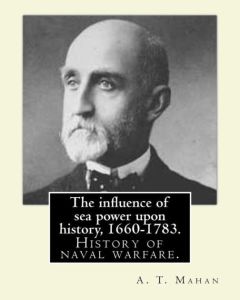 Mahan’s most renowned work, *The Influence of Sea Power upon History, 1660–1783* (1890), underscored the importance of naval power in influencing historical events. This book, read widely by both American and foreign policymakers and naval officers, asserted that control of the sea was the key to world dominance.
Alfred Thayer Mahan’s legacy is profound. His theories became instrumental in the naval policies of various great powers at the turn of the 20th century, especially in the buildup to World War I. Countries like the U.S., Germany, and Japan expanded their navies, echoing Mahan’s emphasis on a strong battleship fleet
In the U.S., Mahan’s ideas inspired the country’s turn to overseas expansion, notably with the annexation of territories following the Spanish-American War and the construction of the Panama Canal.
His influence can still be observed in modern naval strategies, especially in discussions surrounding the importance of naval dominance in areas like the South China Sea and the broader Indo-Pacific.
In conclusion, Alfred Thayer Mahan, while not always a central figure in popular historical narratives, was undeniably instrumental in shaping the naval doctrines of the late 19th and early 20th centuries. His focus on sea power and its influence on global politics and economics laid the foundation for modern naval strategy, securing his place as one of the most significant naval historians and theorists of all time.


 DAVE DOES HISTORY
Leave a comment