
The Battle of Flamborough Head, fought on September 23, 1779, during the American Revolutionary War, is a remarkable episode in naval history. Led by the intrepid American naval hero John Paul Jones, the battle showcased American resolve and determination in the face of overwhelming odds. This article explores the strategic situation leading up to the battle, the acquisition of the Bonhomme Richard, the details of the battle itself, its aftermath, and its lasting legacy.
In 1779, the American Revolution had entered its fifth year, and the British Royal Navy maintained a formidable presence in European waters. The British sought to crush the American rebellion by controlling sea lanes and isolating the American colonies from external support. To counter this threat, the American Continental Navy needed to assert itself in European waters.
John Paul Jones, a Scottish-born American naval officer with a distinguished service record, took command of the USS Bonhomme Richard in 1779. The ship was a converted French East Indiaman, originally named Duc de Duras, which had been gifted to the American navy by France. The Bonhomme Richard was armed with a combination of old and new cannons, making it a formidable but unconventional vessel.
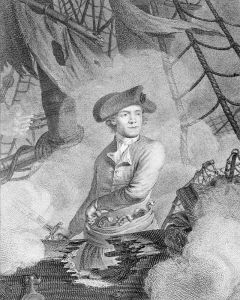
John Paul Jones had already gained recognition as a skilled naval commander, having captured British warships and engaged in daring raids along the British coast. He was known for his fierce determination and strategic prowess, earning him the nickname “Father of the American Navy.”
Public Domain
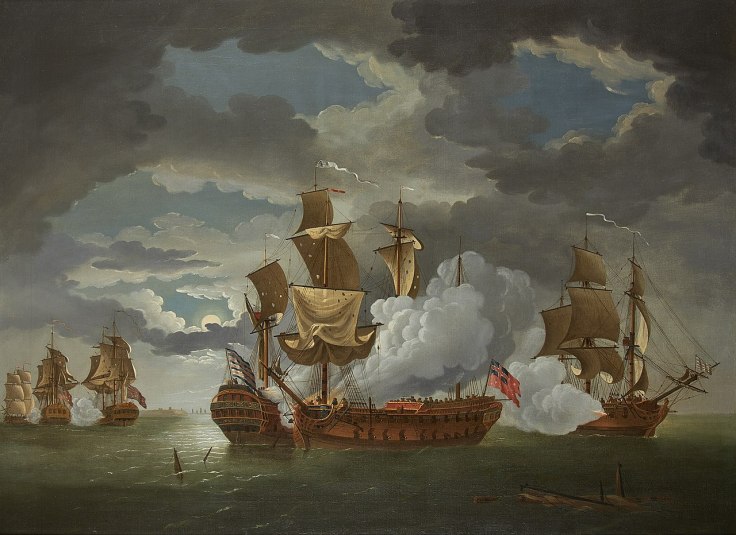
On September 23, 1779, John Paul Jones and his squadron, which included the Bonhomme Richard, engaged a British convoy led by the HMS Serapis and HMS Countess of Scarborough off the coast of Flamborough Head, England. The Bonhomme Richard was initially outgunned and outmanned by the Serapis, which had more firepower and experienced crew.
Despite the odds, John Paul Jones demonstrated exceptional seamanship and tactical skill. During the intense battle, the two ships became entangled, and Jones famously declared, “I have not yet begun to fight!” In a brutal and ferocious struggle, the Americans ultimately prevailed. The Bonhomme Richard was heavily damaged, but the Serapis surrendered, and the Countess of Scarborough also struck her colors.
Public Domain23
The Battle of Flamborough Head was a strategic victory for the American Continental Navy. John Paul Jones and his crew’s determination and bravery captured the imagination of both the American and European public. Although the Bonhomme Richard was ultimately lost, Jones successfully transferred his crew to the captured Serapis and returned to the Netherlands.
The Battle of Flamborough Head remains a symbol of American resolve during the American Revolutionary War. John Paul Jones’ determination and daring tactics established him as a legendary figure in American naval history. The battle’s legacy underscores the importance of skilled leadership, audacity, and courage in overcoming seemingly insurmountable odds. John Paul Jones’ famous words, “I have not yet begun to fight,” continue to inspire generations of naval officers and serve as a testament to the indomitable spirit of the American Navy.




 DAVE DOES HISTORY
Leave a comment