
Public Domain
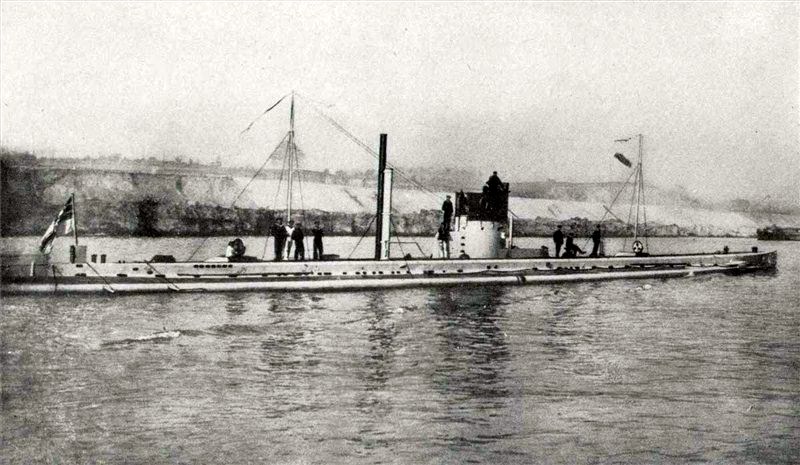
On September 22, 1914, the Imperial German Navy achieved a remarkable victory that would go down in history as one of the most audacious and successful submarine actions of World War I. The U-9, commanded by Kapitänleutnant Otto Weddigen, executed a daring attack that would become emblematic of Germany’s early success in naval warfare.
At the outset of World War I, the Imperial German Navy had a limited but highly effective submarine fleet. The U-9 was one of these early U-boats, known for its agility and precision. Its mission on that fateful September day was to patrol the North Sea and interdict British naval activities.
On September 22, 1914, the U-9 was patrolling the North Sea near the Hook of Holland when it encountered three British cruisers: the HMS Aboukir, HMS Hogue, and HMS Cressy. These British vessels were part of a squadron patrolling the area to prevent German submarines from interfering with British shipping lanes.

Public Domain
In a daring move, Kapitänleutnant Otto Weddigen decided to engage the British cruisers, even though the U-9 was a relatively small submarine facing much larger warships. Weddigen maneuvered his submarine into a favorable position and fired a torpedo at the HMS Aboukir. The torpedo struck its target with devastating effect, causing the British cruiser to quickly capsize and sink.
Emboldened by the success of his first attack, Weddigen fired another torpedo at the HMS Hogue, which met a similar fate. The British cruiser was soon engulfed in flames and sank into the North Sea. The crew of the HMS Cressy, witnessing the destruction of their sister ships, attempted to rescue survivors from the water, but Weddigen seized the opportunity and launched a third torpedo at the Cressy, sending it to the depths as well.
The aftermath of this audacious attack saw the loss of three British cruisers and over 1,400 British sailors, a stunning blow to the Royal Navy in the early stages of the war. The U-9’s success was not only a military victory for Germany but also a morale booster for the Imperial German Navy.
The actions of the U-9 on September 22, 1914, left an enduring legacy in naval history. Kapitänleutnant Otto Weddigen’s bold and tactical decision to engage and sink the British cruisers showcased the potential of submarines as formidable naval weapons. The U-9’s triumph served as an inspiration for future generations of submariners and underscored the changing nature of naval warfare in the 20th century.
While the submarine’s success was a remarkable achievement for Germany, it also intensified anti-submarine measures in the Royal Navy and marked the beginning of a protracted submarine warfare campaign in the Atlantic, a defining feature of World War I naval operations. The U-9’s audacious attack remains a poignant chapter in the annals of naval history, demonstrating the potency of the submarine as a game-changing instrument of war.




 DAVE DOES HISTORY
Leave a comment