
On September 18, 1895, in the heart of Atlanta, Georgia, Booker T. Washington delivered a landmark speech at the Atlanta Exposition. This address, often known as the “Atlanta Compromise,” marked a significant moment in American history, encapsulating the complexities of race relations and offering a vision for African American progress in the post-Reconstruction era.
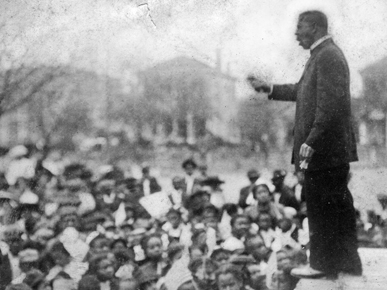
The late 19th century was a tumultuous time for African Americans in the United States. The Civil War had ended, slavery had been abolished, and the Reconstruction Era aimed to address the rights and status of freed slaves. However, racial tensions, segregation, and disenfranchisement persisted in the South.
Washington’s speech at the Atlanta Exposition had several key purposes:
1. Promote Racial Cooperation: Washington sought to foster cooperation between the white and African American communities, emphasizing economic cooperation and gradual social integration.
2. Attract Northern Investment: He aimed to attract investment from the North to the economically struggling South by showcasing the potential for African American labor and entrepreneurship.
In his speech, Washington articulated several key points:
1. Industrial Education: Washington emphasized the importance of vocational and industrial education for African Americans, believing that practical skills would lead to economic self-sufficiency and mutual respect.
2. Work and Patience: He urged African Americans to work diligently and patiently, emphasizing the idea that economic success would eventually lead to social and political equality.
3. Racial Cooperation: Washington advocated for racial cooperation and reconciliation between whites and African Americans. He believed that focusing on economic progress would help bridge racial divides.
Washington’s Atlanta Exposition Speech received mixed reactions. Many white Southerners embraced his conciliatory approach and willingness to accept segregation. Some African Americans and civil rights activists, including W.E.B. Du Bois, criticized the speech for being too accommodating and perceived it as a betrayal of the fight for civil rights. Du Bois famously referred to the speech as the “Atlanta Compromise” in his critique.
Booker T. Washington’s Atlanta Exposition Speech left a lasting impact on the African American civil rights movement and American society as a whole:
1. Economic Empowerment: Washington’s emphasis on vocational education and economic self-sufficiency resonated with many African Americans, leading to the founding of numerous industrial and trade schools.
2. Debate and Disagreement: The speech ignited a debate within the African American community between those who favored Washington’s gradual approach and those, like W.E.B. Du Bois, who advocated for immediate civil rights activism and political participation.
3. Long-Term Influence: Washington’s philosophy of self-help and economic progress continued to influence African American leaders and organizations in the early 20th century.
In conclusion, Booker T. Washington’s Atlanta Exposition Speech was a pivotal moment in African American history, reflecting the complex challenges and strategies of the post-Reconstruction era. While it sparked debates and controversies, it remains a crucial chapter in the ongoing struggle for civil rights and racial equality in the United States.




 DAVE DOES HISTORY
Leave a comment