
The Honda Point Disaster, also known as the Point Pedernales Disaster, is one of the most significant peacetime losses in the history of the U.S. Navy. Taking place on September 8, 1923, it underscored the risks associated with sea navigation, particularly during an era when technology was less advanced.
Honda Point (Point Pedernales) is located off the coast of California, near Santa Barbara. This stretch of coast is notoriously challenging for navigation, with its rugged shoreline, unpredictable currents, and rocky outcroppings. The region is often shrouded in fog, making visual identification of landmarks difficult.
The ships involved in the disaster were part of Destroyer Squadron 11. On the day of the tragedy, they were navigating a route from San Francisco to San Diego. This mission was a high-speed endurance run, an exercise meant to simulate wartime conditions by testing the efficiency and stamina of the ships and their crews.
Several factors culminated in the disaster:
1. Navigational Errors: The primary cause was a navigational miscalculation. Believing they were elsewhere, the fleet’s commanders directed the ships toward the coast.
2. Weather Conditions: Heavy fog made visual confirmation of their location challenging, preventing them from spotting the dangerous coastline in time.
3. Radio Communication: Limited communication capabilities of the time meant ships could not be warned in time once the danger was recognized.
4. Technology Limitations: While some rudimentary navigational aids existed, they lacked the precision of modern GPS systems, leaving more room for error.
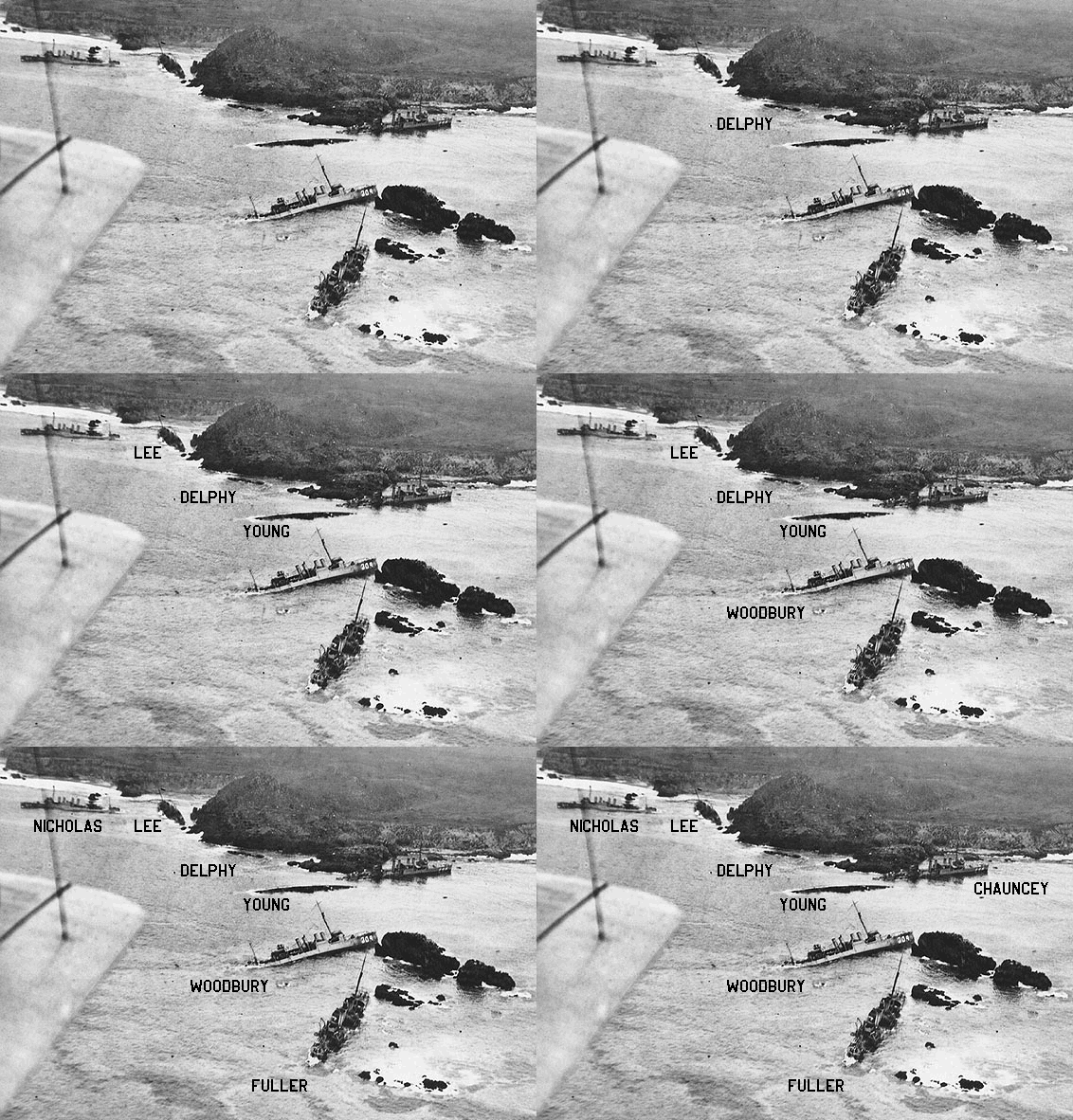
Seven destroyers ran aground, with two others sustaining damage. The ships lost were:
1. USS Delphy (DD-261) – flagship of the squadron
2. USS S.P. Lee (DD-310)
3. USS Young (DD-312)
4. USS Woodbury (DD-309)
5. USS Nicholas (DD-311)
6. USS Fuller (DD-297)
7. USS Chauncey (DD-296)
Tragically, 23 sailors lost their lives, primarily from the USS Delphy and USS Young.
Public Domain
In the investigation that followed, the Navy concluded that navigational errors, compounded by the challenging weather conditions, were primarily to blame. The fleet’s commander, Captain Edward H. Watson, was court-martialed along with several others. Watson took responsibility for the disaster, and while many were found guilty, most of the officers faced no severe retribution due to the extenuating circumstances.
The Navy used the incident as an opportunity to assess and improve its navigational training, communication systems, and safety protocols. Additionally, ships were salvaged where possible, but many remnants remain at the site to this day.
The Honda Point Disaster had lasting effects on naval operations:
1. Training Improvements: There was a renewed emphasis on navigational training to ensure such errors were minimized in the future.
2. Technological Advancements: The disaster highlighted the need for better navigational tools and communication systems, prompting further research and investment in these areas.
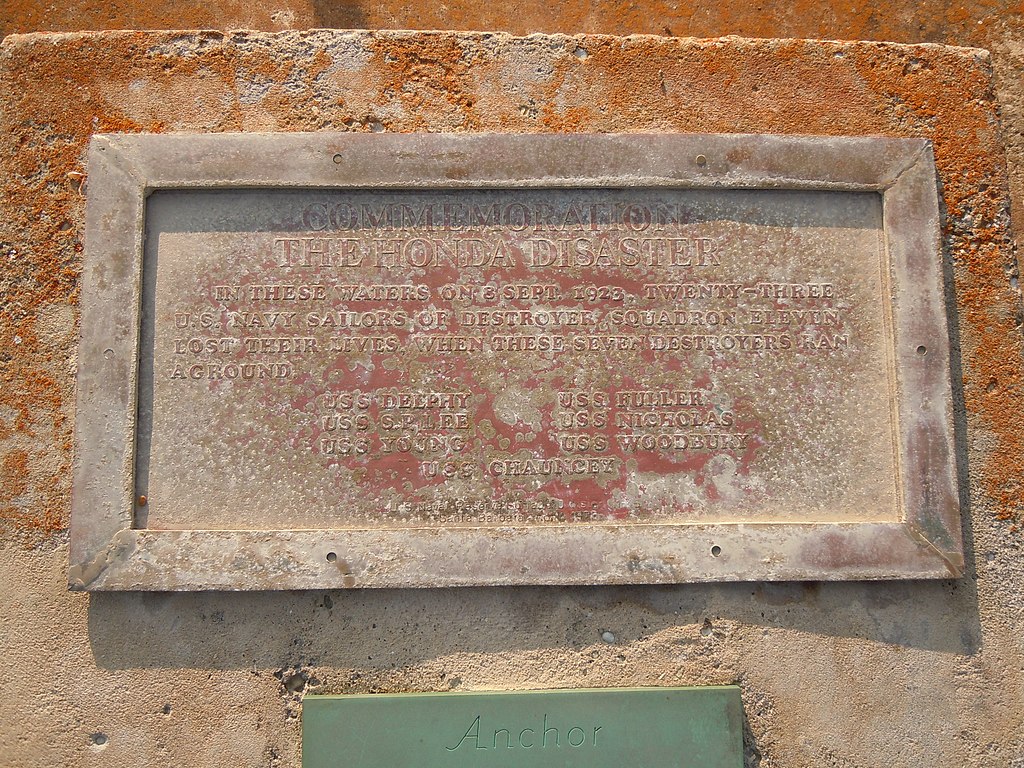
3. Remembrance: The tragic loss of life is commemorated by the Navy, ensuring that the lessons from that fateful day are not forgotten.
By HummersRock88 – Own work, CC0, https://commons.wikimedia.org/w/index.php?curid=27668362
In conclusion, the Honda Point Disaster stands as a somber reminder of the unpredictability of the sea and the inherent risks of naval operations. While a tragic event, it spurred the Navy to make essential changes, ensuring safer voyages for future generations of sailors.




 DAVE DOES HISTORY
Leave a comment