
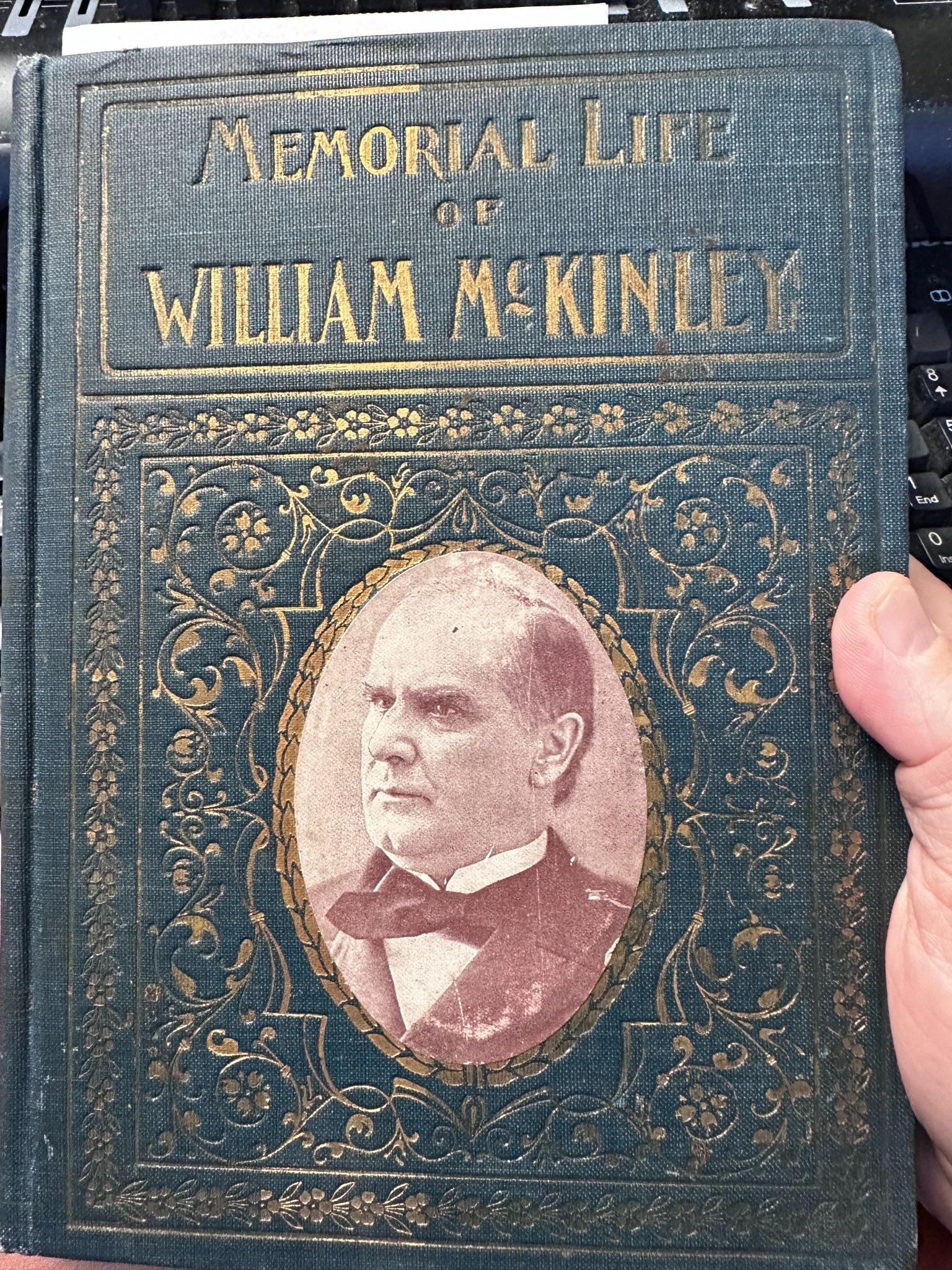
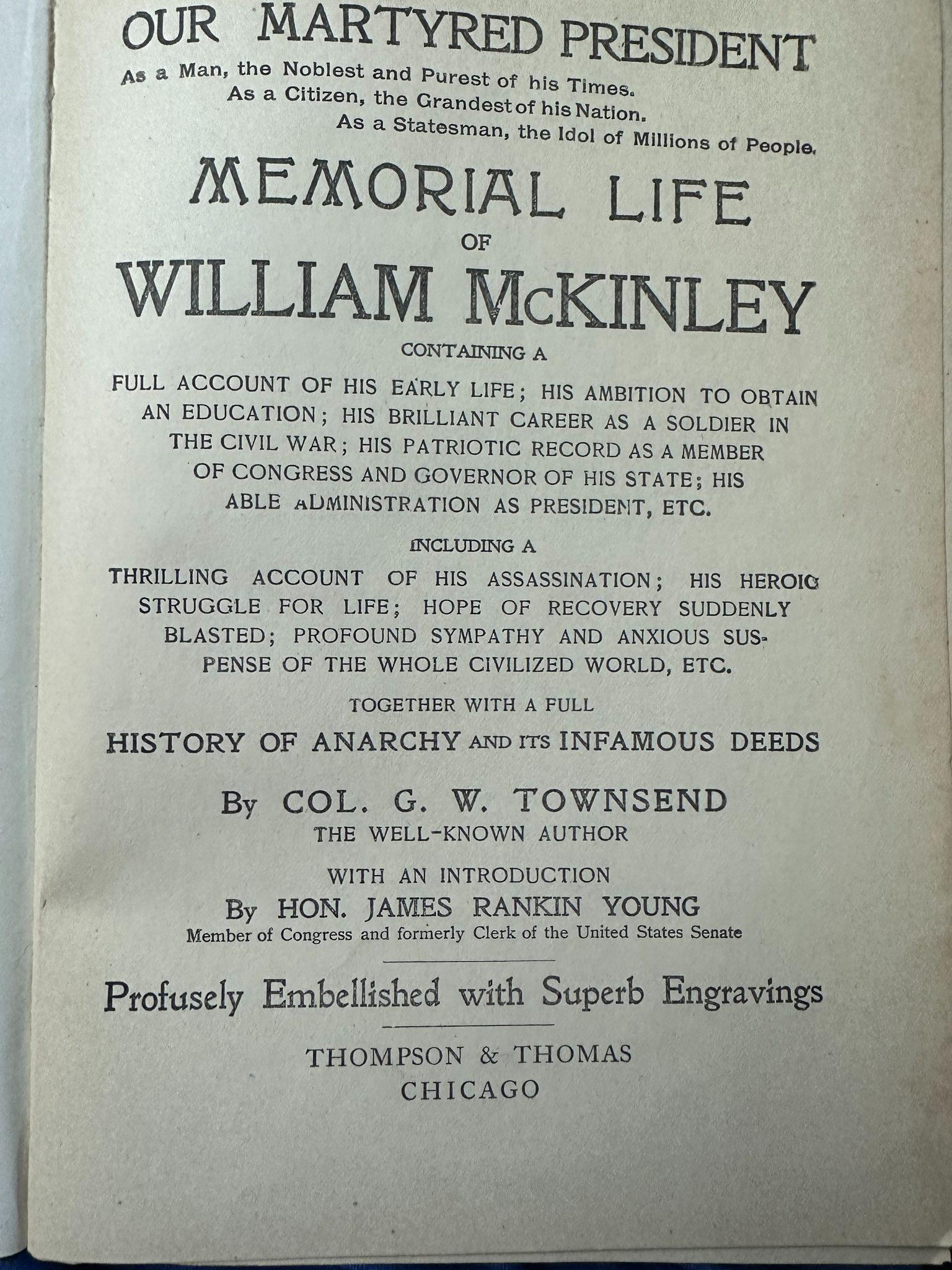
The early days of September 1901 bore witness to a tragic event that would reshape the course of American history. President William McKinley, the 25th president of the United States, attending the Pan-American Exposition in Buffalo, New York, fell victim to an assassin’s bullet. His death not only marked the end of his life but also heralded significant shifts in the nation’s political landscape.
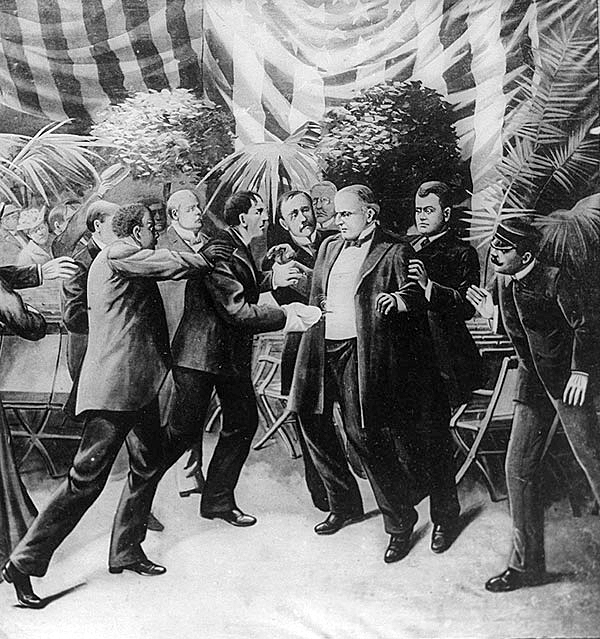
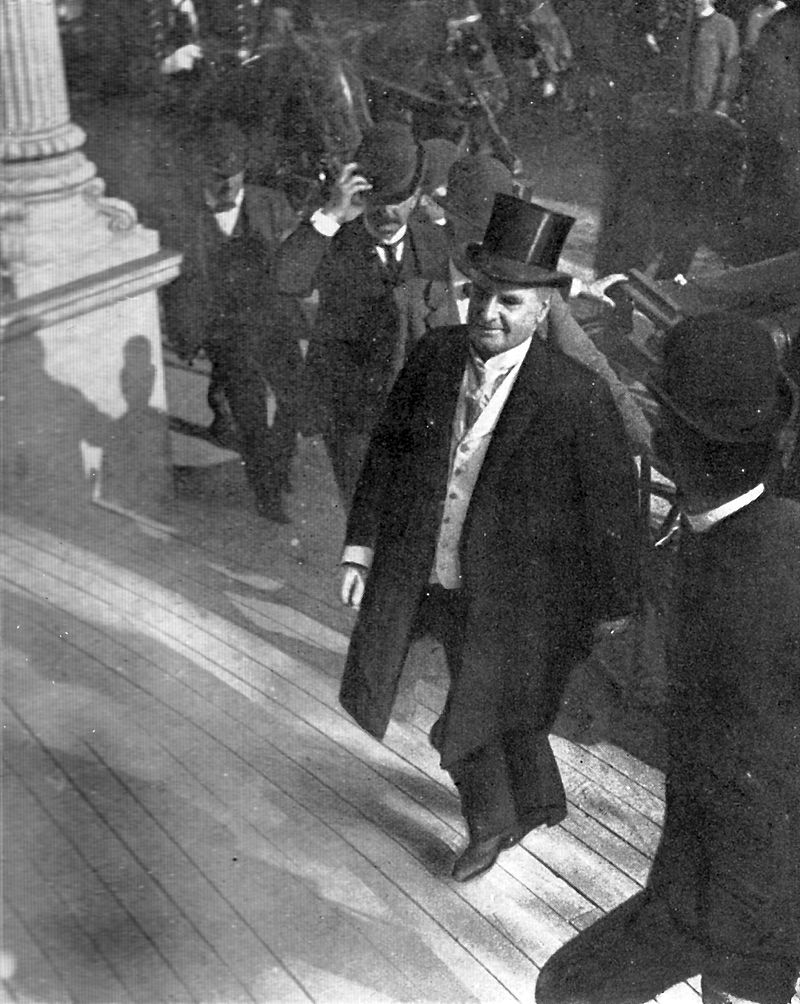 The setting was the Temple of Music, a beautifully constructed building at the Pan-American Exposition. On September 6, 1901, As President McKinley extended his hand in greeting, Leon Czolgosz, an anarchist, shot him twice in the abdomen. McKinley, always the gentleman even in the face of danger, expressed concern for his assailant as the crowd sought retribution. Czolgosz was quickly subdued and taken into custody.
The bullets did not kill McKinley instantly. Over the next few days, the President’s health would see improvements and declines. Surgeons were unable to locate one of the bullets, and in the unsanitary conditions, gangrene began to set in around the paths of the bullets. On September 14, President McKinley succumbed to his wounds and passed away.
The nation mourned. McKinley’s death was a profound shock, prompting widespread grief and outrage. Vice President Theodore Roosevelt, on a hiking trip in the Adirondacks, was immediately informed and rushed to Buffalo. Upon McKinley’s death, Roosevelt was sworn in as the 26th president of the United States.
Public Domain
Leon Czolgosz, the assassin, was put on trial. Showing no remorse, he claimed he killed the President for the good of the people and saw McKinley as a symbol of oppression. He was swiftly found guilty and was executed in the electric chair on October 29, 1901.
William McKinley, during his tenure, had been a popular president. He led America to victory in the Spanish-American War, resulting in the U.S. acquiring territories like Puerto Rico, Guam, and the Philippines. His policies favored big businesses and maintained the gold standard, leading to economic prosperity.
Though his presidency was cut short, his legacy paved the way for America’s rise as a global power. The decisions and policies he implemented, especially in foreign affairs, set the stage for the U.S.’s role in the 20th century.
The assassination also catapulted Theodore Roosevelt, a progressive and robust figure, to the presidency. Roosevelt’s policies would shift from those of McKinley, with a stronger focus on trust-busting, conservation, and an even more assertive foreign policy, exemplified by the construction of the Panama Canal.
The assassination of William McKinley was more than just a tragic event; it marked a turning point in American history. As the nation mourned the loss of its leader, it also unwittingly ushered in a new era that would see the United States play an increasingly dominant role on the world stage. McKinley’s legacy, combined with Roosevelt’s vigor, ensured that the dawn of the 20th century was America’s to shape.


 DAVE DOES HISTORY
Leave a comment