
You might think of Robert Oppenheimer as the Father of the Atomic Bomb. But did you know that he is also one of the Fathers of the Black Hole? On the same day that Nazi Germany launched World War II in Europe, September 1, 1939, Oppenheimer and his student, Hartland Snyder, published a paper which solved one of Einstein’s equations, revealing the probability of the existence of Black Holes.
Imagine blowing up a balloon slowly. As you blow, the balloon expands. Now, think of our universe like that balloon. For a long time, scientists believed that our universe was expanding, just like that balloon. But what if, instead of expanding forever, our universe was destined to collapse back into a tiny point, just like a deflating balloon?
Enter the Oppenheimer-Snyder model. Proposed by J. Robert Oppenheimer and Hartland Snyder in the 1930s, this model presented a revolutionary idea regarding the life cycle of our universe.
Oppenheimer and Snyder suggested that if the universe contained enough matter (think of stars, planets, galaxies, and all the cosmic stuff), the gravitational pull from all that matter could eventually cause the universe to stop expanding and start contracting. This contraction would lead the universe to collapse into a tiny point, a process similar to what we see when massive stars end their lives in spectacular explosions and then become black holes.
This point of infinite density, where time and space become unrecognizable, is what scientists refer to as a “singularity.”
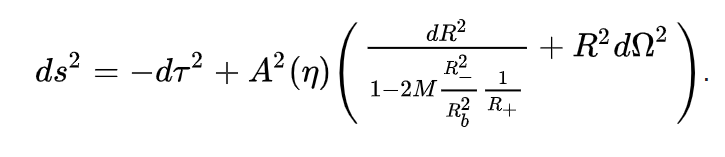
The Oppenheimer-Snyder model set the stage for many future theories about the universe’s birth and ultimate fate. One person deeply influenced by this idea was none other than the brilliant physicist Stephen Hawking.
Hawking took the ideas presented in the Oppenheimer-Snyder model and went a step further. He began to think about the beginning of the universe, the Big Bang. If the universe could collapse into a singularity, could it have also started from one?
Alongside another physicist, Roger Penrose, Hawking demonstrated that, under specific conditions, the universe could indeed have started as a singularity. This realization was groundbreaking and cemented the notion of the Big Bang as a point of origin for our universe.
But Hawking didn’t stop there. He also explored black holes in-depth, understanding how they work and even proposing that they aren’t as “black” as they seem. Instead, they might emit radiation (known as “Hawking radiation”), a revolutionary idea that combined quantum mechanics and general relativity in novel ways.
The Oppenheimer-Snyder model, in suggesting the cosmic dance of expansion and collapse, paved the way for a deeper understanding of our universe’s origins and potential fate. Stephen Hawking, influenced by this, went on to unravel many of the universe’s mysteries, changing how we think about black holes and the very nature of the cosmos. It’s a testament to how one theory can set the stage for countless discoveries down the road!




 DAVE DOES HISTORY
Leave a comment