
Public Domain
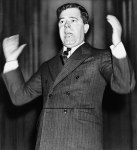
Born on August 30, 1893, in Winn Parish, Louisiana, Huey Pierce Long Jr. grew up in a middle-class family. His ambition and intelligence led him to study at the University of Oklahoma and later Tulane University Law School. By 1915, Long passed the bar and began his legal career in Winnfield, taking up cases against big businesses and championing the causes of the underprivileged, thereby setting the tone for his political career.
Public domain
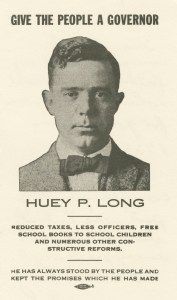
Long’s entry into politics was marked by his election to the Louisiana Public Service Commission in 1918, where he continued his fight against big businesses. However, his sights were set on the governorship. His first campaign in 1924 ended in defeat, but his relentless spirit, charismatic oratory, and pro-working-class stance saw him elected as Governor of Louisiana in 1928.
As governor, Long embarked on a series of populist reforms that earned him both admiration and enemies. He improved infrastructure, built roads, bridges, hospitals, and schools, and championed free textbooks for children and affordable utilities. But his authoritarian tendencies, coupled with accusations of corruption, led to an impeachment effort by his detractors in 1929. However, it was unsuccessful, and Long emerged even more powerful.
Elected to the U.S. Senate in 1930, Long delayed taking his seat until 1932 to ensure that his successor as governor would continue his policies. In the Senate, Long was known for his fervent speeches, often criticizing the concentration of wealth and advocating for wealth redistribution. One of his significant accomplishments was pushing for the “Long Plan,” which sought to provide veterans with bonuses.
Public Domain
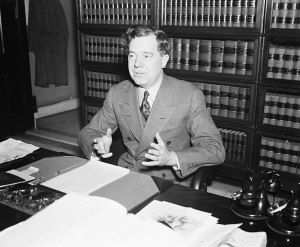
Despite initially supporting Franklin D. Roosevelt and his New Deal, Long soon became a vocal critic. He believed the New Deal was too lenient on the wealthy and didn’t do enough to help the impoverished masses. This rift led Long to formulate his alternative plans.
Long was often critical of American interventions in Latin America. During the Chaco War between Bolivia and Paraguay in the early 1930s, Long advocated for a neutral stance and criticized American businesses that sought to profit from the conflict.
Possibly his most famous endeavor, the “Share Our Wealth” program, proposed in 1934, was Long’s answer to the economic disparities of the Great Depression. The plan called for heavy taxes on the wealthy and the distribution of this revenue to provide every American family with a basic household grant and guaranteed income.
By 1935, Long’s popularity had soared, and he was considered a serious contender for the 1936 presidential elections. Some believed he could potentially split the Democratic vote and weaken Roosevelt, but his aspirations were cut short.
On September 8, 1935, Huey Long was shot in the Louisiana State Capitol by Dr. Carl Weiss. He died two days later. The motive remains a topic of debate, with some believing Weiss was avenging a smear campaign against his family, while others speculate about broader political conspiracies.
Huey Long remains a polarizing figure in American history. Admirers see him as a champion of the working class who sought to break the shackles of corporate greed and wealth inequality. Detractors, on the other hand, view him as a demagogue with authoritarian tendencies. Regardless of one’s stance, there’s no denying the impact Long had on Louisiana and American politics. His “Share Our Wealth” ideas, though never fully realized, have influenced subsequent political debates about wealth, equity, and the role of government in addressing economic disparities.


 DAVE DOES HISTORY
Leave a comment