
August 30, 1862: The Climactic Third Day of the Second Battle of Bull Run
The third day of the Second Battle of Bull Run (or Second Manassas) saw some of the most intense and decisive fighting of the entire engagement. After the inconclusive and bloody actions of the preceding days, both Confederate and Union forces sought to deliver a decisive blow.
The morning was relatively quiet, characterized by the Union forces recovering and preparing. Major General John Pope, still operating under a series of misunderstandings about the Confederate dispositions and intentions, remained convinced that the Confederates were retreating. This belief persisted despite reports from Union cavalry patrols that Confederate forces under James Longstreet were positioned on the battlefield’s southern portion, forming a continuous line with Stonewall Jackson’s corps to the north.
Holding onto his mistaken belief, Pope ordered a massive assault against Jackson’s position around 3 p.m. The Union assaults, although fierce and made by determined troops, were thrown against well-prepared Confederate positions. The Confederate troops, sheltered behind an unfinished railroad embankment, held firm against these repeated Union charges.
Pope’s army launched several attacks against Jackson’s position, but each was repulsed with heavy casualties. However, Pope’s persistence in attacking Jackson had a strategic consequence: it left the Union’s left flank vulnerable.
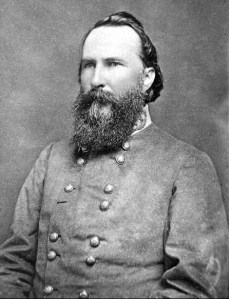
Public Domain
Around 4 p.m., the Confederate counterattack that would decide the battle began. Longstreet, whose corps had been largely unengaged up to this point, saw the exposed left flank of the Union army and initiated a massive, sweeping assault, using over half of the Confederate forces present on the battlefield.
This attack, one of the largest simultaneous assaults of the Civil War, caught the Union left flank by surprise and began to roll it up. With the weight of Longstreet’s attack bearing down on them, the Union lines began to collapse.
By early evening, the Union army was in full retreat across Bull Run towards the defenses of Washington D.C. Confederate cavalry under J.E.B. Stuart exploited the chaos, charging retreating Union units and adding to the confusion.
As darkness fell, the Confederate forces halted their pursuit, exhausted from the day’s fighting. They had secured a clear and decisive victory, one that would boost Southern morale and further diminish Northern hopes for a swift end to the war.
The events of August 30, 1862, are emblematic of the broader patterns of the Second Battle of Bull Run. Union miscommunication and misunderstanding, combined with Confederate tactical prowess and the timely application of force, led to a decisive Confederate victory. This battle firmly established Robert E. Lee’s reputation as a master tactician and gave the Confederacy hope that foreign recognition and intervention might be possible. On the Union side, it led to further introspection about leadership in the Army of the Potomac and set the stage for the forthcoming Maryland Campaign.
The aftermath of the Second Battle of Bull Run (or Second Manassas) brought about significant changes in the strategic outlook of the Civil War’s Eastern Theater. The Confederate victory had both immediate tactical implications and broader strategic repercussions.
1. **Union Morale and Leadership:**
– The defeat at Bull Run was a significant blow to Union morale. Coming on the heels of the Union’s Seven Days’ Battles defeats, it seemed the Army of the Potomac could not secure a clear victory against Lee.
– Major General John Pope, who had been brought to the Eastern Theater with much hope and promise, was relieved of his command of the Army of Virginia soon after the battle. Command complications and infighting among generals further exacerbated the Union’s leadership issues.
– Pope’s removal saw the Army of Virginia merged into the Army of the Potomac, which was once again placed under the command of Major General George B. McClellan.
2. **Confederate Morale Boost:**
– In stark contrast to the Union, Confederate morale soared after the victory. The Army of Northern Virginia, under Robert E. Lee, had managed to defeat a larger force, reinforcing the belief in the superiority of their leadership and fighting spirit.
3. **Strategic Offensive Possibilities for the Confederacy:**
– Emboldened by their success and seeking to capitalize on the disrupted Union forces, Lee decided to take the war to Northern soil. This decision marked the beginning of the Maryland Campaign, which would culminate in the Battle of Antietam. Lee’s hope was manifold: a victory on Union soil might demoralize the North, lead to European recognition and intervention in favor of the Confederacy, and possibly influence the upcoming midterm elections.
4. **Defensive Posture of the Union:**
– The Union army retreated to the defensible lines of Washington D.C., licking its wounds. McClellan, known for his organizational skills, was tasked with rebuilding and reforming the army. However, his notorious caution would soon be tested as Lee moved into Maryland.
5. **Political Repercussions:**
– The defeat at Bull Run and the threat of a Confederate invasion of the North placed increased pressure on President Abraham Lincoln. He was already grappling with the decision of issuing the Emancipation Proclamation. A strong military victory was needed to provide a suitable context for its announcement without it seeming like an act of desperation.
The period immediately after the Second Battle of Bull Run was one of flux and transition. The Confederate victory at Bull Run had reshaped the war’s narrative, giving Lee the confidence to launch his first invasion of the North. The subsequent weeks would prove critical in shaping the war’s trajectory, culminating in the bloody day at Antietam, which would have profound political and military implications for both sides.



 DAVE DOES HISTORY
Leave a comment