
Ladies and gentlemen of the House,
It is with utmost importance that I address the matter of the conflict between the British Empire and the Zanzibar Sultanate, known as the Anglo-Zanzibar War. This war, albeit brief, remains a significant episode in our Empire’s vast and intricate tapestry.
Zanzibar, situated off the eastern coast of Africa, had been under the influence of both our glorious British Empire and the German Empire. We, the British, sought to preserve the balance of power in the region, ensuring stability and protecting our interests. The late Sultan, Hamad bin Thuwaini, was a friend to the British Empire. His sudden and unexpected death in August 1896 raised concerns. His successor, Sultan Khalid bin Barghash, was not someone we had sanctioned, nor did we believe he held the best interests of the British Empire at heart.
The necessity of this conflict arises from our obligations under the 1886 Heligoland-Zanzibar Treaty, in which both the British and the Germans delineated their respective spheres of influence. For the sake of balance, the British were granted the right to determine the succession of the Zanzibari Sultanate. It was, therefore, imperative for our interests and treaty obligations that any sultan in Zanzibar enjoyed the confidence of the British Empire. Sultan Khalid’s assumption of power without our consent was a direct challenge to this agreement.
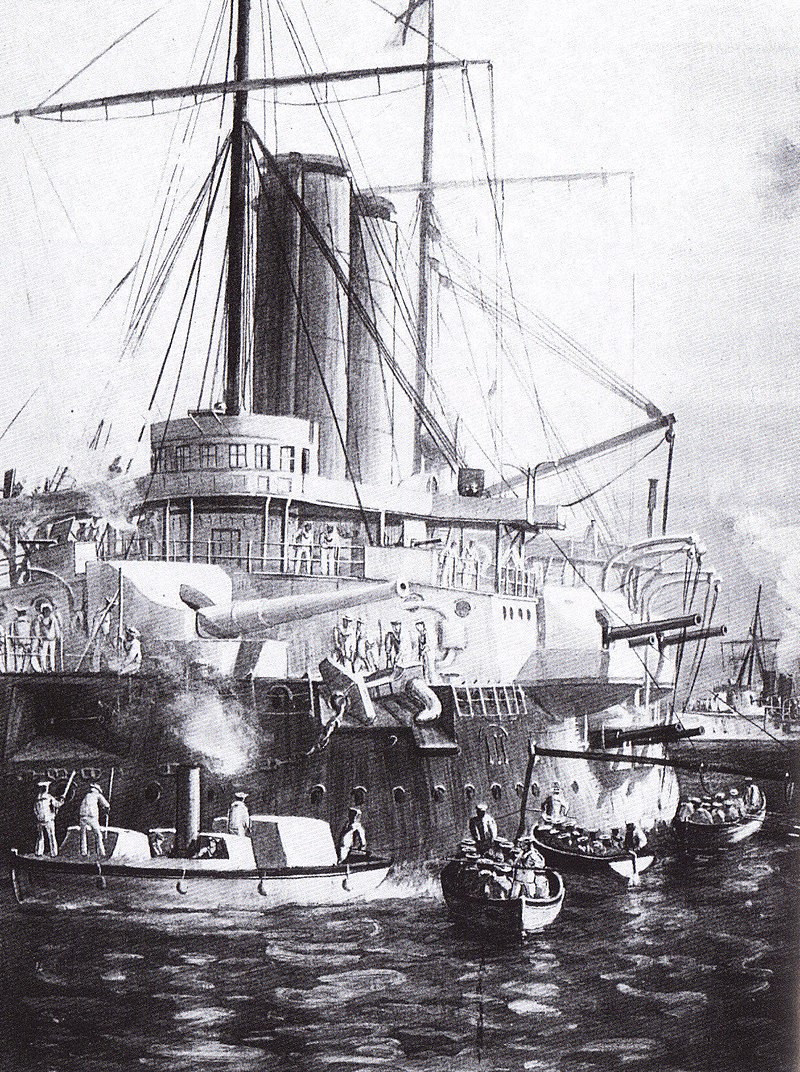
Public Domain
Our esteemed Royal Navy, anchored in the harbour, presented Sultan Khalid with an ultimatum to step down. When he refused and fortified his palace, we took decisive action. On the morning of 27th August 1896, British ships, under the command of Rear-Admiral Harry Rawson, opened fire on the palace. The bombardment, fierce though short-lived, brought the conflict to an end in a mere 38 minutes, earning its record as the shortest war in history.
The swift resolution can be attributed to the overwhelming might and superiority of the Royal Navy and our preparedness against Sultan Khalid’s forces, which were, unfortunately for him, severely outmatched.
Following the conflict, we swiftly installed Sultan Hamoud bin Mohammed, who was more amicable to our interests. The terms of peace required Sultan Khalid to pay for the shells fired upon his palace and were generous enough to allow him refuge in the German consulate before he fled to German East Africa.
In conclusion, the Anglo-Zanzibar War, brief as it was, stands as a testament to our Empire’s commitment to preserving stability, honouring our treaties, and safeguarding British interests abroad. We acted swiftly and decisively in Zanzibar, ensuring that the rightful order was maintained in this vital region.
I thank you for your attention.
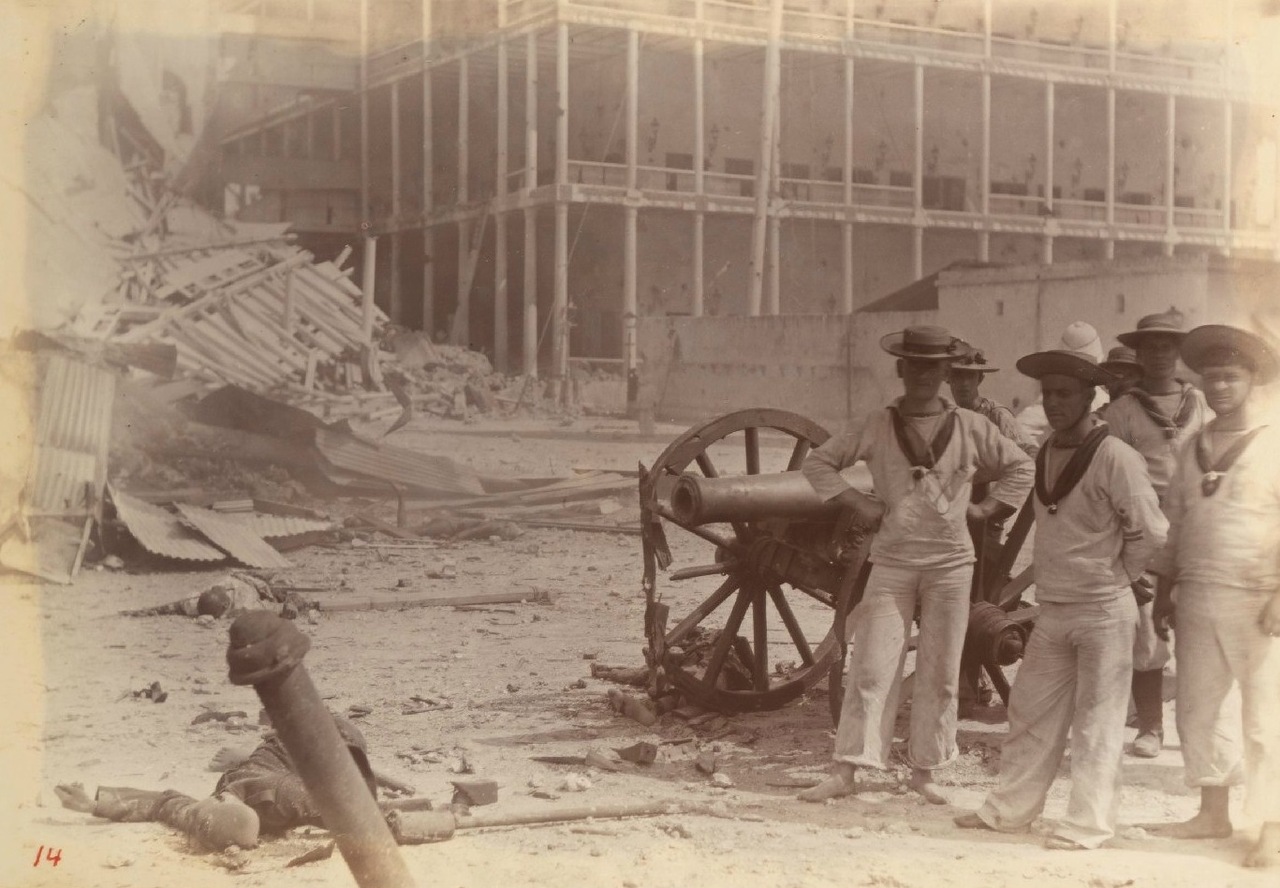
Public Domain




 DAVE DOES HISTORY
Leave a comment