
Today, we’ll discuss a pivotal moment during the War of 1812 — the burning of Washington, D.C. by British troops on August 24, 1814. To truly understand the significance and implications of this event, we’ll delve into the military context, recount the events of that fateful day, and ponder its aftermath.
The War of 1812, often termed the “Second War of Independence,” was primarily fought between the United States and Britain. By the summer of 1814, the British had defeated Napoleon in Europe, freeing up seasoned troops to focus on the American front. The British planned a three-pronged attack — a diversion to upstate New York, a main assault on Baltimore, and a raid on Washington, D.C.
The British forces, led by Major General Robert Ross and Rear Admiral George Cockburn, advanced upon Washington, facing relatively little resistance. The American troops, under the command of General William Winder, were inexperienced, ill-prepared, and heavily outnumbered. They clashed with the British at the Battle of Bladensburg, a disastrously one-sided engagement that opened the path to the nation’s capital.
As British forces entered Washington, they began systematically setting fire to public buildings. Iconic structures, including the White House (then known as the Presidential Mansion), the Capitol, the Library of Congress, and the Navy Yard, were engulfed in flames. The fires illuminated the night sky, a dramatic display of British dominance.
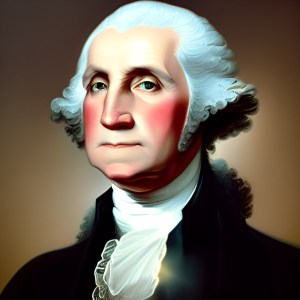
President James Madison and his wife, Dolley, were in the city as the British approached. Dolley Madison is famously remembered for her courage and presence of mind. As she fled the White House, she ensured that Gilbert Stuart’s portrait of George Washington was saved from potential destruction. President Madison had already left to join the troops, and after the defeat at Bladensburg, he met up with his wife as they both fled to safety in Virginia.
While the burning of Washington was undoubtedly a psychological blow and a humiliation for the young American republic, its military significance is debatable. The British didn’t hold Washington for long, and they didn’t leverage the event into any strategic advantage. Instead, the destruction galvanized American resistance. Notably, the subsequent British attack on Baltimore was repulsed, leading to the penning of the “Star-Spangled Banner” by Francis Scott Key.
The recovery and rebuilding process in Washington began almost immediately. Most of the damaged structures were made of stone, so only their interiors needed extensive repairs. By 1817, both the Capitol and the White House were rebuilt and operational. The destruction, however, did raise questions about the suitability and safety of Washington, D.C. as the nation’s capital. Still, the decision was made to invest in its reconstruction rather than move the capital to another location.
In a symbolic sense, the recovery took longer. The burning of Washington was a blow to American pride, but it also provided a rallying point. The U.S. emerged from the War of 1812 with a renewed sense of national identity and a commitment to defend its territory and interests.
The burning of Washington, D.C. in 1814 serves as a vivid reminder of the vulnerabilities and challenges faced by the young American nation. Yet, the resilience and determination demonstrated in its aftermath also underscore the spirit and tenacity that has defined the United States throughout its history.



 DAVE DOES HISTORY
Leave a comment