
Amidst the glittering courts of 18th-century France, few figures rose as meteorically and fell as tragically as Madame du Barry. A woman of unparalleled beauty, wit, and charm, she not only enchanted King Louis XV but also found herself enmeshed in a web of courtly intrigues, rivalries, and eventually, the deadly gears of the French Revolution.
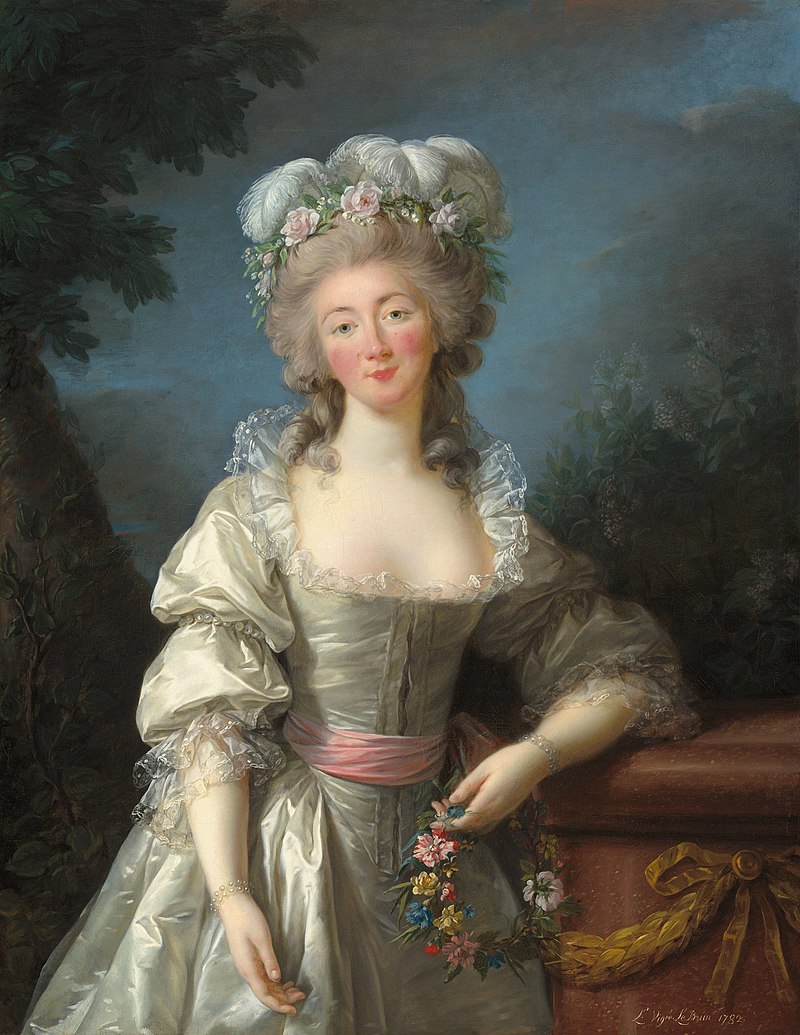
Born Jeanne Bécu on August 19, 1743 to a seamstress, du Barry’s early life gave no hint of the splendor that awaited her. Her youth was marked by poverty and the stigma of illegitimacy. However, her striking beauty soon caught the attention of high society, and she became a courtesan in Paris.
It was here that Jeanne met Jean-Baptiste du Barry, a pimp known for his connections with the city’s wealthy and powerful. Recognizing her potential to ascend the social ladder, he introduced her to the upper echelons of Parisian society. By 1768, Jeanne became known as Madame du Barry.
King Louis XV first met du Barry in 1768. Enchanted by her beauty and vivacity, she soon became his favorite companion. But for her to become the official royal mistress or *maîtresse-en-titre*, she needed a title. Louis XV arranged her marriage to Jean’s brother, Comte Guillaume du Barry, thus giving her the necessary status.
As the King’s mistress, du Barry enjoyed immense privileges. She received extravagant gifts, wielded political influence, and became an important patron of the arts. But this newfound power came at a cost.
The French court was notorious for its factions and rivalries, and du Barry found herself at the heart of many of them. Her most famous adversary was Marie Antoinette, the Dauphiness (and future queen). The two women often found themselves in opposing factions, their differences amplified by courtly gossip and intrigue.
However, du Barry wasn’t merely a pawn in the court’s games. She used her influence to support various political factions and was deeply involved in many of the King’s decisions. Her power was such that many ministers sought her favor to secure their positions.

When King Louis XV died in 1774, du Barry’s world crumbled. The new king, Louis XVI, was married to Marie Antoinette, who had no love for the former mistress. Du Barry was swiftly exiled to her estate at Luciennes, away from the glittering halls of Versailles.
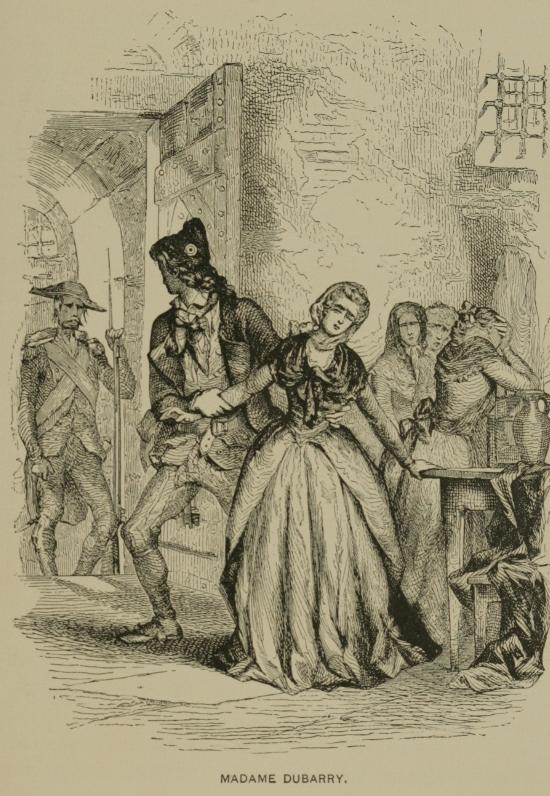
The French Revolution, which began in 1789, had little regard for the nobility and those associated with the old regime. Du Barry, with her ties to the former king and her lavish lifestyle, became a target. Despite her attempts to keep a low profile, she was arrested in 1793.
Public Domain
She was accused of treason and of aiding the counter-revolutionaries. Despite her pleas and attempts to use her old connections, du Barry was sentenced to death. On December 8, 1793, she was executed by guillotine.
Madame du Barry’s life story is emblematic of the volatile nature of 18th-century French society — where one could rise from obscurity to the highest echelons of power, only to fall victim to political upheaval. Her tale is a poignant reminder of the fleeting nature of favor and the dangers of courtly intrigue. Through all the scandals, rivalries, and tragedies, du Barry remains a captivating figure in the annals of French history, embodying the extravagance, political drama, and ultimate upheaval of her time.




 DAVE DOES HISTORY
Leave a comment