
The transition of the Roman Republic into the Roman Empire was marked by intrigue, power struggles, and the unprecedented rise of one man: Augustus, formerly known as Octavian. On August 19, 43 BCE, at the tender age of 20, he would achieve the rank of consul, a feat unheard of for someone so young. Here’s a deep dive into the political mastery and events that paved the way for Augustus’ rapid ascendancy.
Julius Caesar’s assassination in 44 BCE threw the Roman political landscape into chaos. Before his death, Caesar had adopted his grandnephew, Octavian, and declared him as his heir. When news of Caesar’s demise reached Octavian, he was in Apollonia completing his military studies. He promptly returned to Rome, keenly aware of the immense inheritance, both in terms of wealth and political legacy, that awaited him.
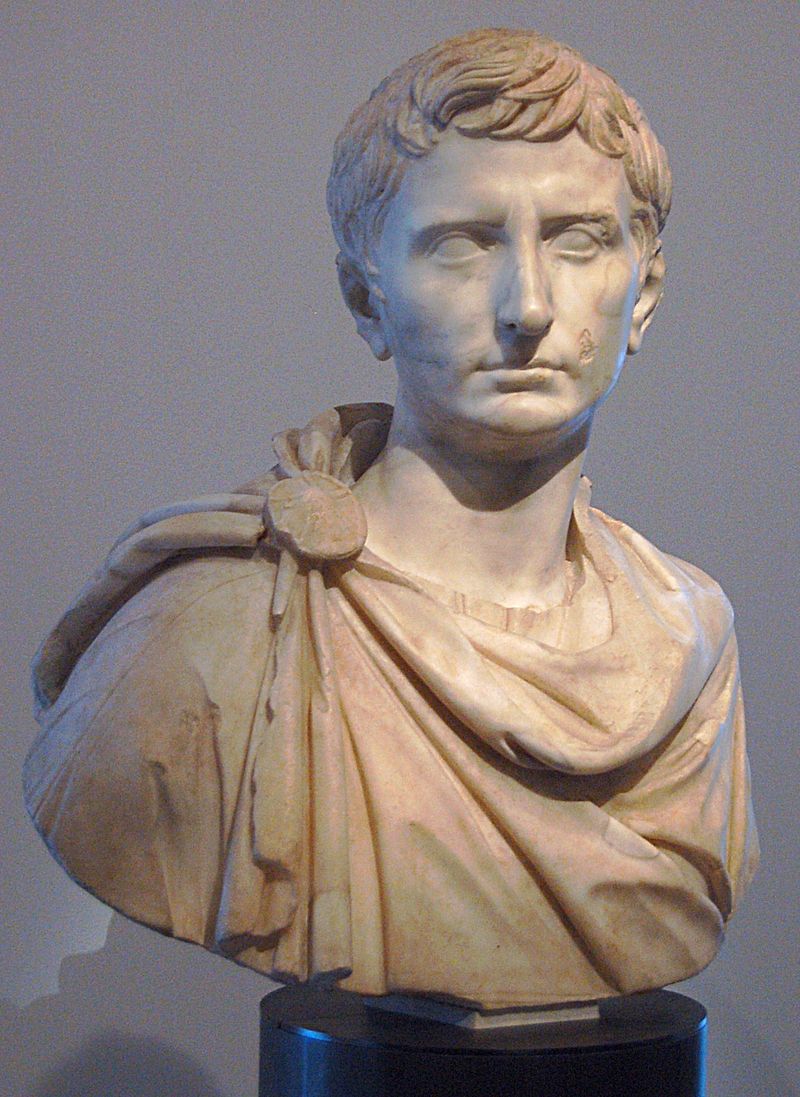
On his return, Octavian found the political situation in Rome precarious. Mark Antony, Caesar’s close friend and ally, was consolidating power. Relations between Octavian and Antony were initially cordial, with Octavian even offering to finance the legacies Caesar had promised in his will using his personal funds. However, the alliance was tenuous at best and soon broke down, leading to mutual mistrust and hostility.
By 43 BCE, the political scenario was complicated. The Senate, in its bid to counterbalance Antony’s rising power, supported Octavian. Two of the consuls for that year, Aulus Hirtius and Gaius Vibius Pansa, were embroiled in a conflict against Antony. Both would die in the confrontations that ensued, creating a vacuum in the consulship.
Octavian, showcasing both his military and political acumen, positioned himself as the Republic’s defender against the “renegade” Antony. With the backing of the Senate and leveraging his status as Caesar’s heir, Octavian managed to get himself elected as consul in the summer of 43 BCE, filling one of the vacant positions. His election was revolutionary — not only because of his age but also because he wasn’t a senator.
Octavian’s consulship was a stepping stone. Later in 43 BCE, recognizing the need for allies, he formed the Second Triumvirate with Mark Antony and Lepidus. While this alliance would undergo its tests, it marked the solidification of Octavian’s power. The Triumvirs went on a purge of their political enemies, culminating in the notorious proscriptions.
Over the next decade, the alliance’s dynamics would change, and power struggles would ensue, but Octavian’s star was on the rise. By 27 BCE, he would be given the title “Augustus” and become Rome’s first emperor, marking the end of the Roman Republic and the birth of the Roman Empire.
The consulship of Augustus in 43 BCE, while just one year in a long and illustrious career, was emblematic of his political savvy. At a juncture when Rome was embroiled in chaos and uncertainty, a young Octavian, bearing the weight of Caesar’s legacy, maneuvered through the Republic’s complex politics to pave the way for an empire that would last for centuries. The lessons from his leadership, adaptability, and vision are timeless, offering insights into the rise of one of history’s most influential rulers.




 DAVE DOES HISTORY
Leave a comment