
On August 16, 1920, the Cleveland Indians were playing against the New York Yankees at the Polo Grounds in New York City. Ray Chapman, the star shortstop for the Indians, stepped to the plate in the top of the fifth inning. On the mound for the Yankees was submariner Carl Mays.
During this era, pitchers would often dirty up baseballs with tobacco juice, dirt, and other substances to make them harder to see and hit – a practice which was legal at the time. The ball could become very dark and scuffed, making it difficult for batters to pick up out of the pitcher’s hand, especially during twilight or in stadiums where shadows could be a factor.
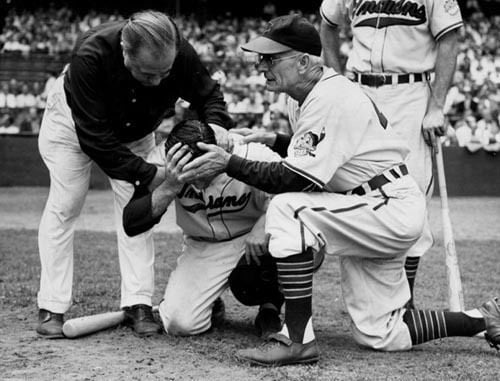
Quad City Times (Contributed)
Mays delivered a submarine pitch (a delivery style where the pitcher releases the ball with his arm extended downward). Chapman apparently didn’t see the ball well and didn’t react quickly enough. The pitch struck him on the left side of his head with a loud crack that many in the stadium initially thought was the sound of the ball hitting the bat. Chapman collapsed to the ground, unconscious.
Chapman was assisted off the field and taken to a nearby hospital. Despite undergoing surgery, he tragically passed away in the early hours of August 17, 1920. This marked the first and only death due to an on-field injury in Major League Baseball history.
The tragic death of Chapman had several long-term effects on baseball:
One direct consequence of this event was the eventual introduction of batting helmets. Though it took many years for helmets to be widely adopted (and not until the 1950s for them to be made mandatory), Chapman’s death was a significant catalyst in recognizing the need for better protection for batters.

Umpires were now required to replace dirty or scuffed baseballs more frequently. This practice not only increased the safety for batters but also effectively put an end to the “spitball” and other pitches that relied on altering the ball’s surface. The following season, in 1921, the spitball was officially banned, with only a few pitchers grandfathered in and allowed to continue using the pitch.
The pitcher, Carl Mays, was deeply affected by the incident for the rest of his life. Although he continued his career and even won two games in the World Series that year, he was vilified by many in the baseball community and the general public. There was talk of banning him from baseball, but after a review, it was determined that there was no malicious intent on his part.
In summary, the tragic death of Ray Chapman led to significant changes in baseball, aimed at improving player safety and ensuring such a tragedy would not happen again. The incident serves as a somber reminder of the risks athletes face, even in non-contact sports like baseball.



 DAVE DOES HISTORY
Leave a comment