
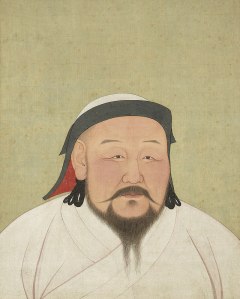
The Battle of Kōan (also known as the Second Battle of Hakata Bay) on August 15, 1281ce was the second attempt by the Mongol-led Yuan dynasty of China, under Kublai Khan, to invade Japan following the first failed attempt in 1274. This invasion is best remembered for the legendary “divine wind” or “kamikaze” that is said to have saved Japan from the Mongol invasion.
Public Domain
After the failed invasion in 1274, Kublai Khan was determined to subdue Japan. He spent years preparing a much larger invasion force. This force consisted of two separate fleets: a northern fleet from Korea and a southern fleet from China.
The plan was for the two fleets to rendezvous and then launch a combined assault on Japan. However, communication issues and other logistical challenges prevented the two fleets from effectively joining forces.
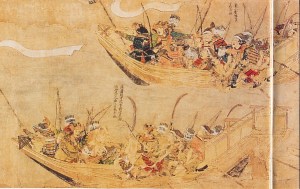
The Mongols launched their attack in June 1281. The southern fleet faced resistance in Kyushu, while the northern fleet battled in the Tsushima Strait. The Japanese, learning from the first invasion, had constructed walls and fortifications which made Mongol landing attempts difficult. Continuous guerrilla attacks by the Japanese further hampered Mongol efforts.
As the Mongols struggled with the invasion, a massive typhoon hit in August 1281. The Mongol ships, which were not built for the open ocean (being largely flat-bottomed vessels meant for riverine and near-shore operations), were devastated. The majority of the Mongol fleet was destroyed, leading to a catastrophic loss of life. The remnants of the invasion force that survived were pursued and defeated by the Japanese.
The Mongol defeat solidified the belief among the Japanese that their home islands were divinely protected. The “kamikaze” or “divine wind” became a part of Japanese legend, symbolizing divine intervention to protect the nation.
Public Domain
The attempted invasions by the Mongols had lasting impacts on Japan. Militarily, it led to the strengthening of coastal defenses. Politically, the ruling Kamakura shogunate gained prestige from successfully repelling the invasions, but the efforts also drained the regime’s resources, contributing to its eventual downfall in the next century. Additionally, the invasions left a lasting impression on Japanese culture, influencing everything from art to literature.
In essence, the Battle of Kōan was not only a pivotal military event but also had profound cultural and political ramifications for Japan, shaping its self-perception and its view of foreign threats for centuries to come.




 DAVE DOES HISTORY
Leave a comment