
One of the more surreal episodes of my life, one of which I have a vivid memory, turns out may not to have happened at all. I know that the conversation occurred, but the dates are jumbled in my head. in short though, I had an opportunity to sit down with a former Russian submariner and just swap sea stories.
To be certain, there was nothing classified or confidential about it, and what I recall most was the overall similarity between us when it came to attitudes and actions aboard the boat. Trying to avoid boredom, finding ways to amuse ourselves, and those rare but unimaginably intense moments when the training kicked in and allowed us to deal with a scary situation.
 What I recall vividly was his absolute confidence and insistence that Kursk was not lost because of an accident. He knew – as surely as the sun rises in the east and sets in the west, that the Kursk had been damaged in a collision with a US submarine and sank because of that damage.
Obviously, I disagree with that assessment, and I believe that the subsequent evidence proves no such collision happened. But there is something of a lesson in the realization that long after that evidence was available and confirmed, many Russian submariners still believe it. what I took from that conversation is that they are fiercely proud of their boats and the job the do.
We believe that we’re better and more capable. But that is a potential problem if we let our confidence get took forward of our training.
Together we made a toast to those men who died, and to all the other submariners on Eternal Patrol.
G-d bless the men who died that August 12th and those who lasted longer. May the never be forgotten and may their deeds and sacrifice be a constant source of motivation to greater accomplishments.
The Russian submarine K-141 Kursk was an Oscar II-class nuclear-powered cruise missile submarine of the Russian Navy. On August 12, 2000, the Kursk suffered a catastrophic explosion and sank in the Barents Sea, leading to one of the most significant post-Cold War naval disasters for Russia.
On August 12, 2000, during a major naval exercise in the Barents Sea, an explosion occurred on board the Kursk. Seismic data from that day suggests there were two explosions, with the second being much larger than the first.
The official investigation concluded that the first explosion was caused by the leakage of hydrogen peroxide from a faulty torpedo, which caused the torpedo’s fuel to explode. This initial explosion then set off several other torpedoes, causing the much larger second explosion.
The explosions devastated the forward section of the submarine, killing most of the crew instantly. The Kursk sank to a depth of about 108 meters (354 feet).
It is believed that 23 sailors survived the initial explosions and took refuge in the ninth compartment at the rear of the submarine. Over the next several days, they made attempts to signal for rescue by banging on the hull of the submarine. Despite international offers for assistance, the Russian Navy declined and undertook the rescue attempts themselves. Sadly, these efforts were plagued with problems, and by the time rescuers were able to open a hatch to the submarine, all of the crew inside had perished.
All 118 sailors and officers aboard the Kursk lost their lives.
The disaster, and particularly the Russian government’s handling of the rescue operation, attracted significant national and international attention. Many criticized the slow and inefficient response, as well as the initial reluctance to accept international help. The Russian government’s initial unwillingness to provide accurate information to the public and the families of the sailors was also a major point of contention.
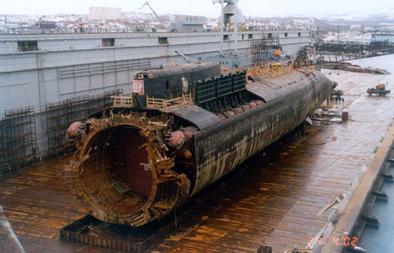
In a massive operation in 2001, the bulk of the Kursk’s hull was raised from the seabed and towed to a dry dock. An investigation followed, which determined the likely cause of the explosion.
The Kursk disaster had significant implications for the Russian Navy and led to calls for increased transparency, modernization, and safety protocols in its operations. The tragedy remains a somber moment in Russia’s post-Soviet history.




 DAVE DOES HISTORY

Leave a comment