

Way back in the early-mid 2000’s, there came a TV show called “Apocalypse Island.” It purported to use the Mayan Long Count calendar AND the “discovery” of a Mayan monument on a remote Pacific Island as proof that when the Mayan Long Count ended and 2012 hit us with it’s full force, there would be only one place in the entire world that would be safe.
The film followed an explorer named Jim Turner (no… not the guy who kicked three field goals in Super Bowl III) who convinces another “historian” to go with him to this remote Island “somewhere between the Marshall islands and South America.” They make a landing worthy of the 1st Marine Division on a desolate beach and then hike for days to reach the Mayan monument that “proves” the theory that this island is the only safe place in the entire world.
It was… absurd.
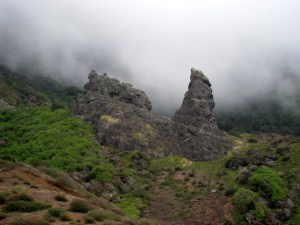
But… it was one of the most beautifully filmed travel “documentaries” I have ever seen. So much so that long after the predicted events of 2012 on Apocalypse Island failed to unfold, I bought the DVD because… well… I really want to go there.
It turned out to be a well known tourist destination island about 700 kilometers off of Chile. The island has a very busy and useful airport. Which, by the by, is how the film crew got to the island to film the heroic landing and subsequent hike.
Anyway, I was never one to buy into the hyperbole of the whole Mayan Long Count 2012 Apocalypse, but it’s still one of my favorite films because – as I said – the Juan Fernandez Islands are quite beautiful and accessible to an old cripple like myself.
The biggest problem is that the film attempted to usurp the accomplishments of the Mayan, who built an amazing calendar, for the purposes of fear mongering and pseudo-science. But at least they hired a professional film crew to film it.
It was this day in 3114bce that the Mayan Long count began…
The Mayan Long Count calendar is a complex and sophisticated system of tracking time used by the ancient Mayan civilization of Mesoamerica. It is one of several calendrical systems the Maya used for various purposes, including tracking astronomical events, planning agricultural activities, and recording historical events. The Long Count calendar is particularly known for its ability to measure long spans of time, making it suitable for tracking historical and cosmic cycles.
The Long Count calendar is a positional numbering system, where each unit represents a specific interval of time. The calendar is composed of five different units that work together to create a date:
1. **K’in:** The smallest unit, equivalent to one day.
2. **Winal:** 20 k’ins, or 20 days.
3. **Tun:** 18 winals, or 360 days.
4. **K’atun:** 20 tuns, or 7,200 days.
5. **B’ak’tun:** 20 k’atuns, or 144,000 days.
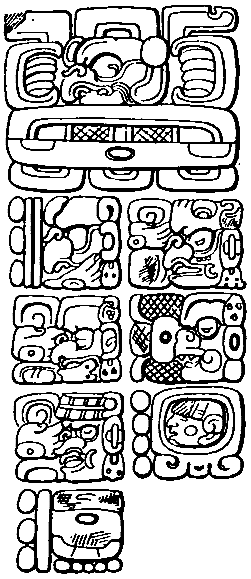
Public Domain
The most famous Long Count date is 13.0.0.0.0, which represents the end of a B’ak’tun cycle. This date corresponds to December 21, 2012, in the Gregorian calendar, which gained attention due to interpretations suggesting it marked a significant cosmic or historical event.
One key feature of the Long Count calendar is that it doesn’t reset to zero after reaching a certain point, as modern calendars do. Instead, it continues to count forward. As each unit completes its cycle, it rolls over to zero while the next higher unit increases by one. For example, after 13 b’ak’tuns, the count would read 1.0.0.0.0.0, with the first digit (1) representing the new b’ak’tun.
To map Long Count dates to our modern Gregorian calendar, researchers rely on the correlation established by scholars. The most widely accepted correlation, known as the Goodman-Martinez-Thompson (GMT) correlation, equates the Long Count’s 13.0.0.0.0 to December 21, 2012.
The Mayans used the Long Count calendar for recording historical events, inscribing dates on monuments, and tracking cosmic cycles. While its primary function was not to predict future events, it allowed the Maya to track cycles of time that had cultural and religious significance.
The Long Count calendar also played a role in the Maya’s complex understanding of the cosmos. It was used in conjunction with other calendars to synchronize solar and lunar cycles, agricultural activities, and religious ceremonies. The precision of the calendar’s calculations indicates the Maya’s advanced knowledge of astronomy and mathematics.
The Mayan Long Count calendar is a remarkable achievement of ancient timekeeping, allowing the Maya to track long spans of time with impressive accuracy. Its intricate structure and use in various aspects of Mayan life reflect the sophistication of the civilization’s culture, science, and cosmology.


 DAVE DOES HISTORY
Leave a comment