
The Battle of Wilson’s Creek, also known as the Battle of Oak Hills, took place on August 10, 1861, near Springfield, Missouri, early in the American Civil War. It was one of the first major battles fought in the Western Theater of the war. The battle was fought between Union forces commanded by Brigadier General Nathaniel Lyon and Confederate forces led by Brigadier General Benjamin McCulloch and Major General Sterling Price.
1. **Union Advance:** Brigadier General Nathaniel Lyon led his Union troops in an early morning attack on the Confederate camp at Wilson’s Creek. His goal was to prevent Confederate forces under Price and McCulloch from uniting and to secure Missouri for the Union.
2. **Confederate Defense:** The Confederate forces, aware of the Union approach, had formed a defensive line on the bluffs along Wilson’s Creek. The Union attack initially surprised the Confederates, but they managed to establish a strong defensive position.
3. **Fighting and Casualties:** The battle was fierce and chaotic, with both sides engaging in heavy fighting. The Confederate forces, though outnumbered, managed to hold their ground. The battle saw significant casualties on both sides, including the death of Union General Lyon. His death marked the first time a Union general was killed in battle during the Civil War.
4. **Confederate Victory:** Despite their numerical disadvantage, the Confederate forces managed to repel the Union attack and secure a tactical victory. However, the Confederates were unable to fully capitalize on their success, and the Union forces retreated from the battlefield.
The Battle of Wilson’s Creek was significant for several reasons:
1. **Early Civil War Battle:** It was one of the earliest large-scale battles of the American Civil War, taking place just a few months after the war’s outbreak at Fort Sumter.
2. **Missouri’s Role:** The battle had an impact on the struggle for control over the state of Missouri. The Confederate victory solidified the Confederacy’s hold on southwestern Missouri for a time.
3. **Union Setback:** The Union defeat at Wilson’s Creek was a setback for the Union’s efforts to control Missouri and prevent it from joining the Confederacy. It demonstrated the challenges the Union would face in trying to maintain control in a divided border state.
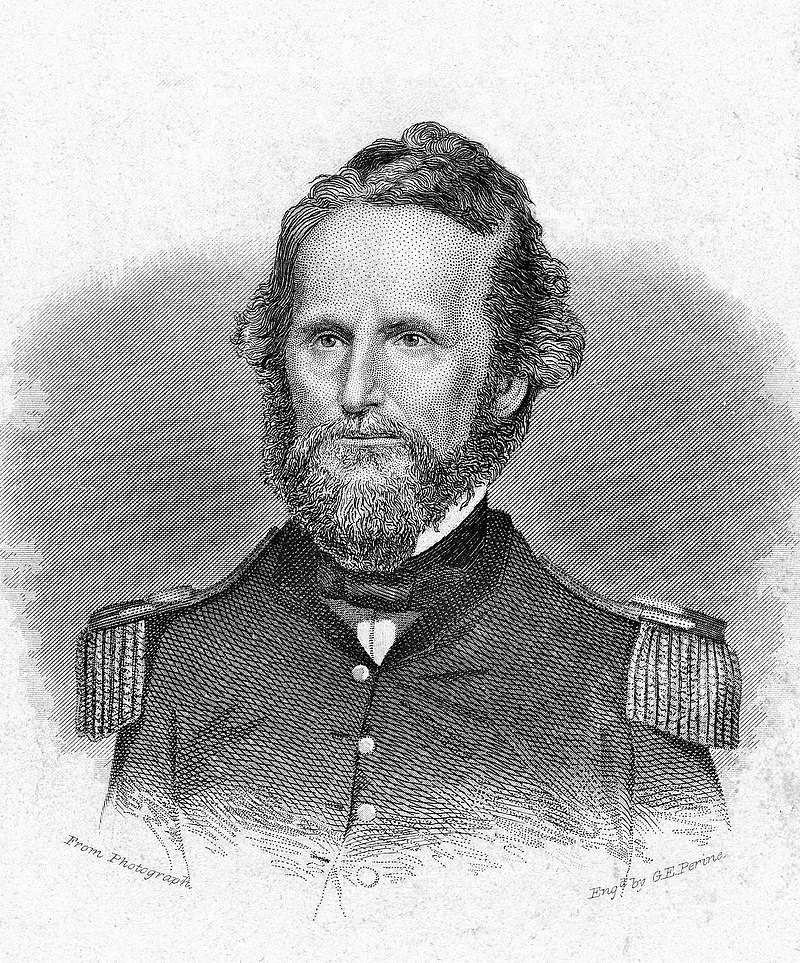
4. **Impact on Command:** The death of Union General Nathaniel Lyon was a blow to the Union side. His aggressive leadership and early death marked a loss of a capable officer.
His legacy lived on beyond his death. His actions in Missouri helped prevent the state from seceding and secured a strategic foothold for the Union in the West. His commitment to preserving the Union and opposing slavery was emblematic of the broader ideological struggle of the Civil War.
Lyon’s efforts and sacrifice were not in vain. His actions in Missouri laid the groundwork for Union control in the state and contributed to the broader Union war effort. His legacy serves as a reminder of the complexities and sacrifices of those who fought to maintain the integrity of the United States during its most tumultuous period.
The Battle of Wilson’s Creek highlighted the intense division and fighting that occurred in border states like Missouri during the Civil War. It was a precursor to larger battles in the Western Theater and demonstrated the difficulties both sides faced in gaining control over strategic areas.




 DAVE DOES HISTORY
Leave a comment