
Nathanael Greene, a pivotal figure in the American Revolutionary War and a Founding Father, was born on August 7, 1742, in Potowomut, Rhode Island. His life story embodies dedication, strategic brilliance, and a profound commitment to the cause of American independence. His contributions to the war effort and the nation’s early days left an indelible mark on American history.
Growing up in a Quaker household, Greene received limited formal education but developed a strong interest in literature and military strategy. Inspired by his reading and the burgeoning revolutionary sentiments, he joined the local militia and swiftly rose through the ranks due to his leadership skills and dedication. By the time the Revolutionary War began, Greene was already a seasoned military leader.
 Greene’s military prowess caught the attention of General George Washington, who appointed him as a Brigadier General in the Continental Army. His first major engagement was the Battle of Bunker Hill in 1775. Throughout the war, Greene displayed exceptional strategic thinking and leadership in battles such as the Battle of Trenton, Battle of Brandywine, and Battle of Germantown.
However, it was Greene’s tenure as Quartermaster General that truly showcased his organizational abilities. Despite facing numerous challenges in supplying the Continental Army, he managed to improve logistics, earning Washington’s trust and gratitude.
Nathanael Greene’s most significant contributions came during the Southern Campaign. As appointed commander of the Southern Department, he faced the daunting task of reclaiming territories occupied by British forces. Greene’s strategy was to avoid direct confrontations with the superior British forces led by General Charles Cornwallis, opting instead for a war of attrition, harassment, and guerrilla tactics. His tactical brilliance culminated in the Battle of Cowpens, a pivotal victory that weakened British control in the South.
Greene’s strategic maneuver known as the “Race to the Dan” further wore down Cornwallis’s forces, forcing the British to retreat. This strategic retreat was a masterstroke that preserved Greene’s army and allowed him to rally reinforcements. Greene’s campaign in the South paved the way for the eventual defeat of Cornwallis at the Battle of Yorktown in 1781, which marked a turning point in the war.
Following the Revolutionary War, Nathanael Greene returned to civilian life, declining offers of political office in favor of focusing on his family and business interests. Tragically, he passed away at the young age of 43 on June 19, 1786, due to heatstroke while attending to his plantation.
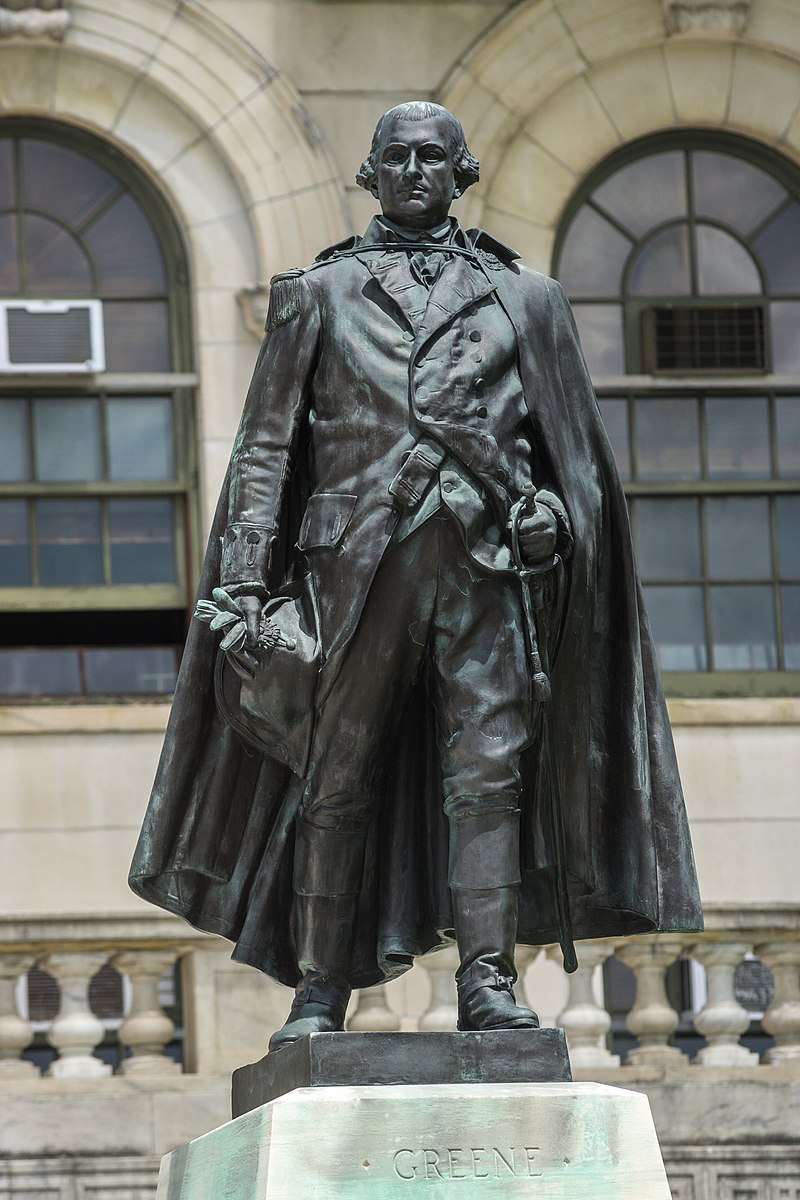
Nathanael Greene’s legacy is characterized by his exceptional leadership, strategic brilliance, and unwavering commitment to the American cause. His military tactics and achievements in the Southern Campaign contributed significantly to securing American independence. Greene’s legacy lives on in the numerous places and institutions named in his honor, including counties, cities, and military installations.
Nathanael Greene’s life and contributions exemplify the spirit of the American Revolution. From his humble beginnings as a militia leader to his pivotal role in reshaping the Southern theater of war, Greene’s dedication, intelligence, and unwavering commitment to liberty and freedom earned him a revered place in American history as both a Revolutionary War hero and a Founding Father.




 DAVE DOES HISTORY
Leave a comment