
At one point in my life, my best friend and I were both going through some really rough times. She would call me at 11pm and we would literally sit on the wall mounted phone (it was a long time ago) and watch three to four episodes of I Love Lucy, laughing with much needed mirth, and talking about our issues during the breaks. It’s still one of my favorite memories, and to this day, I love, I Love Lucy…
Lucille Ball, born on August 6, 1911, in Jamestown, New York, was a legendary actress, comedian, and businesswoman who became an icon of American entertainment. She is best known for her groundbreaking television roles, particularly as the lovable and hilarious Lucy Ricardo on “I Love Lucy,” one of the most beloved and influential sitcoms in television history. Beyond her comedic genius, Lucille Ball also played a significant behind-the-scenes role in shaping the iconic science fiction series, Star Trek.
Lucille Ball’s path to stardom was not without challenges. After her father’s death when she was just a toddler, she moved with her mother to New York City. Determined to make it in show business, she started her career as a model and later became a successful Broadway actress.
Her first major breakthrough in Hollywood came when she starred in the RKO Pictures film “Dance, Girl, Dance” (1940). Although she gained some recognition for her talent, she struggled to secure leading roles in major films.
Lucille Ball’s career soared when she and her real-life husband, Desi Arnaz, pitched the idea of a television sitcom centered around a zany housewife married to a Cuban bandleader. The show, “I Love Lucy,” premiered in 1951 and became an instant success. The chemistry between Ball and Arnaz, along with the show’s innovative use of the three-camera format and live studio audience, revolutionized television comedy.
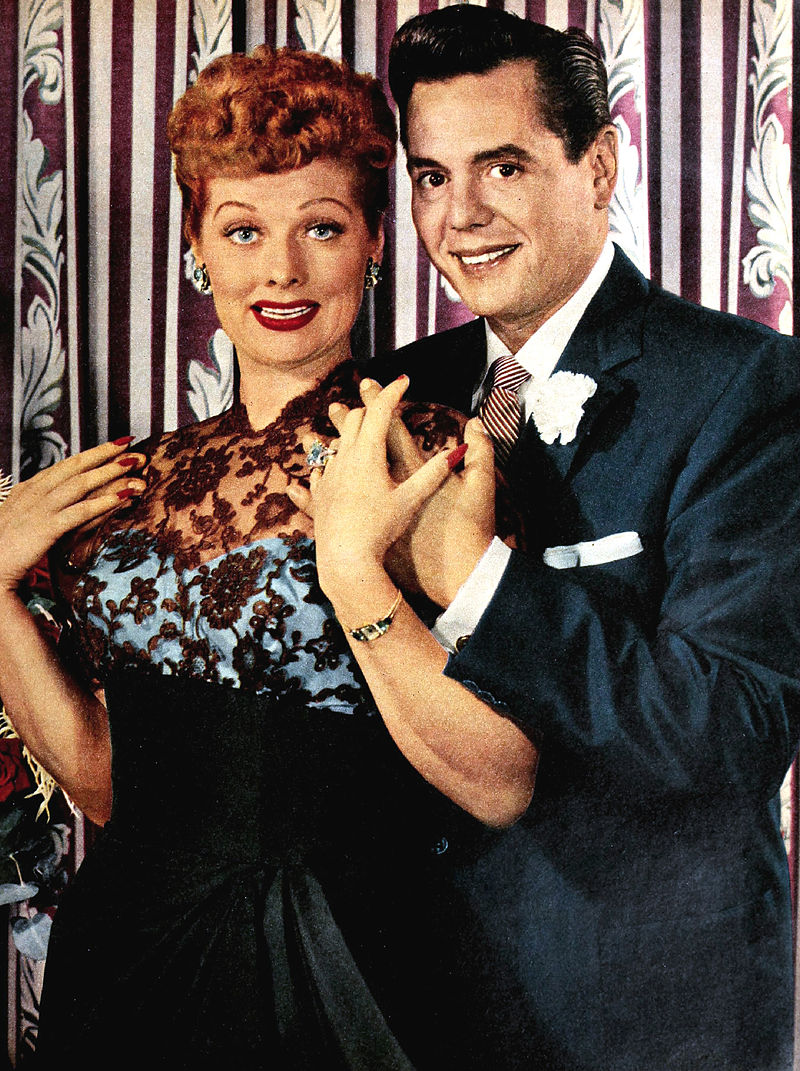
By Macfadden Publications page 2 – TV Radio Mirror page 45
Public Domain
“I Love Lucy” broke barriers by portraying a mixed-race couple on television, a groundbreaking move at the time. The show’s success led to the creation of Desilu Productions, a production company co-founded by Ball and Arnaz, which became one of the most significant production studios in Hollywood.
In 1964, Lucille Ball and Desi Arnaz greenlit the creation of the science fiction series “Star Trek” under Desilu Productions. At the time, the concept of a science fiction show was seen as risky and unconventional. However, Ball recognized the creativity and potential of the show and personally intervened to secure funding for the pilot episode, “The Cage,” which later became part of the two-part episode “The Menagerie.”
When the original pilot faced network rejection, Ball took a tremendous gamble by believing in the vision of the series’ creator, Gene Roddenberry. She allowed him to produce a second pilot, which ultimately led to the commissioning of the iconic “Star Trek” series. Without Ball’s support and vision, “Star Trek” might never have seen the light of day, and its cultural impact might have been significantly diminished.
Lucille Ball’s influence on American television and popular culture is immeasurable. She broke barriers for female comedians and demonstrated that women could be successful behind the scenes as well. Her production company, Desilu Productions, went on to produce other hit shows such as “The Untouchables” and “Mission: Impossible.”
In 1989, Lucille Ball was posthumously awarded the Governors Award at the Primetime Emmy Awards in recognition of her remarkable contributions to the television industry. Her legacy continues to shine brightly, and she remains an enduring and beloved figure in the history of entertainment.
Lucille Ball’s extraordinary talent, pioneering spirit, and business acumen solidified her status as a true entertainment icon. Her comedic brilliance and fearless pursuit of innovative projects left an indelible mark on the history of television. Beyond her own remarkable career, Ball’s support of “Star Trek” exemplifies her crucial role as a behind-the-scenes heroine, helping shape a cultural phenomenon that would inspire generations of fans and contribute to the evolution of science fiction as a genre. Lucille Ball’s enduring impact on the entertainment industry and her trailblazing spirit continue to be celebrated and cherished to this day.



 DAVE DOES HISTORY
Leave a comment