
The 1958 voyage of the USS Nautilus marked a historic moment in naval and polar exploration, as it became the first submarine to successfully cross the North Pole beneath the ice cap. The USS Nautilus was a nuclear-powered submarine and the world’s first operational nuclear-powered ship, a testament to the technological advancements of the time.
On July 23, 1958, the USS Nautilus set sail from its base in Pearl Harbor, Hawaii, for Operation Sunshine, a top-secret mission to navigate the Arctic Ocean and attempt to pass under the ice cap to reach the North Pole. The operation was kept classified until the submarine achieved its goal.
The voyage of the USS Nautilus was a challenging and daring endeavor, as it involved navigating through treacherous Arctic waters filled with ice floes and unpredictable weather conditions. The submarine had to surface periodically to determine its precise position and calculate the best course to avoid obstacles and maintain the most direct route towards the North Pole.
On August 3, 1958, after several weeks of navigating through the icy waters, the USS Nautilus achieved its historic moment. The submarine passed under the ice cap and surfaced at the North Pole, marking the first time a vessel had reached this remote and elusive geographical point. The crew celebrated their achievement, and Rear Admiral Eugene P. Wilkinson, the commander of the Nautilus, received a message of congratulations from President Dwight D. Eisenhower.
The successful crossing of the North Pole by the USS Nautilus was a momentous achievement in naval history and a landmark in polar exploration. The feat demonstrated the capabilities and versatility of nuclear-powered submarines, as the Nautilus had set various speed and endurance records during its journey.
Moreover, the USS Nautilus’s voyage symbolized the United States’ commitment to pushing the boundaries of technology and exploration during the Cold War era. It showcased American ingenuity and the potential of nuclear propulsion for submarines, marking a pivotal step in the development of the U.S. Navy’s nuclear fleet.
The successful 1958 voyage of the USS Nautilus had a lasting impact on submarine technology and naval strategy. Nuclear propulsion soon became a standard feature of submarines, allowing for extended underwater endurance and greater operational range. The achievement also bolstered the United States’ reputation in the realm of polar exploration and advanced the understanding of the Arctic region.
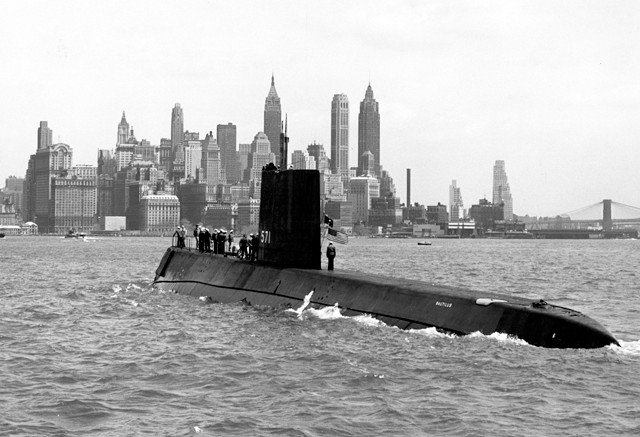
(NAVSOURCE)
Today, the USS Nautilus is celebrated as a pioneering vessel in naval history and remains on display as a museum ship at the Submarine Force Library and Museum in Groton, Connecticut. Its historic crossing of the North Pole remains a testament to human courage, innovation, and the pursuit of exploration in the harshest and most challenging environments on Earth.




 DAVE DOES HISTORY
Leave a comment