
Early on the morning of August 2, 1990, I was headed to Williamsburg, VA, for the first official date with my (ex) wife. Across the radio came the bulletin that Iraq had invaded Kuwait. For many months, we had been training for a a specific type of event: small units, specifically Islamic based landing on the beaches of Southern Virginia and attempting to infiltrate any of the numerous military bases in the area.
If this invasion were to blow up into a full on American response, it made sense why we had been training for that type of event. The training had been intense and realistic, using what was known as SEAL Team 6 to play the roles of the penetration teams. So intense, in fact, that we had lost a team member (and a good friend) in an accident a few months earlier. On the trip to New Jersey for the funeral, we had discussed what we thought was the reason for the training exercises. Nobody came up with the correct answer.
I turned into the parking lot at Bush Gardens in Williamsburg to meet my date, and for the next few hours I tried to not think abut what was happening outside of our time together. Over the next few months, my entire life would be defined by my involvement in the Desert Shield/Storm (I was not deployed to the Iraqi theater, but there were other “things” happening) and by the impending marriage to my (ex)wife.
Those few moments before I turned on the radio would be pretty much be the last “normal” morning of the rest of my life…
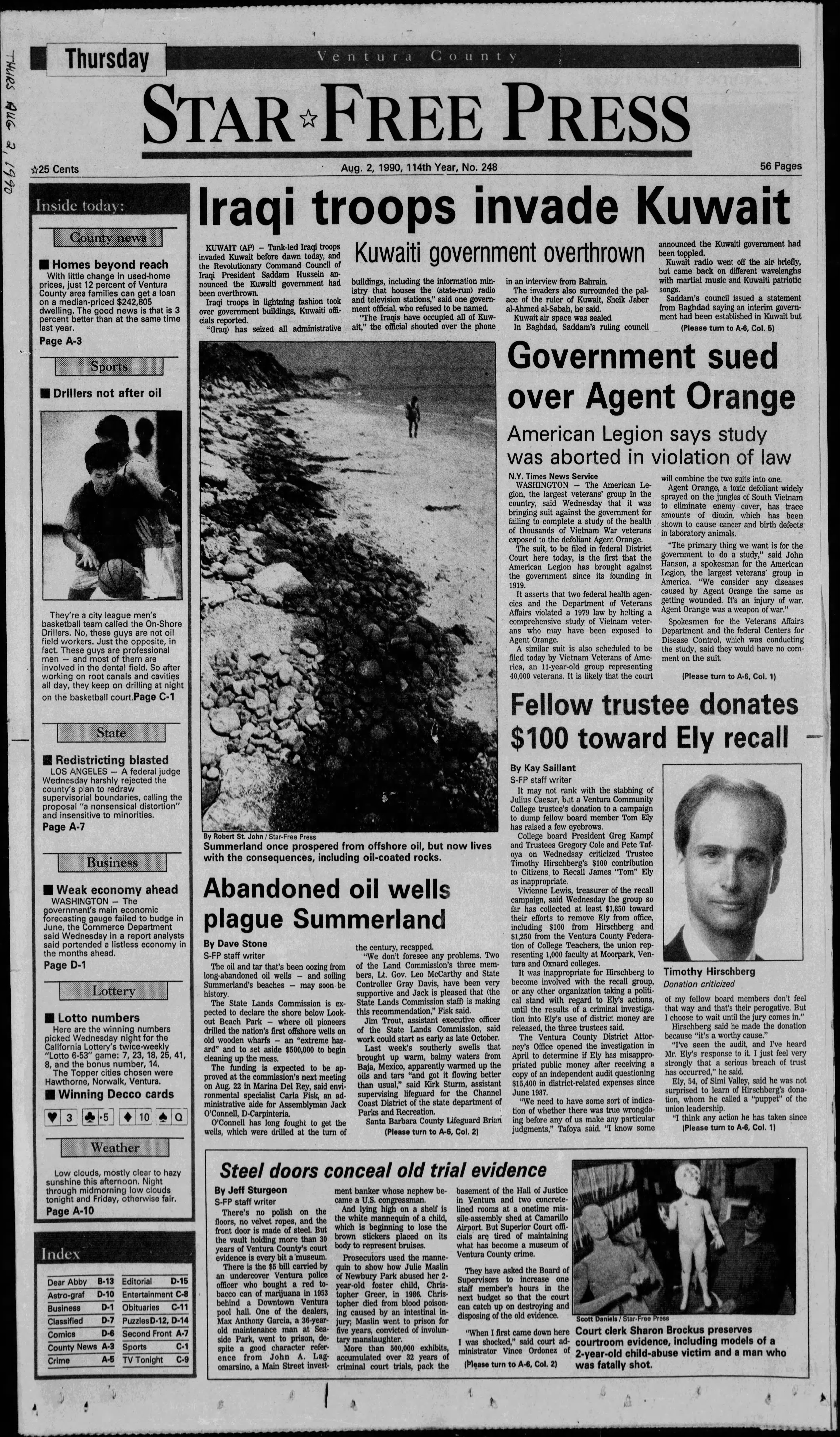
August 2, 1990, was a significant and fateful day for Kuwait as it marked the beginning of the Iraqi invasion and occupation of the country, known as the Gulf War. The events of this day were a prelude to a conflict that would have far-reaching consequences for the region and the world. Here’s a description of what transpired in Kuwait on that day:
1. Iraqi Invasion:
In the early hours of August 2, 1990, the Iraqi military, led by Saddam Hussein, launched a full-scale invasion of Kuwait. The invasion was swift and brutal, catching the Kuwaiti forces and the international community by surprise. Iraqi troops quickly overran the country, and the Emir of Kuwait, Sheikh Jaber al-Ahmad al-Jaber al-Sabah, fled the country.
2. Seizure of Kuwait City:
Within hours of the invasion, Iraqi forces seized control of Kuwait City, the capital of Kuwait. The Kuwaiti government and military were unable to mount a significant defense against the well-equipped and numerically superior Iraqi forces.
3. Resistance and Repression:
Despite the rapid capture of Kuwait City, some Kuwaiti citizens and military personnel attempted to resist the invading forces. However, the Iraqi military responded with extreme violence, engaging in widespread human rights abuses and acts of brutality against civilians. Many Kuwaitis were subjected to arbitrary arrests, torture, and summary executions.
4. International Reaction:
The invasion of Kuwait was met with immediate and strong international condemnation. The United Nations Security Council swiftly passed Resolution 660, demanding Iraq’s immediate withdrawal from Kuwait. The international community imposed economic sanctions on Iraq to pressure Saddam Hussein to withdraw his forces, but they did not have the intended effect.
5. The Beginning of the Gulf War:
The invasion of Kuwait marked the start of the Gulf War, also known as the First Gulf War or the Iraq-Kuwait Conflict. The United States, along with a coalition of over 30 countries, launched Operation Desert Shield to defend Saudi Arabia and other Gulf countries from further aggression by Iraq. As diplomatic efforts failed to secure a peaceful withdrawal, Operation Desert Storm, a military operation to liberate Kuwait, began in January 1991.
6. Liberation of Kuwait:
After months of intense air and ground combat, the coalition forces succeeded in liberating Kuwait. The liberation occurred on February 26, 1991, following a 100-hour ground offensive that pushed Iraqi forces out of Kuwait. The conflict resulted in significant casualties and destruction in both Kuwait and Iraq.
7. Aftermath and Rebuilding:
The aftermath of the invasion left Kuwait devastated, with extensive damage to infrastructure, public buildings, and the economy. The liberation brought relief to the Kuwaiti people, but the war’s legacy continued to shape the region. It also had lasting effects on Iraq, leading to a series of events that eventually led to the Iraq War in 2003.
August 2, 1990, was a pivotal day in Kuwait’s history, as it marked the beginning of a dark chapter of invasion and occupation. The invasion and the subsequent liberation showcased the power of international cooperation in response to aggression and demonstrated the importance of safeguarding the sovereignty and territorial integrity of nations. The scars left by the Gulf War serve as a reminder of the lasting impact of armed conflicts and the importance of diplomacy in resolving disputes between nations.




 DAVE DOES HISTORY
Leave a comment