
One hundred years to the day before I was born, a Virginian who stayed loyal to the Union – much like my own Arkansas Great-grandfather – stood firm on a small hill in northwestern Georgia. The Union lost the battle, retreating to Chattanooga, but his actions in refusing to retreat saved the Union Army from total destruction.
General George Henry Thomas, known as the “Rock of Chickamauga,” was a highly respected and talented Union Army officer during the American Civil War. Born on July 31, 1816, in Southampton County, Virginia, he would go on to become one of the most skilled and dependable military leaders of his time. Thomas’ unwavering dedication to duty and tactical brilliance earned him a reputation as a soldier’s soldier, and his strategic prowess played a crucial role in shaping the outcome of several significant battles during the Civil War.
George Henry Thomas was the son of John Thomas, a wealthy planter, and Elizabeth Rochelle Thomas. He spent his early years in Virginia, where he received a private education. After the death of his father in 1829, Thomas’ family faced financial difficulties, prompting his move to Kentucky to live with relatives.
In 1836, Thomas secured an appointment to the United States Military Academy at West Point. Despite initially struggling academically due to his late start in formal education, he persevered and graduated in 1840, ranking twelfth in his class.
George H. Thomas commenced his military career as a second lieutenant in the United States Army, serving with distinction in various posts during the Second Seminole War and the Mexican-American War. His remarkable leadership skills and dedication to training and discipline quickly earned him the respect of his superiors and peers.
In the years leading up to the Civil War, Thomas was stationed in California, where he developed a strong loyalty to the Union. When the war erupted in 1861, he faced a difficult decision, torn between his allegiance to his Southern roots and his commitment to preserving the Union. Ultimately, Thomas chose to remain loyal to the United States and served as a steadfast Union general throughout the conflict.
General Thomas played a pivotal role in several crucial battles of the Civil War. He demonstrated exceptional skill as a defensive tactician, earning him the enduring nickname “The Rock of Chickamauga.” His most significant contributions include:
1. Battle of Mill Springs (January 1862): Thomas led Union forces to victory in this early Kentucky battle, boosting the Union’s position in the Western Theater.
2. Battle of Stones River (December 1862 – January 1863): Thomas’s stalwart defense helped repel Confederate assaults and secure a vital Union victory in Tennessee.
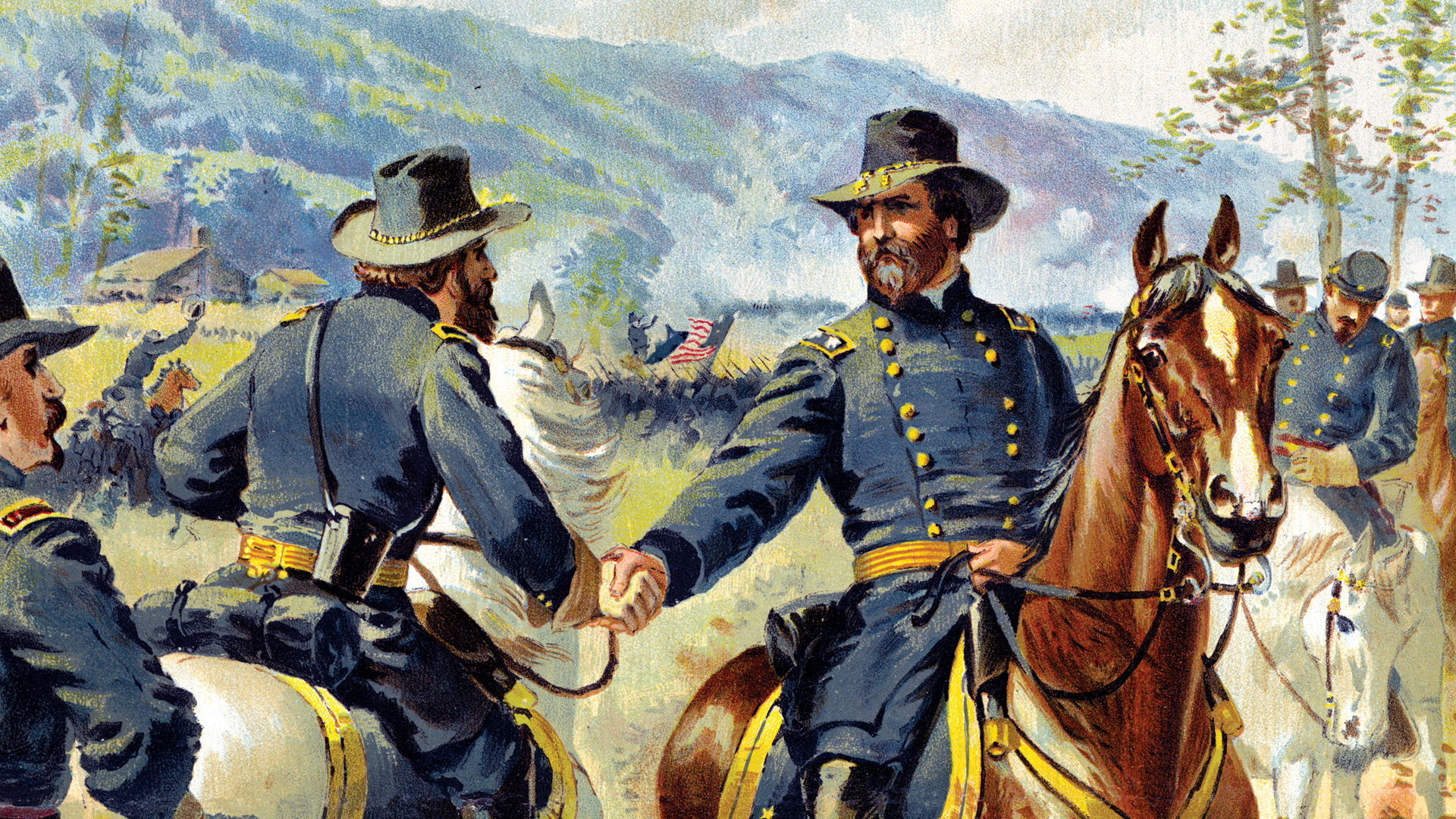
3. Battle of Chickamauga (September 1863): Despite facing overwhelming Confederate numbers, Thomas held his ground admirably, preventing a complete Union collapse and earning accolades for his tenacity and bravery.
4. Battle of Missionary Ridge (November 1863): Thomas played a pivotal role in the Union victory at Chattanooga, commanding the center of the Union line and executing a daring charge that broke the Confederate defenses.
5. Atlanta Campaign (1864): As part of General William T. Sherman’s forces, Thomas contributed to the capture of Atlanta, a critical turning point in the war.
After the Civil War, General Thomas continued to serve in the U.S. Army, where he commanded the Division of the Pacific and the Division of the Cumberland. Despite his numerous accomplishments during the war, Thomas was modest and rarely sought public recognition.
Tragically, on March 28, 1870, General George H. Thomas passed away in San Francisco, California, due to a stroke. He was laid to rest at Oakwood Cemetery in Troy, New York.
General George H. Thomas left behind a legacy of dedication, loyalty, and tactical brilliance. His strategic prowess and unwavering commitment to duty significantly influenced the course of the Civil War, earning him a place among the Union’s most esteemed military leaders. The memory of “The Rock of Chickamauga” lives on as an inspiration to future generations of soldiers and leaders.


 DAVE DOES HISTORY
Leave a comment