
The sinking of USS Indianapolis (CA-35) was a tragic and infamous incident that occurred during World War II. The USS Indianapolis was a Portland-class heavy cruiser of the United States Navy. On July 30, 1945, the ship was struck and sunk by the Japanese submarine I-58 in the Pacific Ocean.
The USS Indianapolis had a crucial role in the war effort, having participated in several significant battles, including the Aleutian Islands campaign, the Battle of Okinawa, and the Battle of Leyte Gulf. After delivering crucial parts for the atomic bomb “Little Boy” to the island of Tinian in the Mariana Islands, the ship was on its way to the Philippines when the disaster occurred.
The I-58, commanded by Lieutenant Commander Mochitsura Hashimoto, spotted the USS Indianapolis on July 30, 1945. At that time, the American cruiser was not zigzagging, a common evasive maneuver to avoid submarine attacks, and it lacked an escort. Hashimoto decided to launch six torpedoes at the cruiser.
Two of the torpedoes struck the USS Indianapolis, causing extensive damage. The cruiser quickly started to list and sink. Due to the suddenness of the attack and the lack of adequate communication, the Navy was unaware of the disaster for several days.
Approximately 300 sailors died immediately in the attack, but the ordeal was far from over for the surviving crew. Over 800 sailors found themselves stranded in the open ocean, with no lifeboats, inadequate life jackets, and limited food and water supplies.
For several days, the survivors faced dehydration, exposure to the elements, and shark attacks. Despite distress calls that were dismissed as a potential Japanese trap, rescue efforts were not initiated until a routine patrol aircraft spotted the survivors by chance on August 2, 1945.
By the time rescue operations began, only 316 sailors out of the original crew of around 1,196 had survived the ordeal at sea. It remains one of the worst maritime disasters in U.S. naval history.
The tragedy of the USS Indianapolis was further intensified by the fact that the ship’s mission to deliver the atomic bomb components was classified, leading to confusion about its whereabouts and delayed rescue efforts. The sinking and the suffering endured by the surviving crewmembers became a poignant symbol of the sacrifices made by the men and women serving in the armed forces during World War II.
(Navsource)
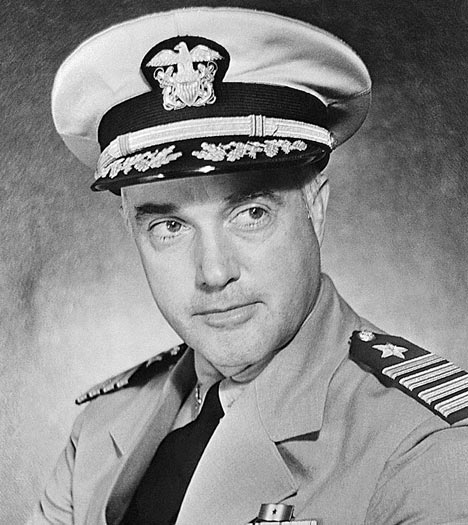
Captain Charles B. McVay III was the commanding officer of the USS Indianapolis (CA-35) at the time of its sinking by the Japanese submarine I-58 on July 30, 1945, during World War II. After the tragic incident, Captain McVay faced a court-martial for the loss of his ship. The court-martial was held in December 1945, and its proceedings were highly controversial.
At Court Martial, Captain McVay was charged with failing to zigzag the ship, a standard evasive maneuver to avoid submarine attacks, and with failing to take appropriate action to save his crew after the ship’s sinking. The prosecution argued that these actions contributed to the sinking of the USS Indianapolis and the subsequent loss of life.
Captain McVay’s defense team, on the other hand, contended that the cruiser’s sinking was primarily due to the Navy’s failure to provide adequate protection and to detect the presence of the Japanese submarine. They argued that zigzagging would not have prevented the sinking and that Captain McVay had followed standard procedures.
During the court-martial, several naval officers testified in support of Captain McVay’s character and leadership. Additionally, a former submarine commander and expert witness, Captain Wilbur C. Kincaid, testified that zigzagging would not have made a significant difference in preventing the sinking.
Despite these arguments, Captain McVay was found guilty of failing to zigzag and thus placing his ship in harm’s way. He was convicted on December 19, 1945. The verdict was controversial and met with significant public outcry.
After the court-martial, Captain McVay faced considerable personal challenges. He was relieved of active duty and later assigned to desk jobs. He struggled with guilt and depression over the loss of his crew and the sinking of the USS Indianapolis. In the years following the court-martial, many of his surviving crew members and their families rallied behind him, advocating for his exoneration.
Finally, in 1968, following a long and persistent campaign by survivors and their supporters, Congress passed a resolution exonerating Captain Charles B. McVay III of any blame for the loss of the USS Indianapolis. The resolution acknowledged the shortcomings of the court-martial and recognized that the circumstances of the sinking were beyond Captain McVay’s control.
Despite the exoneration, the tragedy of the USS Indianapolis and the court-martial of Captain McVay remain a deeply distressing episode in U.S. naval history. The incident has continued to be remembered and discussed, with efforts made to honor the memory of the crew and to ensure that the lessons learned from the tragedy are not forgotten.
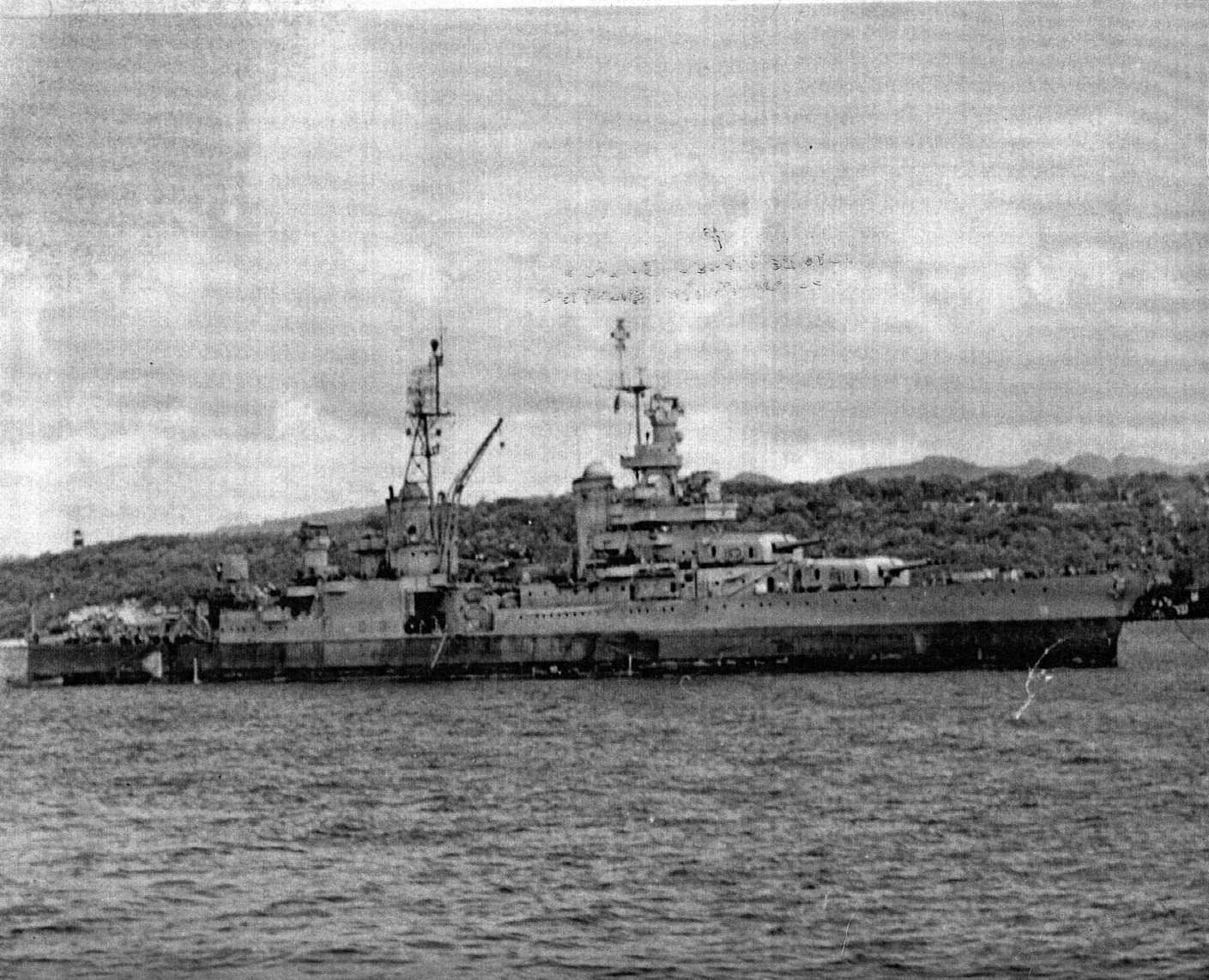
Picture taken by Gus Buono”.
U.S. Navy photo from the Collection of David Buell
(Navsource)



 DAVE DOES HISTORY
Leave a comment