
The sinking of the Andrea Doria was a tragic maritime disaster that occurred on July 25, 1956. The Andrea Doria was an Italian ocean liner named after the 16th-century Genoese admiral Andrea Doria. It was considered one of the most luxurious and advanced passenger ships of its time, operating on the Genoa-to-New York route.
The disaster happened off the coast of Nantucket, Massachusetts, in the North Atlantic Ocean. The Andrea Doria was en route to New York City when it collided with the MS Stockholm, a Swedish passenger ship, in dense fog. The Stockholm struck the Andrea Doria on its starboard side near the bow, causing significant damage and leading to the eventual sinking of the ship.
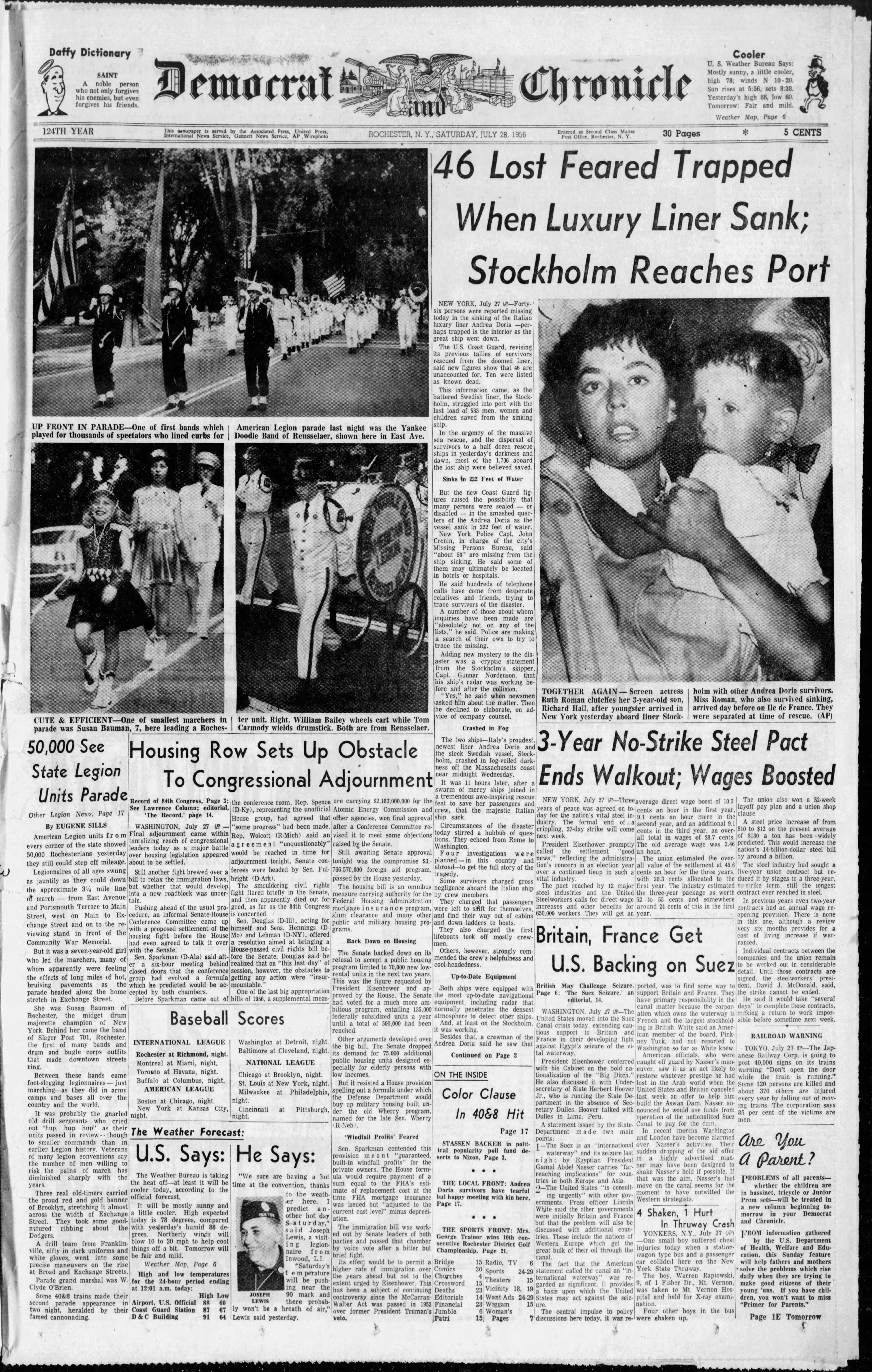 The impact of the collision tore a large hole in the Andrea Doria’s hull, and water began flooding the lower compartments. However, due to the ship’s compartmentalized design, it was able to remain afloat for several hours, allowing passengers and crew to evacuate.
The evacuation process was challenging due to the foggy conditions and the ship’s rapidly listing position. Nevertheless, thanks to the skilled actions of the crew and the assistance of nearby vessels, including the the MS Île de France, most of the passengers were rescued from lifeboats or picked up from the water.
Tragically, 46 people lost their lives in the accident, including passengers and crew members from both ships. The Andrea Doria eventually capsized and sank into the Atlantic Ocean on July 26, approximately 11 hours after the collision.
The sinking of the Andrea Doria remains one of the most infamous maritime disasters in history and has since become a subject of fascination and study among historians, maritime experts, and divers. The incident also led to significant changes in maritime regulations and practices, particularly concerning navigation, communication, and safety measures at sea.




 DAVE DOES HISTORY
Leave a comment