
The Nixon Doctrine was a foreign policy initiative introduced by President Richard Nixon during his presidency in the early 1970s. It was officially articulated on July 25, 1969, in the aftermath of the Vietnam War, in a speech delivered by President Nixon to the nation. The doctrine aimed to redefine the United States’ approach to foreign affairs and its global role, particularly in the context of the Cold War.
Key Points of the Nixon Doctrine:
1. Vietnamization: One of the central pillars of the Nixon Doctrine was the policy of “Vietnamization.” The United States had been heavily involved in the Vietnam War, and President Nixon sought to gradually withdraw American troops from Vietnam while increasing the responsibility and military involvement of the South Vietnamese forces in their own defense. The goal was to shift the burden of the war to the South Vietnamese government and military, reducing the American military presence in the region.
2. Partnership with Allies: Another critical aspect of the Nixon Doctrine was the emphasis on strengthening partnerships with American allies and promoting regional cooperation. Nixon believed that the United States could not and should not be the world’s policeman, and instead, regional allies and partners should take on a more active role in maintaining their own security and stability. By doing so, the United States aimed to reduce its direct military involvement in various parts of the world.
3. The Doctrine of Multilateralism: The Nixon Doctrine advocated for a more multilateral approach to international relations, wherein regional and international organizations would play a more significant role in resolving conflicts and maintaining peace. This approach was seen as a way to avoid direct military confrontation between superpowers, such as the United States and the Soviet Union, and to address global issues collectively.
4. Realpolitik: The Nixon Doctrine was also influenced by the concept of “realpolitik,” which emphasized practical considerations and national interest over ideological or moral principles in foreign policy decision-making. This approach sought to engage with nations based on their strategic importance and potential benefits to the United States, rather than purely on ideological grounds.
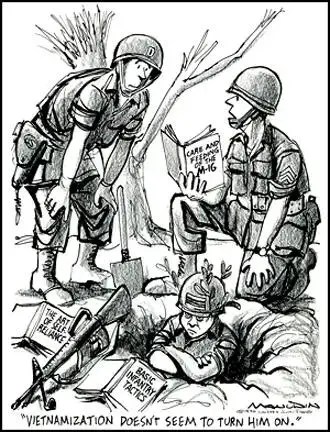
(Chicago Sun-Times)
The Nixon Doctrine marked a significant shift in American foreign policy and played a pivotal role in shaping the post-Vietnam War era. By adopting a more pragmatic and restrained approach to global affairs, President Nixon sought to lessen the burden on the United States and encourage greater self-reliance among its allies.
The doctrine’s emphasis on regional partnerships and multilateralism reflected a desire to create a more stable and secure world order without relying solely on the United States’ military might. However, critics argued that this approach could potentially lead to the abandonment of smaller nations in need of American support.
Ultimately, the Nixon Doctrine set the stage for subsequent foreign policy initiatives, including the policy of détente with the Soviet Union and efforts to normalize relations with China. While its implementation faced challenges and complexities, the Nixon Doctrine left a lasting impact on how the United States approached its role in the world during the latter part of the Cold War and beyond.




 DAVE DOES HISTORY
Leave a comment