
Henry Knox, born on July 25, 1750, was a remarkable figure whose contributions during the American Revolutionary War and subsequent nation-building efforts left an indelible mark on the foundation of the United States. As a prominent military leader, founding father, and public servant, Knox played a vital role in shaping the young nation’s destiny.
Henry Knox was born in Boston, Massachusetts, into a modest family. Despite limited formal education, he developed a passion for reading and self-improvement, which shaped his intellectual curiosity and resourcefulness. At the tender age of 18, Knox opened a bookstore, displaying his early entrepreneurial spirit. This venture allowed him to access an extensive array of books, fostering his knowledge of military strategy, history, and politics.
As tensions between the American colonies and Great Britain escalated, Knox became increasingly involved in the revolutionary cause. Inspired by the Boston Tea Party and other acts of resistance, he joined the local militia and quickly gained recognition for his dedication and military acumen. His expertise in artillery and ordnance was particularly notable, earning him the title of Colonel.
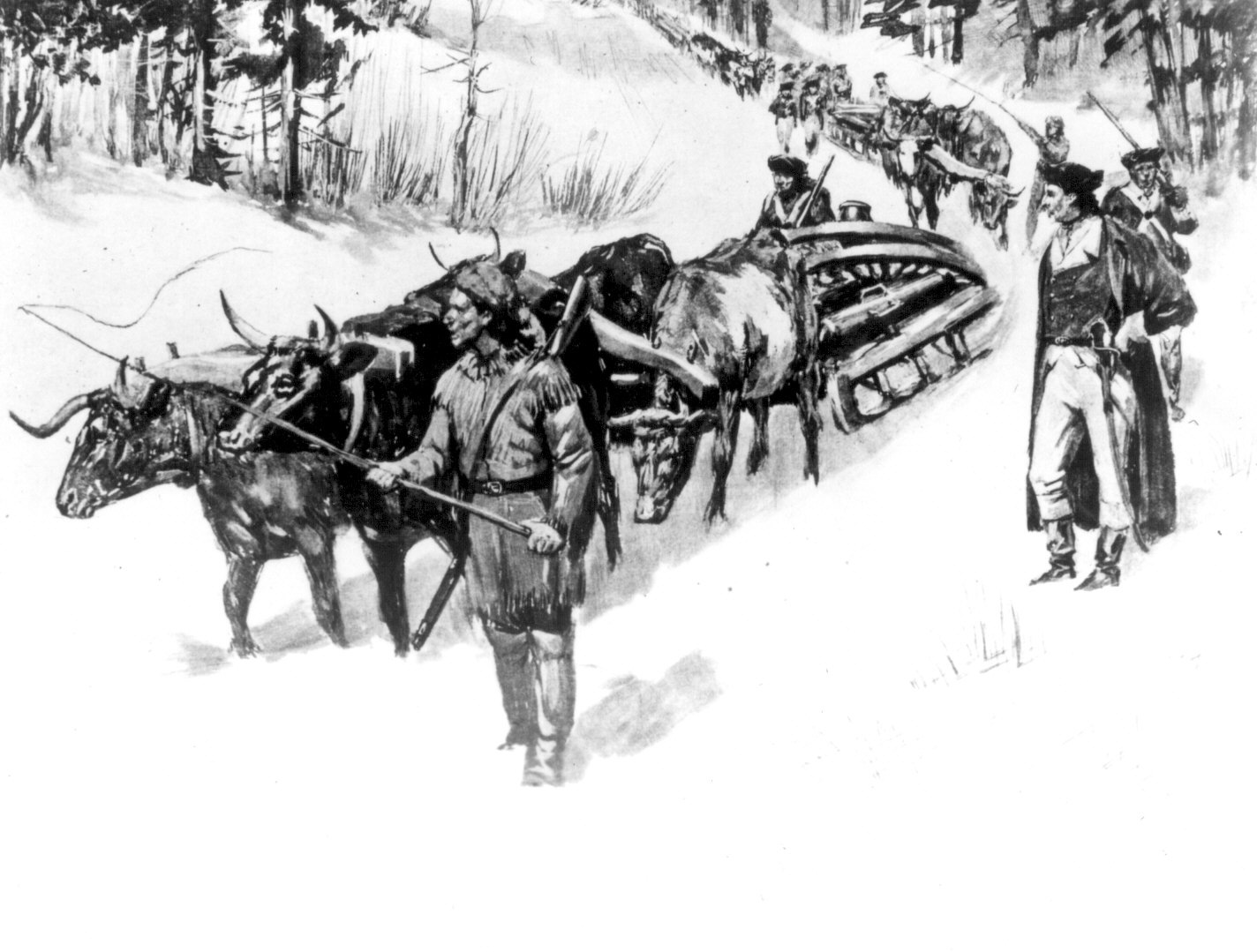
(National Archives)
One of Knox’s most celebrated accomplishments occurred in the winter of 1775-1776 when he orchestrated the daring transport of artillery from Fort Ticonderoga, New York, to Boston. This operation, known as the “Noble Train of Artillery,” involved transporting dozens of cannons and mortars over challenging terrain and icy waters, spanning nearly 300 miles.
Knox’s meticulous planning and leadership skills ensured the safe delivery of the artillery, which proved crucial during the Siege of Boston. The captured cannons were strategically placed on Dorchester Heights, forcing the British to evacuate the city in March 1776 and securing a pivotal victory for the American forces.
Henry Knox’s prowess as a military leader did not go unnoticed, and he was appointed the first Secretary of War under President George Washington’s administration. In this capacity, he worked tirelessly to organize and modernize the nation’s military, laying the groundwork for the Department of War, which eventually became the Department of Defense.
After the war, Knox continued his dedicated service to the new nation. He played a crucial role in quelling the Whiskey Rebellion in 1794 and was instrumental in securing the Louisiana Purchase as President Thomas Jefferson’s emissary.
Henry Knox was a devoted family man, marrying Lucy Flucker in 1774, and they had 13 children together. Tragically, several of his children passed away in infancy, but his love for family and commitment to public service remained unwavering.
Henry Knox passed away on October 25, 1806, leaving behind a legacy of patriotism, military prowess, and nation-building. He was buried in Thomaston, Maine, where a monument stands today to honor his memory and contributions.
Henry Knox’s remarkable journey from a young bookseller to a prominent military leader and statesman exemplifies the indomitable spirit and vision of the American Revolution’s founding fathers. His role in shaping the nation’s military infrastructure and fortifying its early foundations endures as a testament to his enduring legacy and dedication to the principles of liberty and freedom.



 DAVE DOES HISTORY
Leave a comment