
Raymond Chandler (1888-1959) was an influential American writer best known for his contributions to the detective fiction genre. With his iconic creation, private detective Philip Marlowe, Chandler redefined and revitalized the hardboiled detective genre, leaving an indelible mark on literature and popular culture. This biography explores the life, literary career, and lasting legacy of Raymond Chandler.
Raymond Thornton Chandler was born on July 23, 1888, in Chicago, Illinois. His parents divorced when he was a young child, and he was raised primarily by his mother, Florence. After the death of his mother, Chandler was sent to England to be educated at Dulwich College. There, he developed a lifelong love for the British classics and literature.
Chandler worked in various jobs, including as a journalist and bookkeeper, before returning to the United States in 1912. He held several positions in the oil industry, which brought him to Los Angeles, California. In the 1920s, Chandler’s personal life became challenging as he faced alcoholism and personal struggles.
In the 1930s, Chandler turned to writing as an escape from his personal difficulties. Inspired by pulp magazines and the hardboiled detective fiction of Dashiell Hammett, Chandler began writing short stories for pulp magazines like Black Mask. His early stories introduced the character of private detective Philip Marlowe, who would become his most iconic creation.
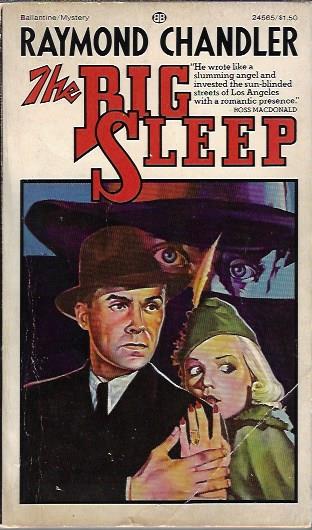 In 1939, Chandler published his first novel, “The Big Sleep,” featuring the now-famous detective Philip Marlowe. Marlowe became the embodiment of the hardboiled private eye, a complex and cynical character with a strong moral compass. Set in the seedy underworld of Los Angeles, the novel showcased Chandler’s skillful use of dialogue, vivid imagery, and compelling storytelling.
Philip Marlowe novels, written by Raymond Chandler, feature the iconic private detective Philip Marlowe as the central character. Set in the seedy and corrupt underworld of 1930s and 1940s Los Angeles, the series showcases Marlowe’s wit, intelligence, and moral integrity as he navigates through complex cases and encounters a cast of intriguing characters.
1. The Big Sleep (1939): The debut novel introduces Philip Marlowe as he is hired by wealthy General Sternwood to resolve a blackmail threat against his younger daughter, Carmen. As Marlowe delves deeper into the case, he uncovers a web of deceit, murder, and corruption involving the Sternwood family and their associates.
2. Farewell, My Lovely (1940): In this novel, Marlowe becomes entangled in the case of a missing nightclub singer, Velma Valento. As he investigates, he is drawn into a labyrinth of crime, encountering a range of colorful characters, including a giant ex-con named Moose Malloy and a femme fatale named Helen Grayle.
3. The High Window (1942): Marlowe is hired by a wealthy widow, Mrs. Elizabeth Bright Murdock, to retrieve a valuable missing coin from her son-in-law. As he digs deeper, Marlowe uncovers layers of deception and murder, leading to a high-stakes investigation involving greed and betrayal.
4. The Lady in the Lake (1943): Marlowe takes on a case involving a missing woman, Crystal Kingsley. As he searches for her, he encounters a tangled web of adultery, murder, and political intrigue, with multiple suspects and a trail of lies.
5. The Little Sister (1949): Marlowe is hired by a young woman named Orfamay Quest to find her missing brother, Orrin. The case leads him into the dark world of Hollywood, where he uncovers a series of dangerous connections between the movie industry and the criminal underworld.
6. The Long Goodbye (1953): This novel features one of Marlowe’s most complex and personal cases. After befriending Terry Lennox, a troubled war veteran, Marlowe becomes entangled in a case involving Lennox’s wife’s murder. The investigation takes Marlowe into the world of gangsters, deceit, and personal betrayal.
7. Playback (1958): In the final completed novel in the series, Marlowe is hired by wealthy widow Mrs. Elizabeth Bright Murdock to track down a missing man named Donald Zinn. As he follows the trail, Marlowe discovers a series of hidden secrets and dangerous alliances.
Raymond Chandler’s Philip Marlowe novels are widely regarded as some of the finest examples of hardboiled detective fiction. The series stands out for its atmospheric depictions of 1940s Los Angeles, complex characters, and intricate plots. Philip Marlowe’s sharp wit, moral compass, and no-nonsense approach to justice make him an enduring and beloved figure in the world of detective literature.
Throughout the 1940s, Chandler achieved critical acclaim and commercial success with his subsequent novels, including “Farewell, My Lovely” (1940), “The High Window” (1942), and “The Lady in the Lake” (1943). His writing style was characterized by its sharp wit, evocative prose, and realistic portrayal of the dark underbelly of society.
Chandler’s talent for storytelling also led him to a successful career in Hollywood as a screenwriter. He worked on adaptations of his own novels, as well as other films, including “Double Indemnity” (1944) and “Strangers on a Train” (1951). However, Chandler became disillusioned with the Hollywood studio system, feeling that his creative vision was often compromised.
Despite his literary success, Chandler faced personal challenges throughout his life. He struggled with alcoholism and experienced periods of financial difficulties. In the late 1940s and early 1950s, he suffered from writer’s block and struggled to produce new works.
Raymond Chandler’s impact on the detective fiction genre and literature as a whole cannot be overstated. He elevated crime fiction to a new level of literary respectability with his atmospheric descriptions, memorable characters, and exploration of complex themes. Chandler’s influence can be seen in the works of numerous authors who followed, including Ross Macdonald, Elmore Leonard, and James Ellroy.
Raymond Chandler passed away on March 26, 1959, in La Jolla, California, at the age of 70. Despite his relatively small body of work, Chandler’s legacy endures through the enduring popularity of Philip Marlowe and the continued admiration for his contributions to detective fiction.
Raymond Chandler’s life and literary career were marked by personal struggles, creative triumphs, and a lasting impact on the detective fiction genre. Through his iconic creation, Philip Marlowe, Chandler redefined the detective novel and left an indelible mark on American literature. His legacy continues to captivate readers and inspire writers to this day, cementing his status as one of the greatest authors in the history of detective fiction.



 DAVE DOES HISTORY
Leave a comment