
The First Bull Run Campaign and Battle, fought in July 1861, marked the initial major confrontation of the American Civil War. Also known as the First Battle of Manassas (in the South), this pivotal engagement took place in Northern Virginia near the small town of Manassas Junction. The battle pitted inexperienced Union and Confederate armies against each other and showcased the brutal realities of warfare that lay ahead. This essay delves into the First Bull Run Campaign and Battle, exploring its context, key participants, strategies, and lasting impact on the unfolding Civil War.
After the secession of Southern states from the Union following Abraham Lincoln’s election as president in 1860, the American Civil War officially began in April 1861 with the firing on Fort Sumter in South Carolina. The secessionist states, collectively known as the Confederate States of America, were committed to preserving slavery and states’ rights. The Union, led by President Lincoln, sought to preserve the nation’s integrity and abolish slavery.
As the war commenced, both sides grappled with the enormity of the conflict. The First Bull Run Campaign represented the initial attempt by the Union to launch a large-scale offensive to seize the Confederate capital of Richmond, Virginia. The Union leadership believed that a swift and decisive victory would bring an end to the rebellion, underestimating the determination and strength of the Confederate forces.
The First Bull Run Campaign witnessed two key commanders who would go on to play significant roles in the Civil War:
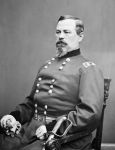
1. Union: General Irvin McDowell led the Union Army of Northeastern Virginia. A career officer with limited combat experience, McDowell faced immense pressure to achieve a quick victory and demonstrate the superiority of Union forces.
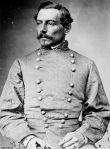
2. Confederate: General Pierre G.T. Beauregard commanded the Confederate Army of the Potomac. A skilled engineer and graduate of West Point, Beauregard had earned a reputation as a capable commander at Fort Sumter. He was tasked with organizing and leading the Confederate forces to defend against the Union’s advance.
The Union’s primary objective in the campaign was to capture Manassas Junction, a strategic railroad junction connecting the Orange and Alexandria Railroad with the Manassas Gap Railroad. McDowell believed that a victory at Manassas would destabilize the Confederate defenses and potentially lead to the capture of Richmond.
To counter the Union’s advance, Beauregard gathered Confederate forces near Manassas Junction. He was later joined by reinforcements led by General Joseph E. Johnston from the Shenandoah Valley. This combined Confederate force positioned themselves along Bull Run, a small river near Manassas.
On July 21, 1861, the two armies clashed in the Battle of First Bull Run. The Union launched a well-coordinated assault, and initially, they pushed back the Confederate lines. However, the Confederates held firm, and reinforcements from General Johnston’s forces arrived on the battlefield.
Confederate Brigadier General Thomas J. Jackson, later known as “Stonewall” Jackson, played a pivotal role in rallying his troops, earning his enduring nickname for his steadfast defense during the battle. His actions inspired the Confederate forces, bolstering their resolve.
As the day wore on, the tides turned against the Union. Their uncoordinated attacks and lack of experience on the battlefield began to take a toll. The arrival of Confederate reinforcements sealed the Union’s fate. Facing a determined Confederate counterattack, the Union forces retreated in disarray towards Washington, D.C.
The Battle of First Bull Run was a sobering experience for both sides. The Union’s defeat dispelled the notion of a swift and decisive victory, leading to a reassessment of war strategies and tactics. On the other hand, the Confederate victory bolstered Southern morale and emboldened their resolve to fight for their independence.
The First Bull Run Campaign and Battle also exposed the harsh realities of war to the civilian population. Many spectators from Washington, D.C., came to witness the battle, expecting an easy Union triumph. However, the horrific scenes of battle and the Union’s defeat shocked them, leading to a realization that the war would be long and costly.
The battle’s impact reached far beyond the battlefield. In the North, the defeat led to a deeper commitment to the war effort and the mobilization of additional troops. President Lincoln appointed General George B. McClellan to organize and train the Union forces more effectively. Meanwhile, in the South, the victory solidified Southern confidence and encouraged other states to rally behind the Confederacy.
The First Bull Run Campaign and Battle marked a critical turning point in the American Civil War. The Union’s defeat at Manassas demonstrated the complexity and gravity of the conflict, dispelling any notions of a quick and easy resolution. Both sides realized the long and arduous nature of the war ahead.
The First Bull Run Battle foreshadowed the immense sacrifices and profound impact the Civil War would have on the nation and its people. The lessons learned from this early engagement influenced military strategies and civilian attitudes, shaping the trajectory of the Civil War and ultimately the future of the United States.


 DAVE DOES HISTORY
Leave a comment