
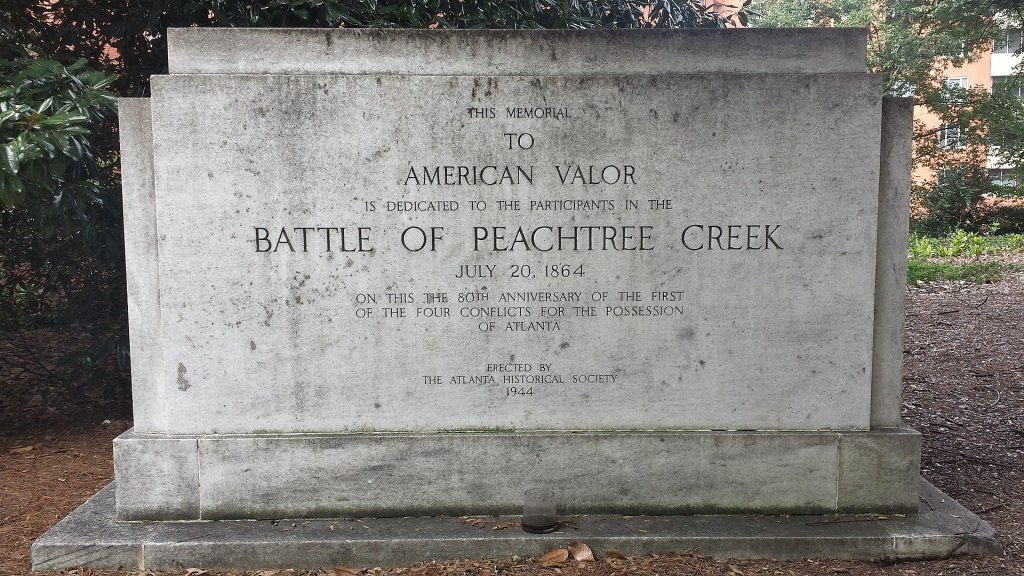
The Battle of Peachtree Creek was a pivotal engagement during the American Civil War and a crucial part of the Atlanta Campaign. Fought on July 20, 1864, on the outskirts of Atlanta, Georgia, it marked a significant moment in the struggle for control of the city and the wider Confederate heartland. The battle pitted Union forces, led by Major General William T. Sherman, against Confederate troops commanded by General John Bell Hood. The outcome of this fierce encounter would influence the course of the Atlanta Campaign and ultimately shape the trajectory of the war.
By the summer of 1864, the American Civil War had been raging for over three years, and the Union’s efforts to suppress the Confederacy’s rebellion had seen several military campaigns unfold. In the West, General William T. Sherman had been tasked with capturing the vital city of Atlanta, an industrial and transportation hub that served as the Confederacy’s crucial supply center. The Atlanta Campaign aimed to bring Atlanta under Union control, cutting off Confederate supply lines and undermining their capacity to wage war.
The Union’s efforts in the Atlanta Campaign had been met with fierce resistance from Confederate General Joseph E. Johnston, who employed a strategy of delaying and defending to wear down the Union forces. However, in late June 1864, President Jefferson Davis replaced Johnston with General John Bell Hood, hoping for a more aggressive approach to protect Atlanta.

On July 20, 1864, the Union Army of the Cumberland, commanded by Major General George H. Thomas, advanced towards Atlanta from the north. Confederate General Hood launched a preemptive strike, attacking the Union forces as they crossed Peachtree Creek, just north of the city.
The Confederates enjoyed a favorable position, being well entrenched on high ground along the creek. They had constructed defensive fortifications and breastworks to bolster their position and disrupt the Union’s advancement.
The Union troops faced challenging terrain, dense undergrowth, and intense heat, making the crossing and advancement slow and laborious. Additionally, they encountered logistical challenges due to the scarcity of provisions and the sweltering summer conditions.
As the Union forces began their crossing, the Confederate troops launched a surprise assault. The initial Confederate attack caught the Union troops off guard, leading to fierce fighting and heavy casualties on both sides. However, despite the initial advantage, the Confederates were unable to capitalize on the momentum and decisively defeat the Union forces.
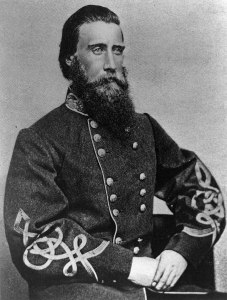
A critical turning point came when General John B. Hood made a tactical error by sending a portion of his troops on a flanking maneuver, diverting their focus from the main Union force. This strategic misstep allowed the Union forces to regroup and fortify their positions, preparing for a counterattack.
As the battle raged on, both sides suffered heavy losses. The Union forces struggled to breach the Confederate defenses, and the Confederates encountered difficulties in holding their ground against the Union’s relentless assaults.
By the end of the day, the Battle of Peachtree Creek remained inconclusive, with both armies retaining their positions. While the Confederates managed to hold their defensive lines, the Union forces demonstrated resilience and determination, proving that they were still a formidable fighting force despite the challenges they faced.
The Battle of Peachtree Creek had significant consequences for both sides. Despite the inconclusive outcome, it marked a crucial turning point in the Atlanta Campaign. The fierce fighting at Peachtree Creek illustrated that the Union forces were still determined to press forward, even in the face of formidable Confederate defenses.
Following the battle, General John Bell Hood realized that a defensive strategy would not be sufficient to protect Atlanta. He would go on to adopt a more aggressive approach, resulting in a series of subsequent battles in and around Atlanta.
The Battle of Peachtree Creek also highlighted the valor and determination of the Union forces under Major General William T. Sherman. The battle demonstrated Sherman’s tenacity and strategic acumen, setting the stage for future engagements in the campaign.
Despite the heavy casualties and grueling conditions, the Battle of Peachtree Creek was a crucial prelude to the larger and more decisive Battle of Atlanta, which took place on July 22, 1864. Sherman’s eventual victory in Atlanta was a major turning point in the Civil War and had significant political and military implications, enhancing President Abraham Lincoln’s chances of re-election and ultimately hastening the Confederacy’s demise.
The Battle of Peachtree Creek was a fierce and consequential engagement in the Atlanta Campaign during the American Civil War. The battle showcased the determination and resilience of both Union and Confederate forces, setting the stage for subsequent battles in and around Atlanta. The outcome of the Atlanta Campaign and the eventual fall of the city had far-reaching effects on the course of the Civil War and the nation’s history. The sacrifices and valor displayed by soldiers on both sides during the Battle of Peachtree Creek remain a testament to the profound impact of this crucial moment in American history.




 DAVE DOES HISTORY
Leave a comment