
The Women’s Rights Convention held at Seneca Falls, New York, on July 19-20, 1848, was a momentous gathering that marked the birth of the women’s suffrage movement in the United States. Led by prominent women’s rights activists Elizabeth Cady Stanton and Lucretia Mott, this historic event was the first of its kind, calling for gender equality and demanding basic civil rights for women.
The mid-19th century was a period of significant social and political change in the United States. The abolitionist movement, seeking an end to slavery, was gaining momentum, and women began drawing parallels between their own subjugation and the plight of enslaved individuals. Activists like Stanton and Mott, inspired by the rhetoric of the Declaration of Independence, felt compelled to advocate for women’s rights and their inclusion in the democratic process.
The convention took place at the Wesleyan Chapel in Seneca Falls, a town in upstate New York. On the first day, July 19, 1848, the event commenced with an assembly of approximately 300 people, both men and women, who were eager to discuss the grievances and demands of women.
The event’s agenda covered various aspects of women’s rights, including suffrage, property rights, education, and opportunities for employment. Attendees debated these issues passionately, sharing personal experiences of discrimination and discussing potential solutions to address gender-based inequalities.
The highlight of the convention came on the second day, July 20, when Elizabeth Cady Stanton presented the Declaration of Sentiments. Modeled after the Declaration of Independence, this groundbreaking document outlined the demands for women’s rights and justice.
The Declaration began with the powerful statement, “We hold these truths to be self-evident: that all men and women are created equal.” It then enumerated a list of grievances against the patriarchal society that deprived women of their rights, including the denial of suffrage, lack of access to education and professional opportunities, and the inability to retain property after marriage.
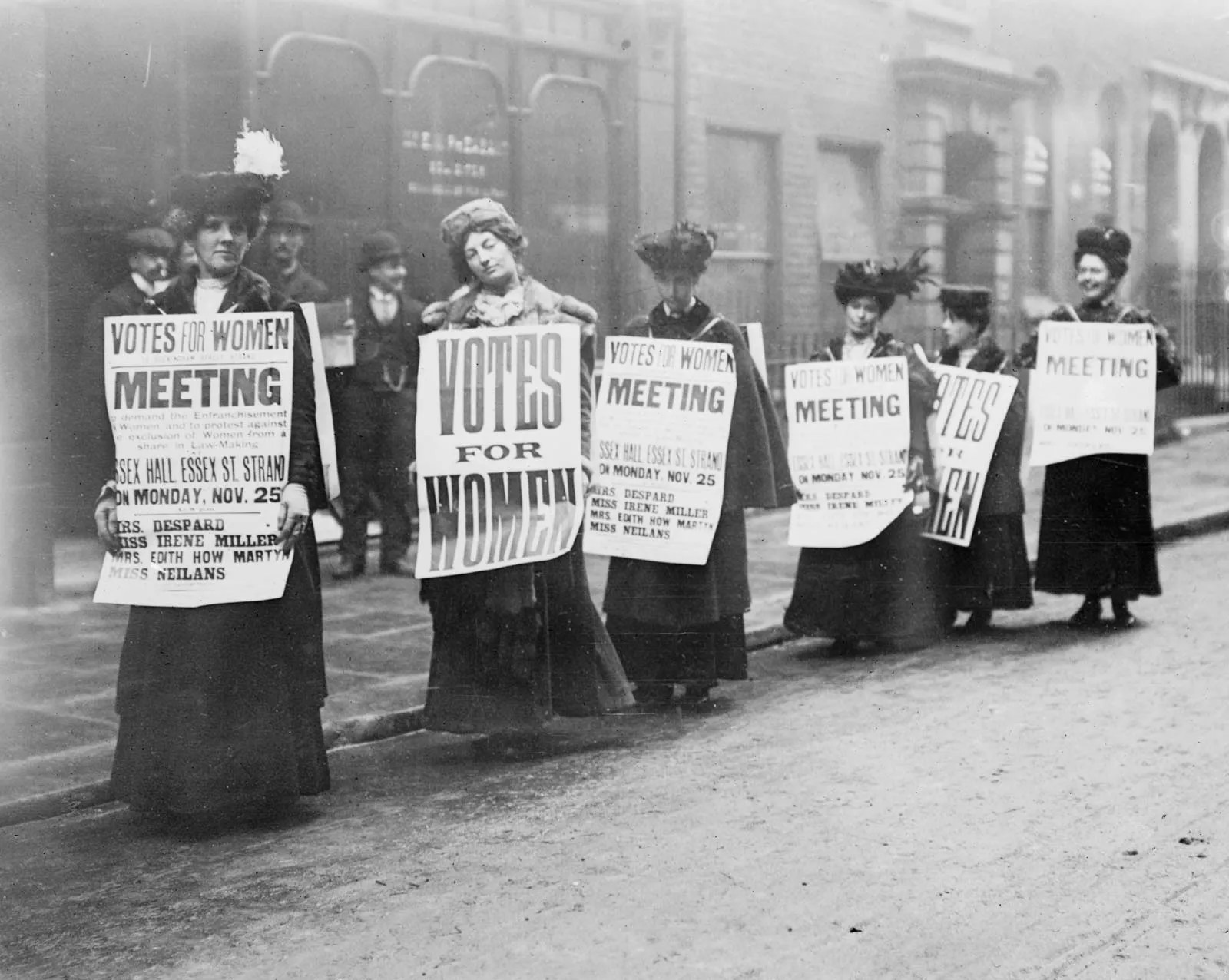
George Grantham Bain Collection/Library of Congress, Washington, D.C. (reproduction no. LC-DIG-ggbain-00111)
Perhaps the most controversial demand was for women’s right to vote, which became a central point of contention at the convention. Stanton and others argued that without political power, women would continue to be marginalized and unable to effect meaningful change.
After two days of vigorous discussions and debates, the convention adopted most of the resolutions presented in the Declaration of Sentiments. The only point that faced significant opposition was women’s suffrage, with some attendees fearing that it might jeopardize the overall goal of women’s rights.
While the convention’s immediate impact was limited, it set in motion a series of subsequent women’s rights gatherings and conventions across the country. The event at Seneca Falls became a rallying point for the nascent women’s suffrage movement and inspired a new generation of activists to advocate for women’s rights.
The Women’s Rights Convention at Seneca Falls in 1848 was a groundbreaking event that laid the foundation for the women’s suffrage movement in the United States. The Declaration of Sentiments, with its demand for gender equality, continues to be regarded as a pivotal document in the fight for women’s rights and served as an inspiration for future generations of activists who relentlessly pursued justice and equality for women.




 DAVE DOES HISTORY
Leave a comment