
The Battle of Stony Point, fought on July 16, 1779, during the American Revolutionary War, was a pivotal engagement that showcased the valor and determination of the American forces. Taking place in Stony Point, New York, this nighttime assault on the British-held fort demonstrated the military prowess of the Continental Army under General George Washington’s command and significantly boosted the morale of the American troops. This essay delves into the events leading up to the battle, the strategies employed by both sides, and the significance of the American victory at Stony Point.
By 1779, the American Revolutionary War had been raging for four years. The British forces were in control of various key locations along the Eastern Seaboard, and Stony Point was one such strategic fortification. Situated on the Hudson River, Stony Point guarded a vital supply route for the British troops, making it an enticing target for the Continental Army.
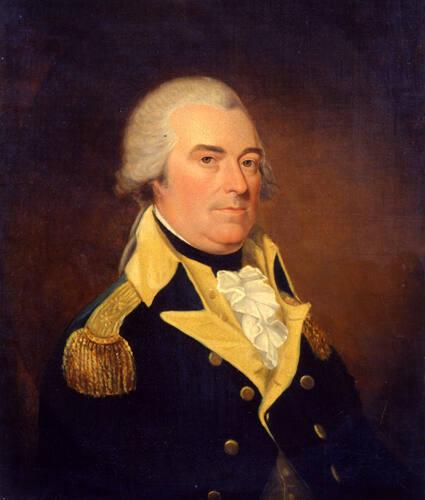
General George Washington realized the importance of launching an attack on Stony Point to disrupt the British supply lines and deal a psychological blow to their forces. To accomplish this, he assigned General Anthony Wayne to lead a select force of handpicked soldiers known as the “Light Infantry” in a daring nighttime assault on the heavily fortified position.
On the night of July 15, 1779, under the cover of darkness, Wayne’s Light Infantry began their stealthy approach towards Stony Point. Their movements were carefully coordinated, and they maintained strict silence to avoid detection by the British troops. The American soldiers managed to surprise the British defenders, catching them off-guard and initiating a fierce and swift attack.
With bayonets fixed and muskets unloaded, the Light Infantry relied on the element of surprise and close-quarters combat to storm the fort’s defenses. Despite facing intense British resistance and heavy casualties, the American forces pressed forward with indomitable courage. Scaling the walls and engaging in hand-to-hand combat, they managed to secure control of the fort within a remarkably short span of time.

The British forces were stunned by the audacious assault and had little time to react. Although they attempted to mount a counteroffensive, the American troops had already fortified their positions within Stony Point, making it virtually impenetrable. In the end, the British decided to withdraw from the fort, ceding control to the Continental Army.
The Battle of Stony Point was a critical turning point in the American Revolutionary War. It showcased the tactical brilliance of General Washington and his ability to execute unconventional warfare strategies. The victory at Stony Point bolstered American morale, proving that the Continental Army could successfully take on a well-entrenched enemy.
Furthermore, the success of the nighttime assault demonstrated the effectiveness of surprise attacks, inspiring future military tactics throughout the war. Stony Point also played a role in securing French support for the American cause. The French, impressed by the American triumph, were more inclined to strengthen their alliance with the patriots, providing valuable aid in the form of troops, naval support, and financial assistance.
The Battle of Stony Point remains a remarkable chapter in the annals of the American Revolutionary War. Through skillful planning, determination, and bravery, the Continental Army achieved an improbable victory against the British forces. The success at Stony Point had far-reaching effects, boosting American morale, inspiring future military strategies, and solidifying the alliance with the French. As a result, this pivotal battle accelerated the path towards American independence and proved the resilience of a young nation fighting for its freedom.




 DAVE DOES HISTORY
Leave a comment