
On July 16, 1945, in a remote desert location near Alamogordo, New Mexico, the world witnessed a defining moment in human history—the Trinity Test. This was the first successful detonation of a nuclear weapon, a moment that marked the dawn of the atomic age. The Trinity Test was a pivotal event in World War II, forever altering the course of human civilization and raising complex moral and ethical questions about the use of such powerful and destructive technology. This essay explores the lead-up to the Trinity Test, its execution, its implications, and its long-term impact on the world.
I. The Development of the Atomic Bomb:
The Trinity Test was the culmination of years of intense scientific and engineering efforts under the top-secret Manhattan Project. Initiated in 1939 by the United States, the Manhattan Project aimed to harness the power of nuclear fission to create a weapon of unprecedented destructive force. Scientists such as J. Robert Oppenheimer, Enrico Fermi, and Richard Feynman led the research and development efforts, working in utmost secrecy to avoid tipping off the Axis powers about the project’s existence.
II. The Selection of Trinity Site:
To conduct the test, a remote and desolate location was required. After careful consideration, the Jornada del Muerto desert in New Mexico was chosen as the site for the Trinity Test. The location offered isolation and security, which were essential due to the experimental nature of the detonation and the potential risks involved.
III. Preparations for the Test:
In the months leading up to the Trinity Test, the scientific team worked tirelessly to assemble the bomb. The design of the bomb, codenamed “Gadget,” utilized implosion technology, whereby conventional explosives were used to compress plutonium into a critical mass, initiating the nuclear chain reaction.
The countdown to the test day was filled with tension and anticipation. The scientists and military personnel involved knew that the test could either validate their years of work or result in catastrophic failure.
IV. The Trinity Test:
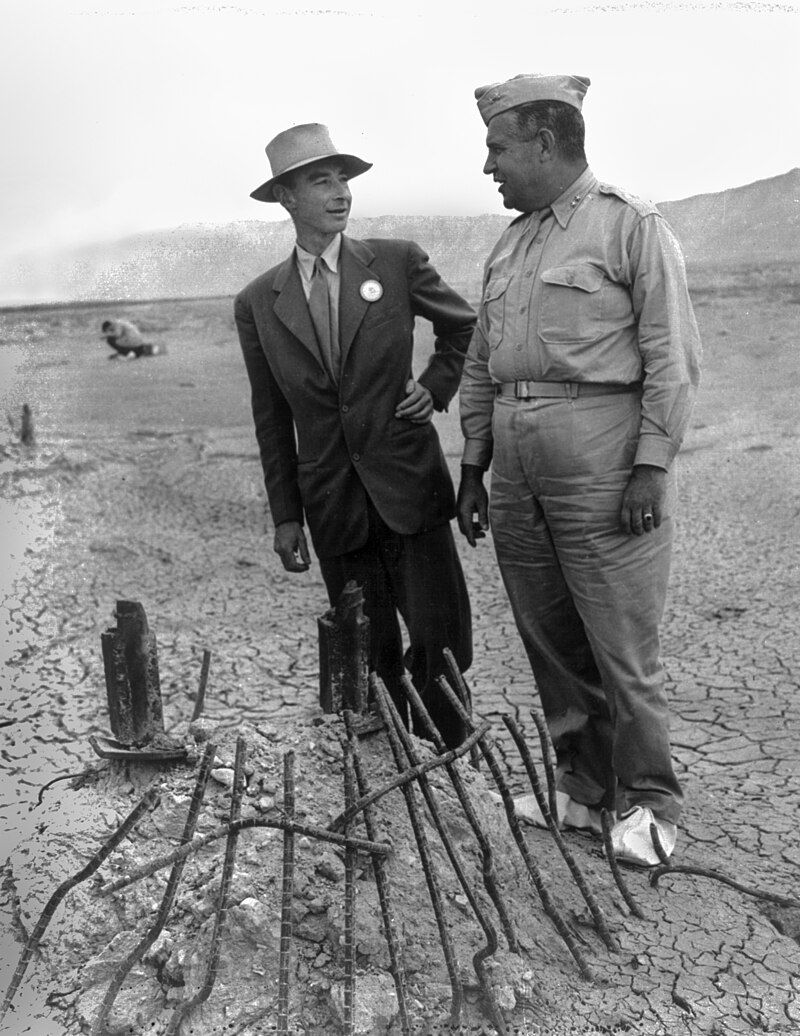
US Army Corps of Engineers
On the morning of July 16, 1945, the Gadget was raised to the top of a 100-foot steel tower at the Trinity Site. In the pre-dawn hours, the area was evacuated, and strict security measures were put in place. At precisely 5:29:45 a.m., the Gadget detonated, unleashing an enormous explosion and a blinding flash of light that illuminated the entire region. A massive mushroom cloud rose to a height of more than seven miles, and the ground shook for miles around.
The Trinity Test had been a resounding success. The energy released was equivalent to approximately 20 kilotons of TNT, leaving a crater 30 feet deep and 1,200 feet wide. The test confirmed the feasibility of nuclear weapons and set the stage for their potential use in the ongoing global conflict.
V. Immediate Impact:
The successful Trinity Test profoundly affected those present at the site. J. Robert Oppenheimer, the scientific director of the Manhattan Project, famously quoted a line from Hindu scripture, “Now I am become Death, the destroyer of worlds,” reflecting the grave moral implications of the weapon they had created.
The immediate aftermath of the Trinity Test was the acceleration of the use of atomic weapons in World War II. Less than a month after the test, on August 6 and 9, 1945, the United States dropped atomic bombs on the Japanese cities of Hiroshima and Nagasaki, respectively, leading to Japan’s surrender and the end of the war.
VI. Ethical Dilemmas and the Atomic Age:
The success of the Trinity Test raised profound ethical and moral dilemmas for the scientific community, military leaders, and governments worldwide. The use of nuclear weapons on civilian populations at Hiroshima and Nagasaki led to an intense debate about the morality of such actions and the implications of possessing such devastating power.
The concept of nuclear deterrence emerged from this era, as nations sought to maintain peace through mutual fear of the consequences of nuclear warfare. This strategy led to the development of massive nuclear arsenals during the Cold War, with the United States and the Soviet Union competing to amass more powerful and numerous nuclear weapons.
VII. The Nuclear Arms Race:
The Trinity Test marked the beginning of the nuclear arms race, with multiple countries, particularly the United States and the Soviet Union, rapidly developing and stockpiling nuclear weapons. This dangerous competition escalated tensions between the two superpowers, and the fear of nuclear annihilation gripped the world during the Cold War.
VIII. The Impact on International Relations:
The development of nuclear weapons fundamentally altered the dynamics of international relations. The doctrine of Mutually Assured Destruction (MAD) emerged, wherein the possession of enough nuclear weapons by both sides would deter either from initiating a nuclear conflict due to the certainty of devastating retaliation.
IX. The Nuclear Non-Proliferation Treaty:
The advent of the atomic age also prompted efforts to control the spread of nuclear weapons. In 1968, the Nuclear Non-Proliferation Treaty (NPT) was established with the goal of preventing the proliferation of nuclear weapons while promoting the peaceful use of nuclear energy.
The Trinity Test on July 16, 1945, was a pivotal moment that altered the trajectory of human history. It demonstrated the tremendous power of nuclear weapons and their potential for catastrophic consequences. The test propelled the world into the atomic age, leading to the development of nuclear arsenals, the rise of the nuclear arms race, and profound ethical dilemmas surrounding the use of such devastating weapons. The events of that fateful day continue to shape international relations and global security to this day, reminding humanity of the need for responsible stewardship over the power of nuclear technology.




 DAVE DOES HISTORY
Leave a comment